www.F1scalemodels.com
... specialising in 1:43 scale model cars (Formula 1, Indy 500, Le Mans, GT and classic and modern road cars)
About www.F1scalemodels.com
Welcome to F1scalemodels (Dunefin Pty Limited). My name is Philip and this is my website (started in 2009) which is dedicated to the hobby of model car collecting. Apart from being a keen collector I'm also a part-time model car trader, trading primarily at several swap meetings and car events around the Sydney (Australia) area.
This site is always being updated and improved (hopefully) and the main purpose is to provide an up-to-date listing of models that are available for purchase at swap meets that I will be attending. As you can imagine it would be impossible to have all my stock at any swap meet, so if there are any particular model(s) that you're interested in, please contact me and I'll make sure I bring them along to the next swap meet. This is an obligation-free service.
Check out the link called "Motorsport Gallery" where I've posted some motorsport related photos. These are some of the photos I've taken over the years at various events.
Mail Order
I've been asked a few times now if I do mail order; the answer is yes. So far I've posted to a number of interstate collectors and also to USA, UK, Estonia, Hungary, Portugal, Sweden, Switzerland, France, Austria, Italy, Belgium, Canada and Malaysia. Australian collectors have a choice of payment options; Direct bank deposit, money order or Paypal. International collectors will need to pay via Paypal. Please contact me with the details of the models you're interested in and I will provide you with a firm quotation for postage.
Swap Meets / Events
I'm planning to attend the following swap meets and events in 2026; please go to the Swap Meets link for dates and other details.
- Sydney Toy and Hobby Fair (Epping)
- Collector Con Penrith
- Shannons Eastern Creek Classic
- Hawkesbury Model and Hobby Show
- All British Day
- Hunter Toy and Hobby Fair
- Australian Diecast Expo
Contact Me
Mobile: 0417 428 668
Email: info@f1scalemodels.com
Updates
This website is updated regularly (at least once a month) with new additions and important or interesting information related to the hobby. All new Recent and Restocked items will be marked with an "R" in the stocklists so please check these lists regularly. I hope you find these updates helpful.
New Additions: October 2026
Welcome to another monthly update. Firstly, I'd like to thank everyone who stopped by my stand at last month's All British Day and the Hawkesbury Model Show. We had fantastic weather for both events and big turnouts of visitors. You just know Summer is fast approaching when Daylight Saving kicks in on October 4 (apologies to you guys in the Northern Hemisphere and in Queensland). Last month, I received only a small number of models, but I found a few Australian Touring cars in storage that were, for some reason, not yet listed. So, which model is to be highlighted this month? This car is an iconic one, the most easily recognisable of all the Ferrari F1 cars that have been made over the years.
The Ferrari 156 F1 was a new single-seater developed for the 1961 season following rule changes that reduced the maximum engine displacement from 2.5 litres to 1.5 litres. The car featured an innovative 120° V6 engine (1,476 cc) that lowered the car's centre of gravity and produced roughly 188–205 horsepower. Designed by Carlo Chiti and Mauro Forghieri, it earned its "sharknose" nickname from the distinctive twin-oval air intakes on the front nose cone. The 156 won five of its eight Grands Prix (three with Phil Hill and one each for Wolfgang Von Trips and Giancarlo Baghetti). The battle for the World Championship was between Phil Hill and Wolfgang Von Trips and was decided at the penultimate race at Monza. Tragically, however, Von Trips’ car went off the track and ploughed into spectators, killing 13 of them. Hill, unaware that his friend and team mate lay dead, won the race and title, but his joy soon vanished when he learned the terrible news. Enzo Ferrari famously scrapped the original 1961 factory cars at the end of their competitive era, though accurate replicas have since been built. The 1:18 CMR model is a sealed resin model and would make a fine addition to any Ferrari collection.
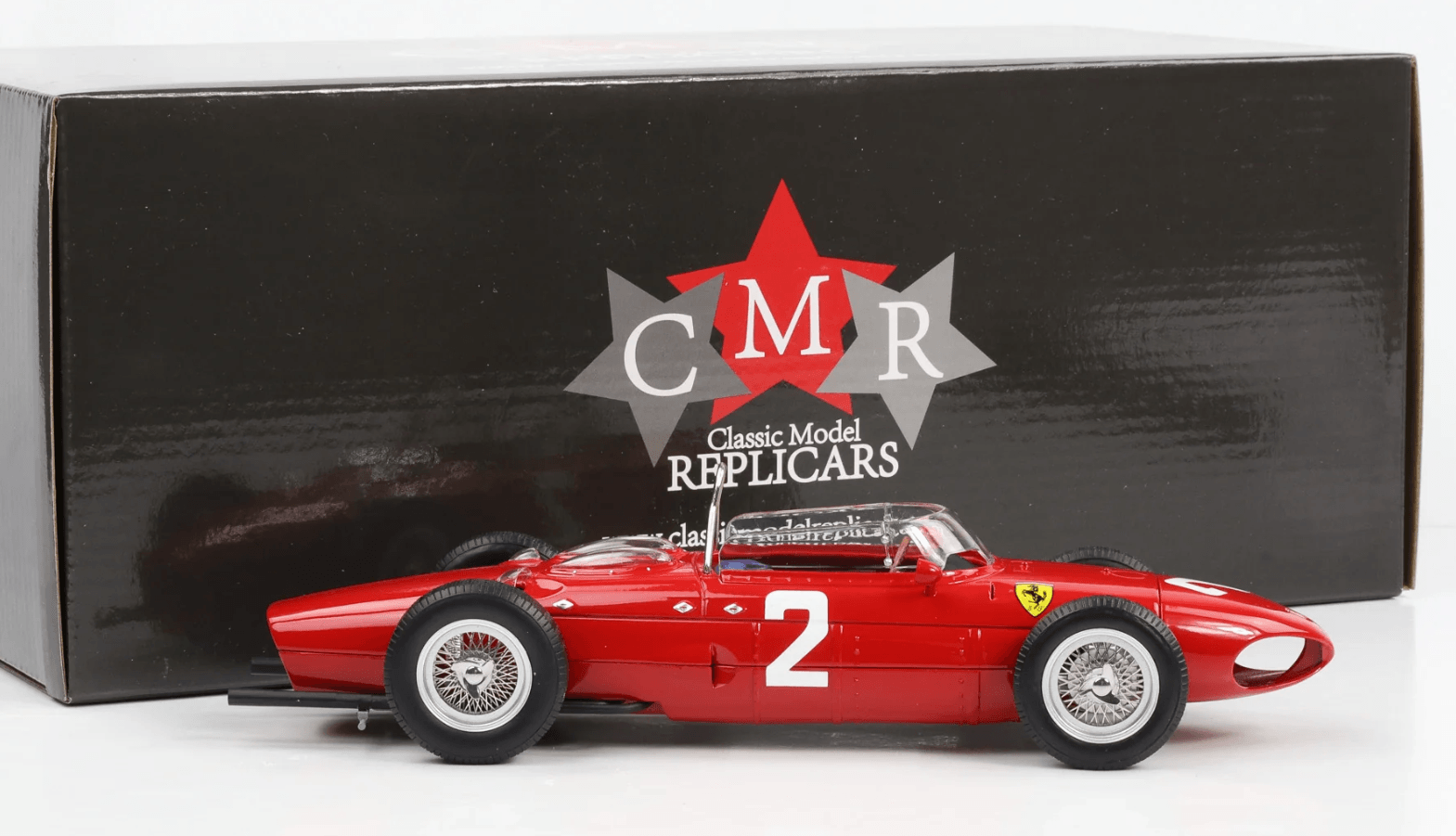 CMR: Ferrari 156 F1 (CMR166)
Well, that wraps up another monthly update. There aren't many more to go this year. So, what's on this month? The regular first Friday Sydney Toy and Hobby Fair is on October 2. There is also a Collector Con event on 25 October at Campbelltown, but I won't be attending. Until next month, happy collecting.
Formula One
- 1964 Ferrari 158, J.Surtees (2) World Champion in blister pack (Altaya)
American Racing Series
- 1970 McLaren M8D, D.Gurney (48) Can Am (Minichamps)
Australian Racing Series
- 1977 Chevrolet Corvair V8, F.Gardner (6) "JPS" Sports Sedan Champion (Armco)
- 1978 Chevrolet Corvair V8, A.Grice (6) "Craven Mild" Sports Sedan Champion (Armco)
- 2012 Ford Falcon FG, Reynolds/Canto (52D) Bathurst retro "Bottle-O" (ApexReplicas)
- 2014 Ford Falcon FG, Johnson/Wall (17) Bathurst retro "Shell Yellow/Blue" (ApexReplicas)
- 2015 Ford Falcon FG X, M.Winterbottom (5) V8 Supercars Champion (ApexReplicas)
- 2019 Ford Mustang GT, McLaughlin/Premat (17) 1st Bathurst 1000 (Authentic)
- 1972 Monaro HT GTS 350, N.Beechey (40) ATCC (AMR)
- 1993 Commodore VP, Perkins/Hansford (11) 1st Bathurst 1000 (ACE)
- 1995 Commodore VR, Perkins/Ingall (11) 1st Bathurst 1000 (ACE)
Road Cars
- 1988 BMW M3 (E30) Sport Evo in metallic silver grey (Spark)
- 2017 Commodore VF SSV Redline II (Biante)
- 1962 Triumph Spitfire 4 in red (Spark)
- 1967 Triumph Spitfire Mark III in white (Spark)
1:18 Models
- 1961 Ferrari 156 Sharknose, P.Hill (2) World Champion (CMR)
After Thoughts: "The Great Designers - Gérard Ducarouge."
Gérard Ducarouge (23 October 1941 – 19 February 2015) was a French Formula One car designer whose motorsport career began in 1965. Like many designers, he had a background in aeronautical engineering. He earned his degree in aeronautical engineering from the École Nationale Technique d’Aéronautique and began his career in missile development.
Matra (1965 - 1974)
His time in motor racing began in earnest after he secured a role at Matra Racing late in 1965. Initially working on their Formula Three entrants, he impressed enough to move to Formula Two, and soon after to Head of Operations, overseeing Matra’s F1 programme. During this time, he designed the Matra MS80, which, entered by the British privateer Matra International team of Ken Tyrrell, won both the World Drivers' Championship and the World Constructors' Championship in the 1969 season.
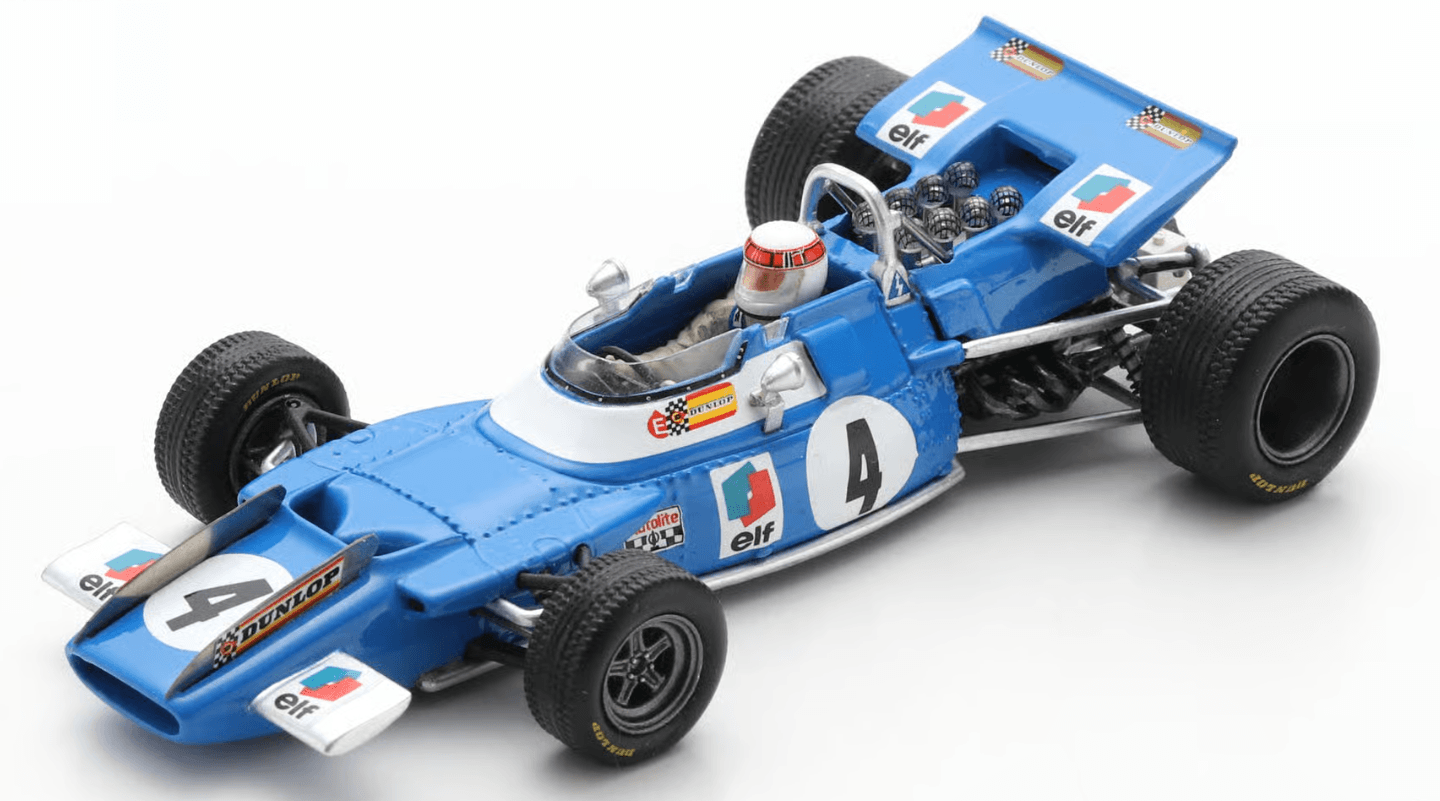 Spark: Matra MS80 1969 (S7191)
Driven by Jackie Stewart, the car was one of the first to feature downforce-inducing wings, designed to increase cornering speeds by using airflow to press the car down onto the circuit. This is now common practice, but the thinking was still in its infancy in the late sixties. Ducarouge was among the first to harness these early benefits once the high wings were moved to a more conventional lower position. Stewart himself went on to describe the MS80 as “the nicest-handling F1 car I’ve ever driven”.
Ducarouge subsequently oversaw a hat-trick of Le Mans wins in 1972, 1973, and 1974 with his MS670 before Matra’s withdrawal from motorsport. The company was bought out by Guy Ligier at the end of 1974, taking its designer with it.
Ligier (1975 - 1981)
After acquiring Matra, Guy Ligier set about transforming it into the Ligier Gitanes F1 team and tasked Ducarouge with designing their first car, the JS5, to compete in the 1976 season. The Ducarouge-designed JS5 was famous for the 'teapot' airbox that it used in the first few races of the season. Jacques Laffite took pole for that year's Italian GP, and then gave Ligier its first GP victory with the JS7 in 1977.
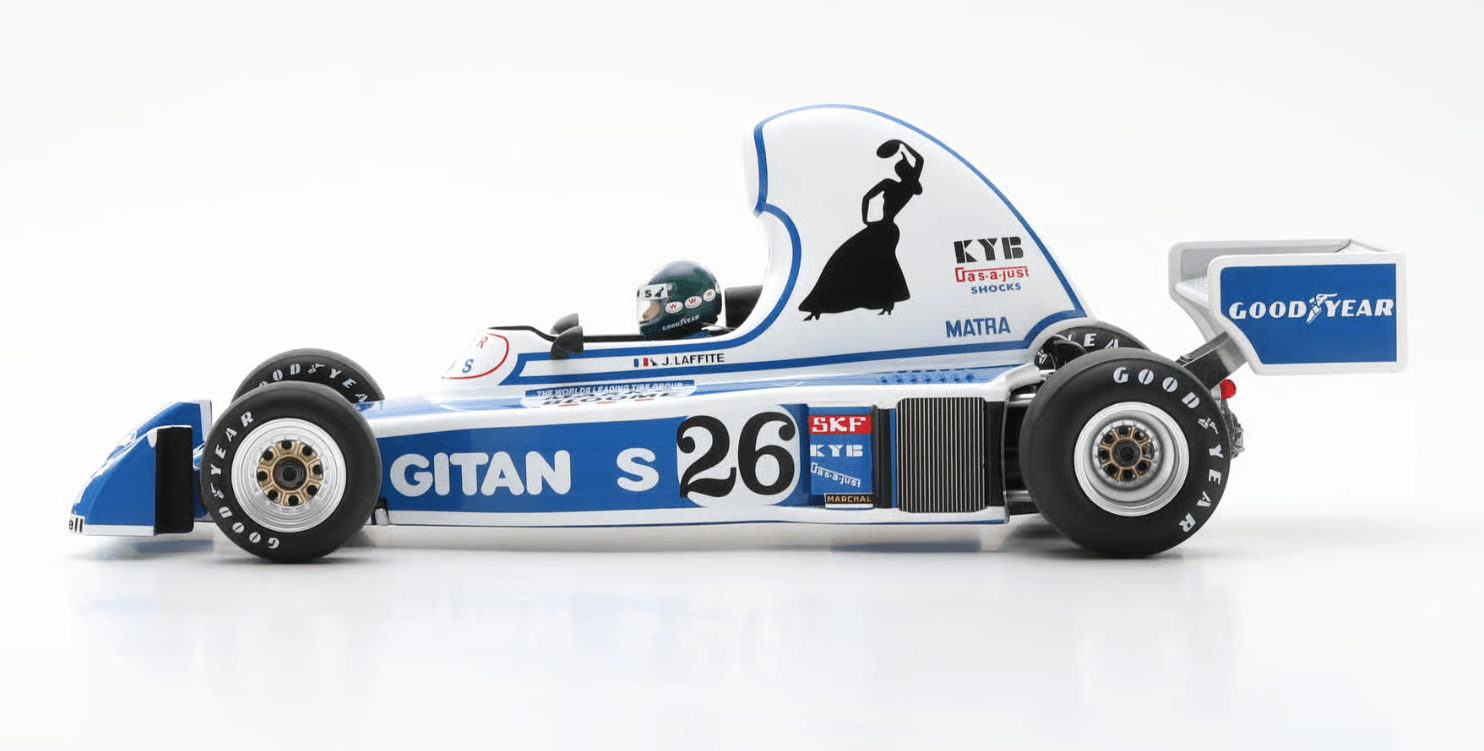 Spark: 1976 Ligier Matra JS5 (S1630)
Ducarouge is perhaps best remembered for the JS11. The car dominated the early part of the 1979 World Championship in the hands of Laffite and Patrick Depailler. The updated JS11/15 was also a frontrunner in 1980, when Didier Pironi joined the team. Laffite then won two more GPs in 1981 with the JS17. Ducarouge subsequently fell out with Guy Ligier and was unceremoniously sacked.
Alfa Romeo (1981 - 1983)
Ducarouge quickly accepted an offer to join the Alfa Romeo team where he persuaded the team to create his first carbon fibre chassis. Despite this and other innovations Ducarouge instigated, Alfa Romeo failed to deliver on increasingly high expectations. Following the first qualifying session of the 1983 French Grand Prix where Andrea de Cesaris was disqualified for his car being underweight, Ducarouge was blamed and dismissed.
Lotus (1983 - 1988)
He was not to remain out of work for long, as Peter Warr from Team Lotus headhunted Ducarouge. Lotus had witnessed a severe decline in fortunes following their dominant 1978 campaign, culminating in the death of their founder, Colin Chapman, in December 1982. After extensive persuasion, Ducarouge joined the team after the 1983 Belgian Grand Prix. Using a more methodical approach than that associated with ideas man Chapman, Ducarouge helped Lotus create the 94T, which was designed and built in five weeks in the middle of the 1983 season and helped salvage some success for the remainder of the season.
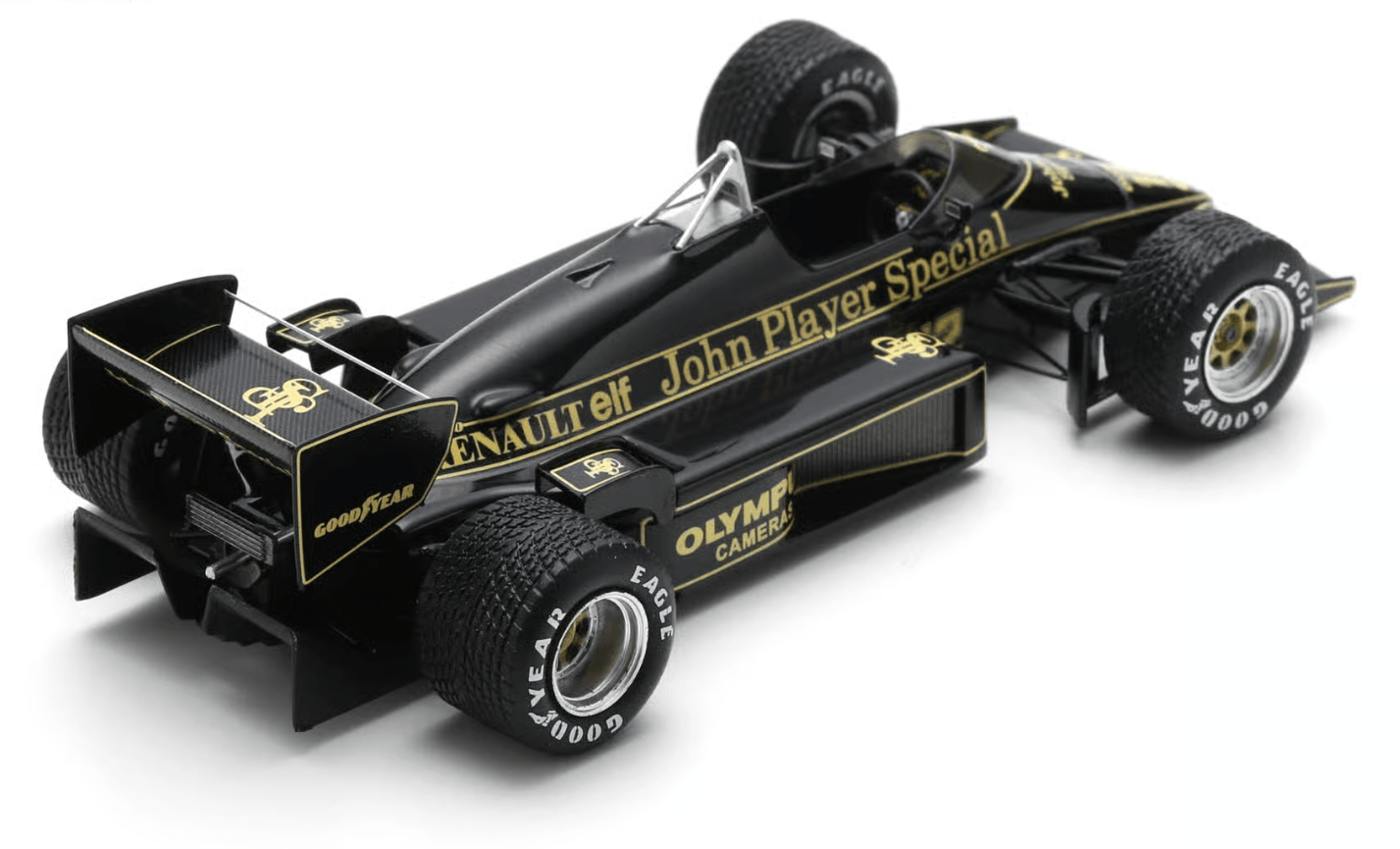 Spark: 1985 Lotus Renault 97T (S7152)
In 1985 Ayrton Senna joined the team, and the Brazilian formed a close bond with Ducarouge. Senna scored his first GP wins in Portugal and Belgium with the Renault-powered 97T. Featuring another Ducarouge innovation, one of the earliest forms of barge boards, designed to direct airflow more effectively around the car’s rear, the Lotus took eight pole positions, but ultimately fell out of title contention through poor reliability.
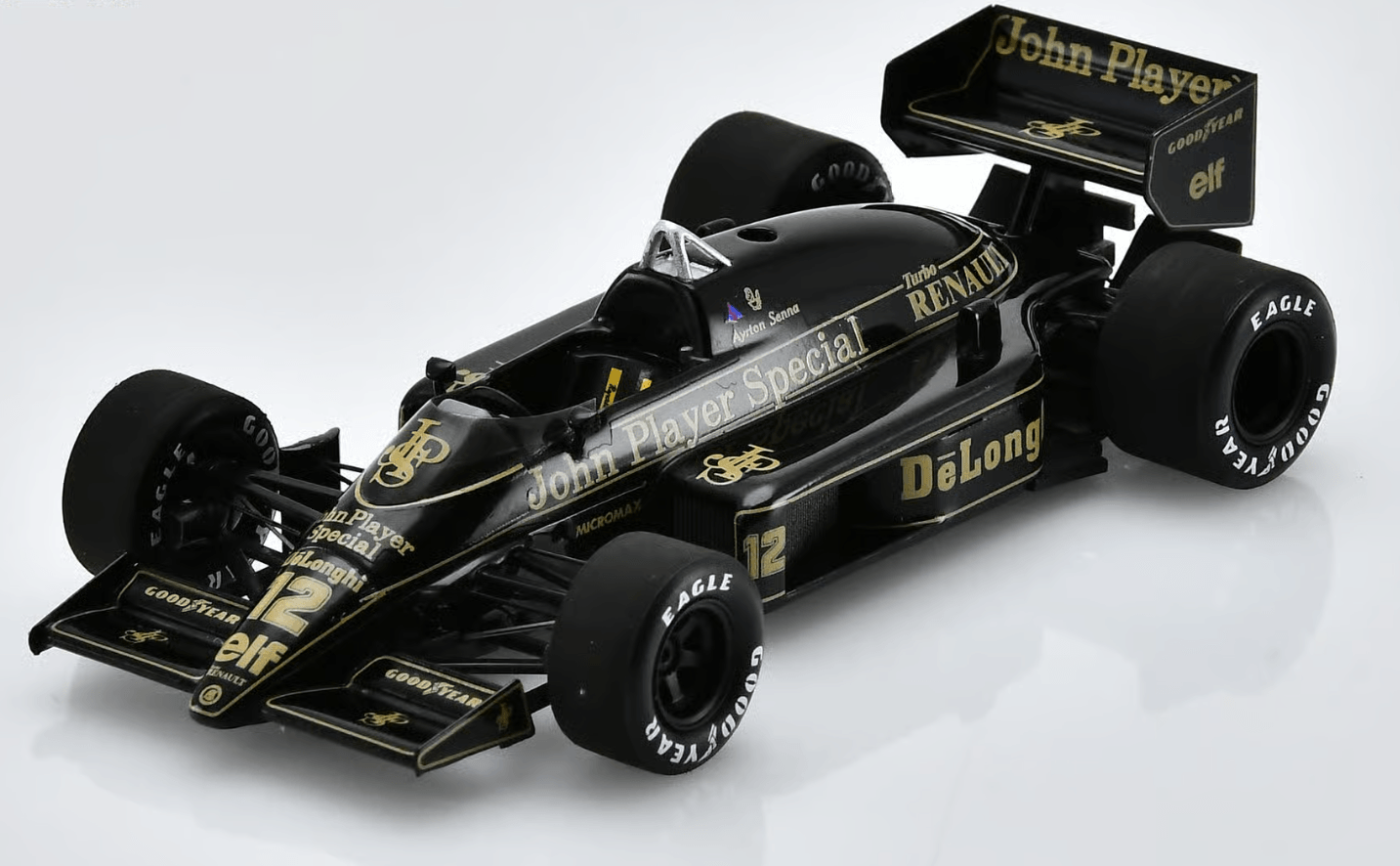 Spark: 1986 Lotus Renault 98T (S7155)
Senna added four more successes over the next two years with the 98T and the Honda-equipped 99T, before moving on to McLaren. The 1987 Lotus 99T did have some novel features, not least of which was active suspension, which was relatively successful at smoothing out pitch and roll and maintaining the car’s consistent ride height. However, this early incarnation was not yet a world-beater, and the flip side of the innovative suspension was that it added extra weight, which reduced performance, particularly at higher-speed circuits.
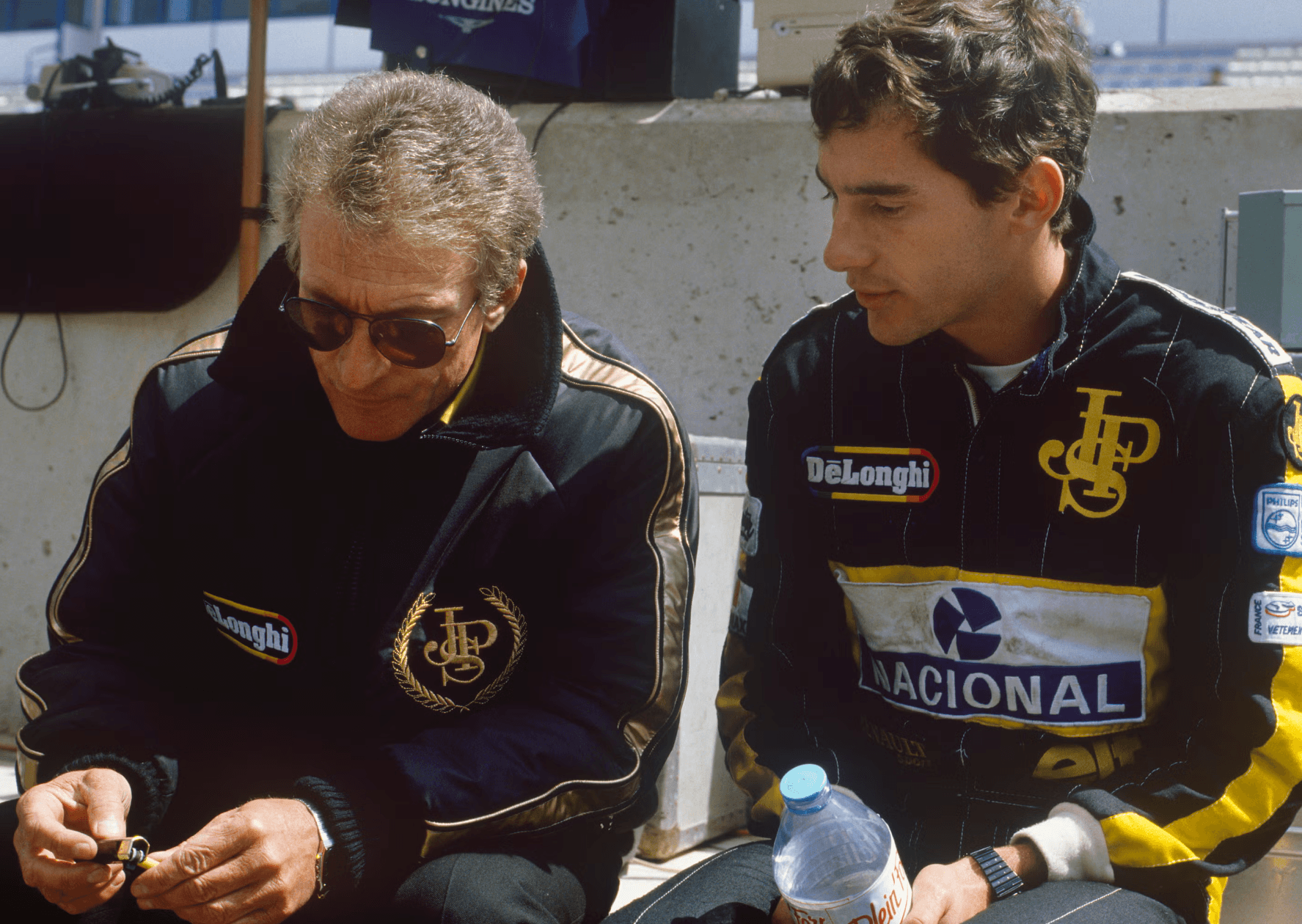 Gérard Ducarouge with Ayrton Senna
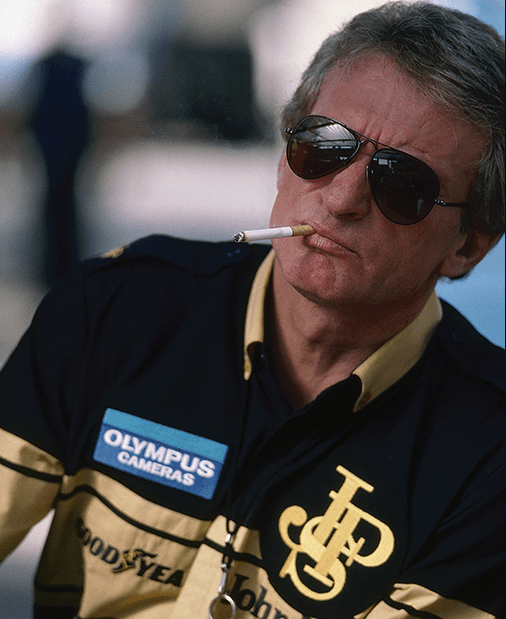 Ducarouge sampling the sponsor's product
Larousse/Ligier (1988 - 1994)
A disappointing 1988 campaign with Lotus saw Ducarouge return to his native France with the newly formed Larousse team, and eventually back to Ligier, but he was unable to make a significant difference to either team’s fortunes. He retired from the world of Formula 1 midway through the 1994 season.
Gérard Ducarouge died on 19 February 2015 aged 73.
New Additions: September 2026
Welcome to another monthly update, which is going to be a short one as there are no new additions to report this month. However, I would like to start by thanking everyone who stopped by my stand at the 2026 Australian Diecast Expo at Rosehill over the weekend of 29/30th August. It was a great weekend, and although it had a strong focus on Hotwheels and other 1:64 brands, there's still some love out there for 1:43. So, with no new models, I thought I'd highlight a model from last month.
The Ford Fairlane Skyliner is a two-door, full-size convertible with a retractable hardtop. Ford's 1957 Skyliner was the world's first mass-produced retractable hardtop convertible, with sales approaching 50,000. The Skyliner's retractable top operated via a complex mechanism that folded the front of the roof and retracted it under the rear decklid. Instead of the typical hydraulic mechanisms, the Skyliner top used seven reversible electric motors. Ford marketed the retractable roof system as the Hide-Away Hardtop. The Brooklin model of the 1957 Ford Skyliner (BRK35) is finished in ivory with a black interior, yellow licence plate and whitewall tyres. It was released in November 1991 and discontinued in January 1996.
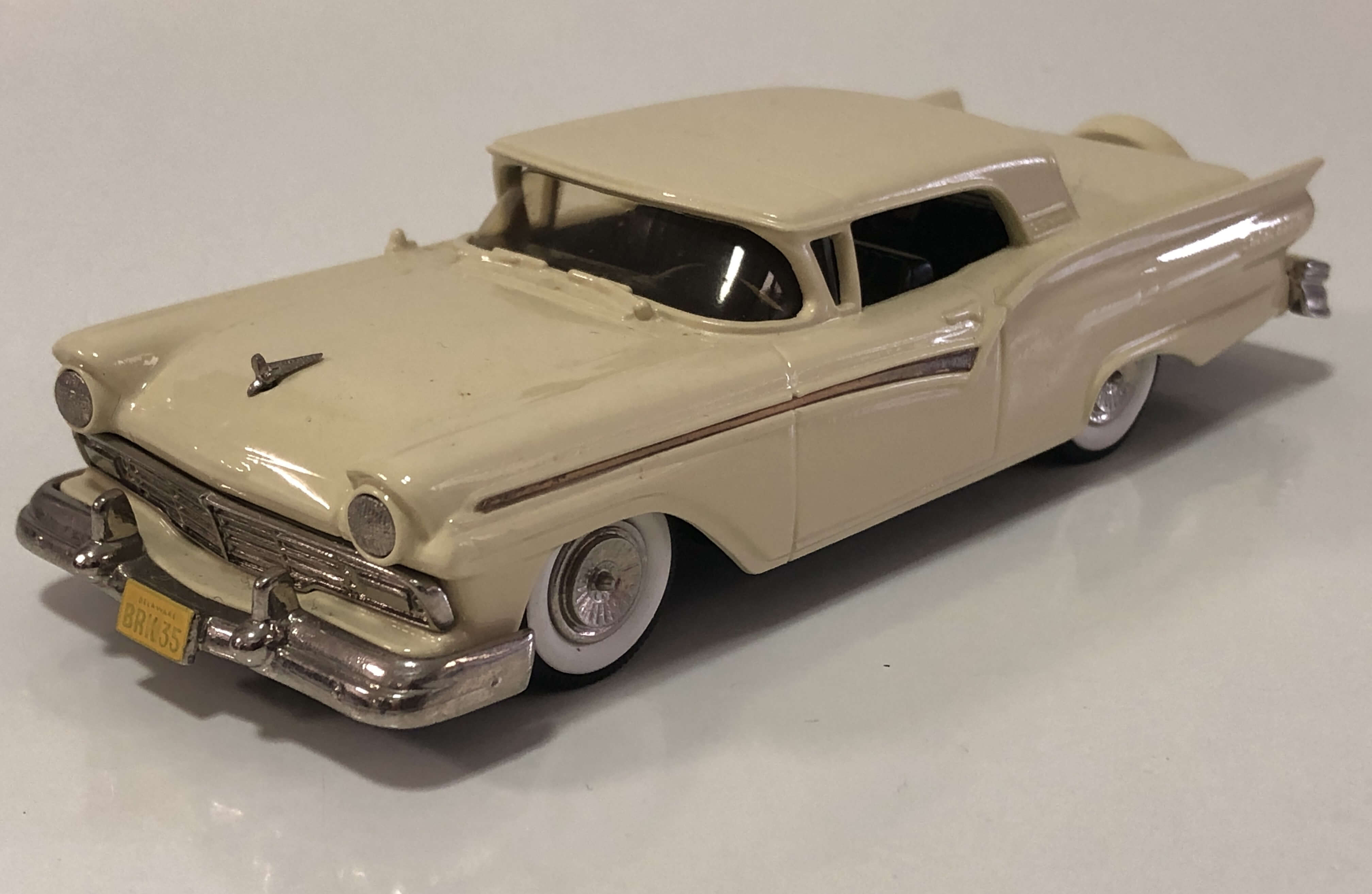 Brooklin Model 1957 Ford Fairlane Skyliner (BRK35)
That's it for another monthly update. So, what's on in September? The regular Sydney Toy and Hobby Fair is on 4th September at the Epping Creative Centre, 26 Stanley Road, Epping starting at 6:00 pm. Then the All British Day will be on the 13th, followed by the Hawkesbury Model Show on the 19th and 20th which is part of the Antique Machinery Rally. Both these events will be held at the Hawkesbury Showgrounds, Racecourse Road, Clarendon. I've heard that the "Guiness Book of Records" will be at the Antique Machinery Rally as there will be an attempt on the record of the most trucks gathered at one event. Until next month, happy collecting.
After Thoughts: "The Art of Survival - The 1983 Arrows Ford A6"
The modern world of Formula One is defined by high technology and high finance, with a few races added to the mix. Without sponsors, no team can exist, so corporate sponsors are courted constantly, and once secured, car liveries are developed pre-season. Liveries essentially remain unchanged for the entire season, except for minor alterations as smaller sponsors come and go. But in the 1970s and 1980s, many smaller teams struggled to find potential sponsors. One such team was the Arrows Racing Team.
Hardly any other Formula 1 car was repainted as often over the course of a single season as the 1983 Arrows A6. The British team, led by former driver Jackie Oliver, designer Tony Southgate and financier Franco Ambrosio, suffered chronic funding shortages. No title sponsor could be secured, leaving the powerful but expensive turbo engines out of reach, so they muddled through race to race with the Cosworth DFV V8. Sponsorship deals were often secured at the last minute, and the A6 appeared at almost every Grand Prix in a different livery. In fact, more than 10 different model car versions of the Arrows A6 can be identified, and for the first GP of the season in Brazil, the two cars of Surer and Serra rolled almost completely white to the starting grid.
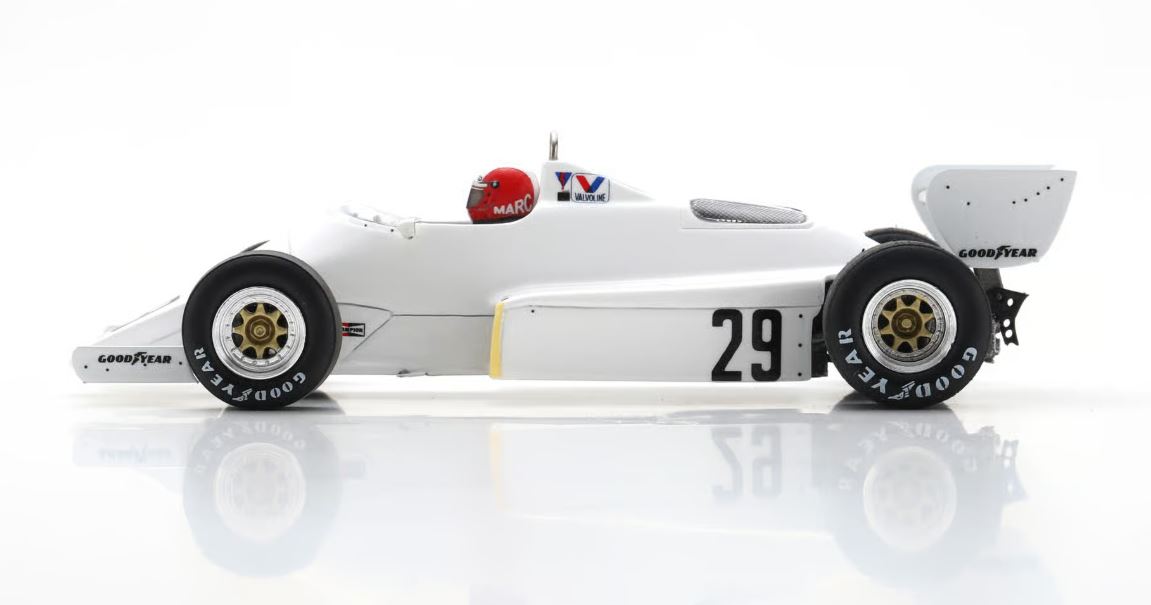 Spark: Arrows A6 - 1983 Brazilian GP
On the eve of the season, Oliver made the shock announcement that he had tempted Alan Jones out of retirement and that the former World Champion would make his debut once he recovered from a broken leg sustained when he fell off a horse. Jones had demanded a substantial retainer, but Arrows gambled that he would help attract sponsors.
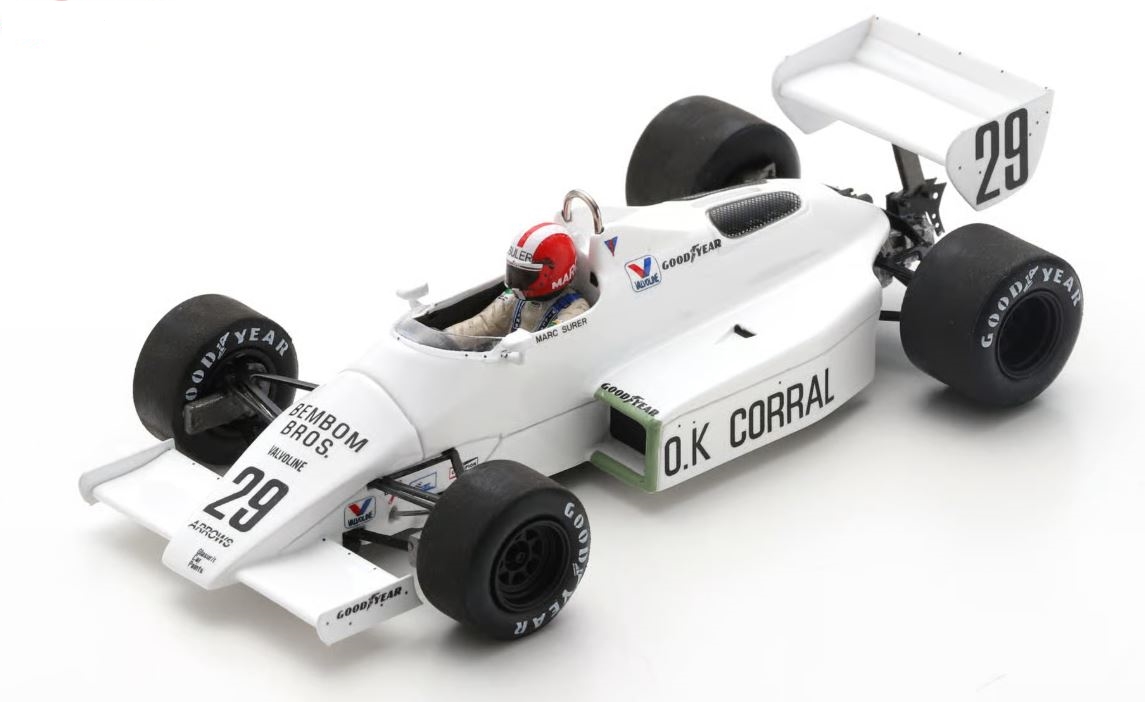 Spark: Arrows A6 - 1983 French GP
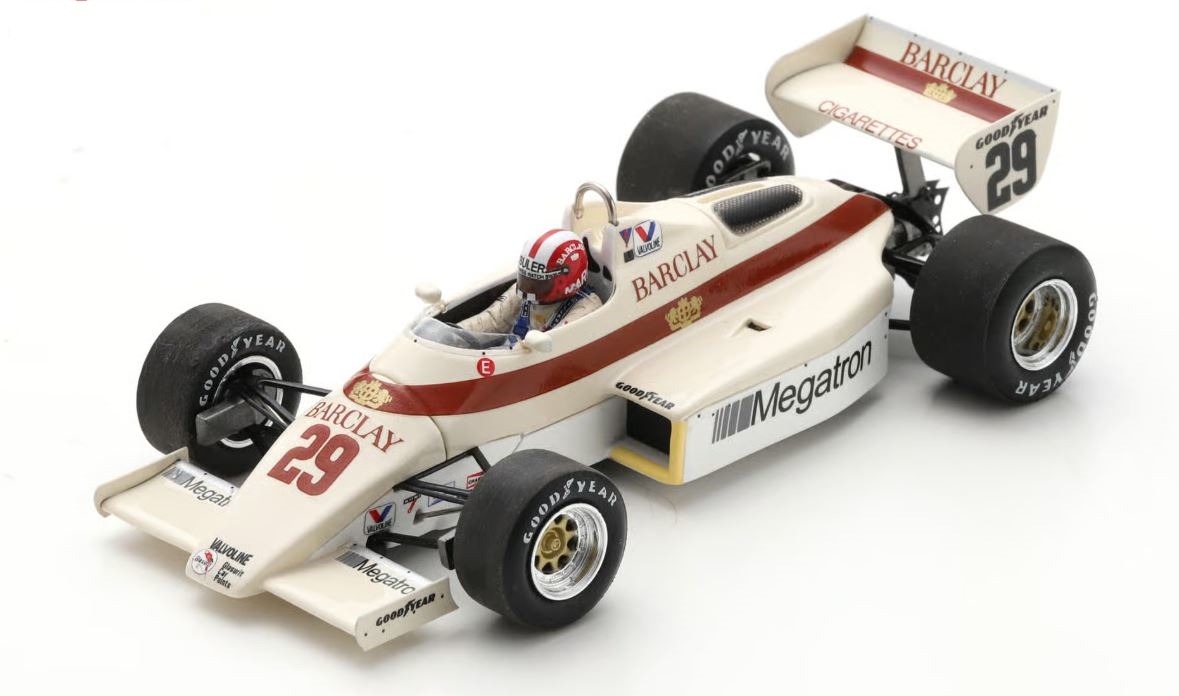 Spark: Arrows A6 - 1983 Detroit GP
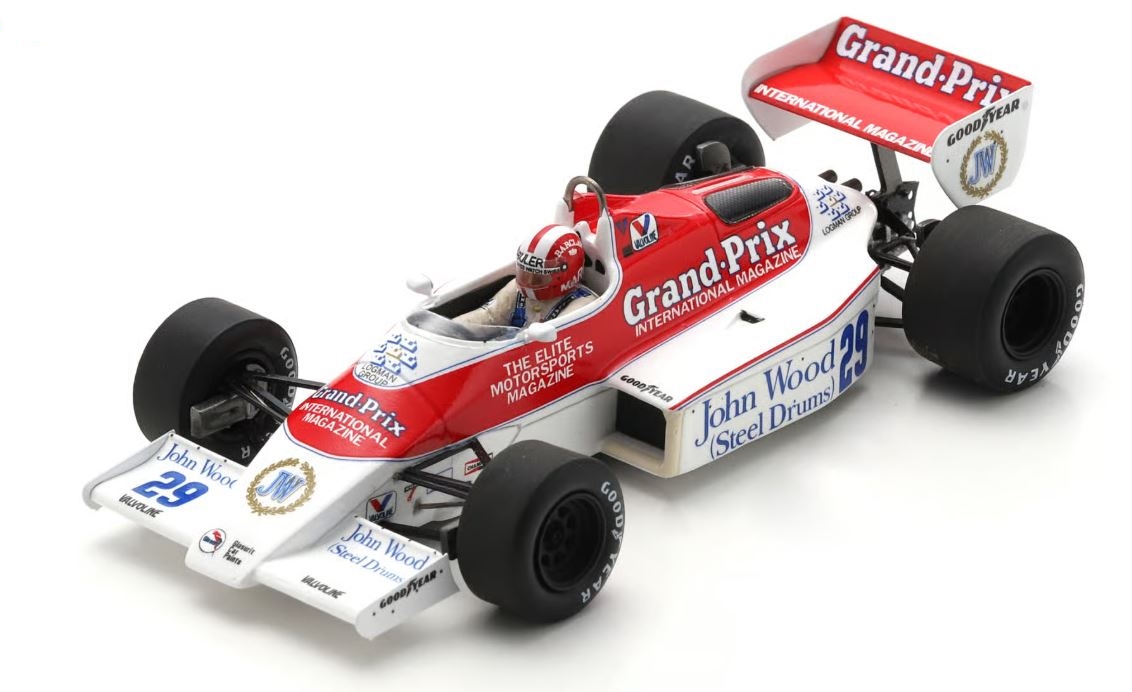 Spark: Arrows A6 - 1983 British GP
Results at the beginning of the year were impressive, given that the A6 first turned a wheel only during practice for the Brazilian GP. The anticipated sponsorship from signing Alan Jones did not eventuate. Jones contested just one championship GP before retiring from racing once again. Finally, at the 3rd GP in France, "O.K Corral" adorned the sidepods. Two races later, at Monaco, the A6 sported sponsorship from MARILENA, a sportswear company, and BARCLAYS, a tobacco company. After the race, the team had a week to scrape the brown off the number 30 car and put numerous new sponsors on the naked white for the race in Belgium.
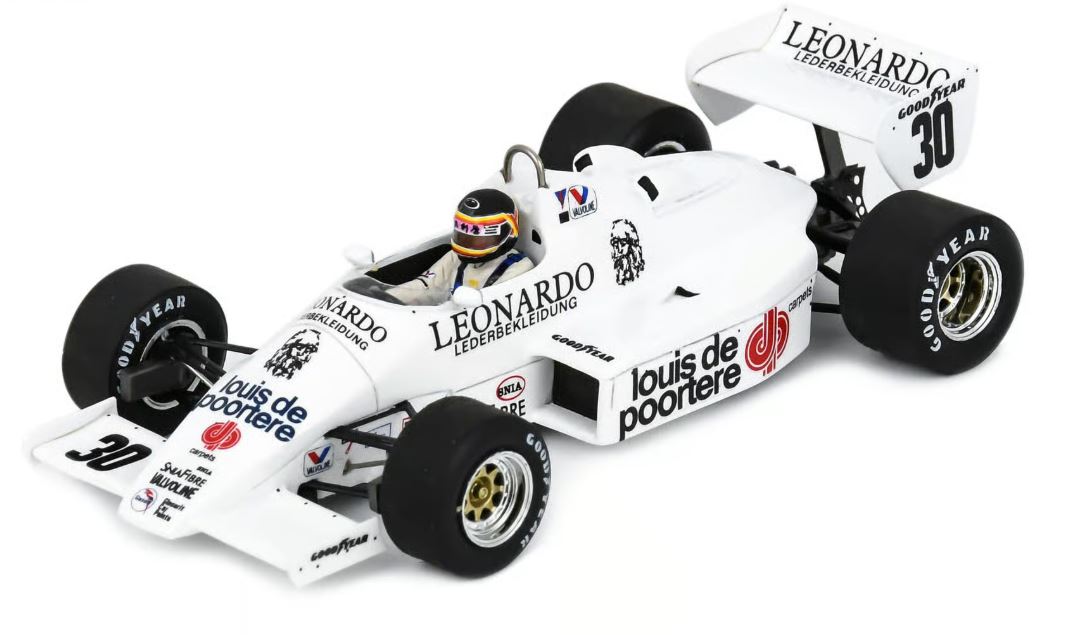 Spark: Arrows A6 - 1983 German GP
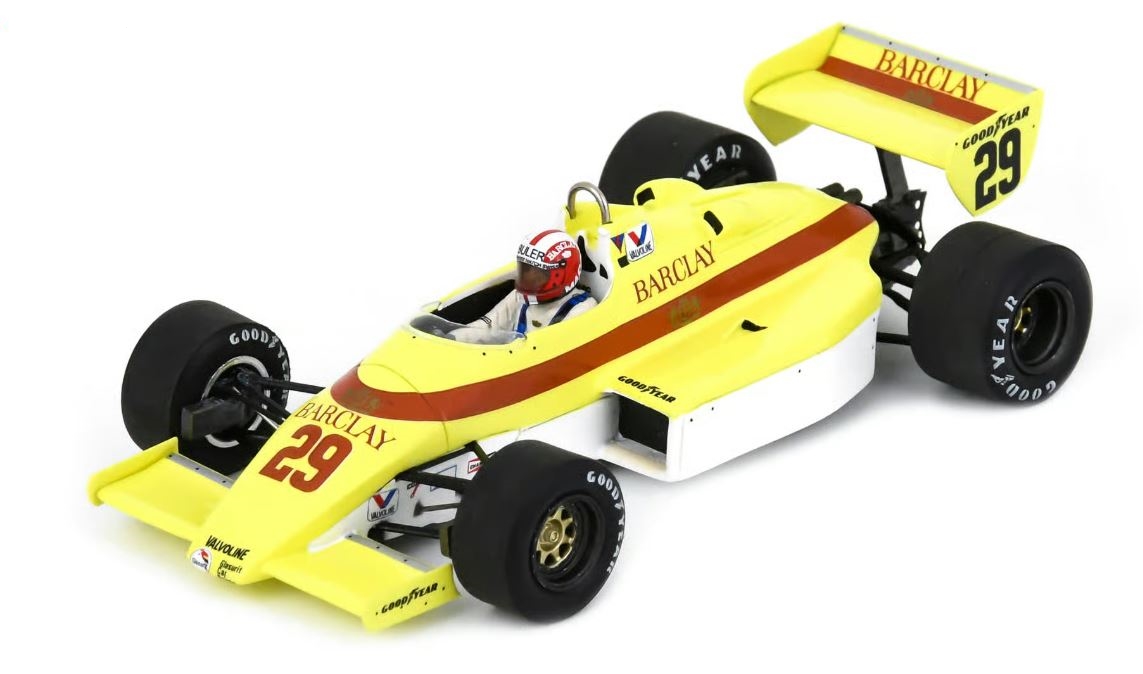 Spark: Arrows A6 - 1983 Austrian GP
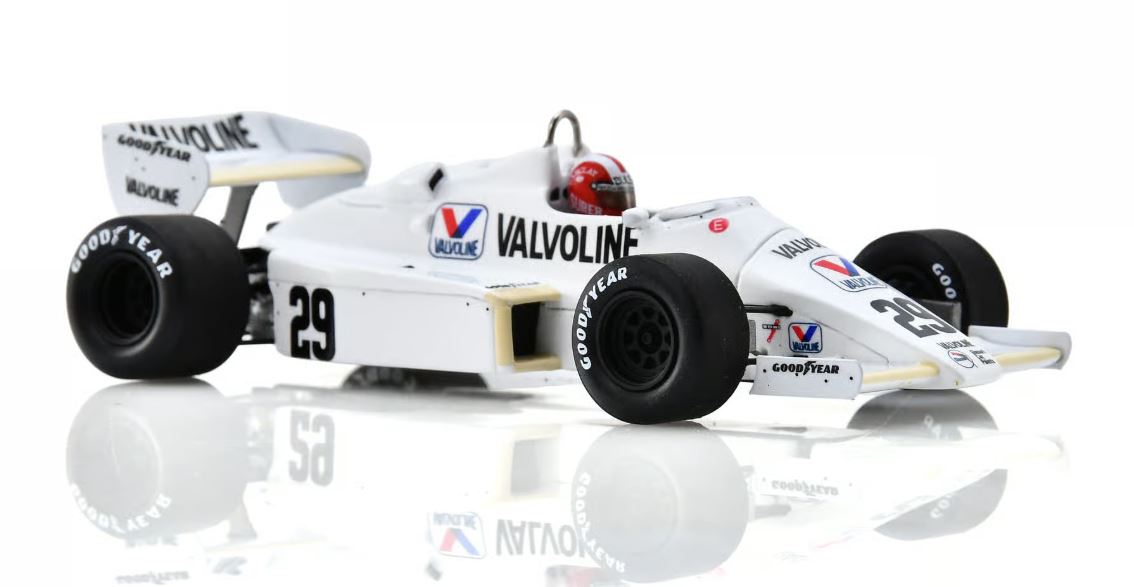 Spark: Arrows A6 - 1983 Dutch GP
Over the course of the season, race-by-race sponsorship was secured from such companies as an art gallery, GP International Magazine, Leonardo (leather clothing), Valvoline, a carpet manufacturer, perfume brands, and Golia (a peppermint maker). Due to the limited budget, the team was prevented from developing the A6, so the results tapered off after a promising start to the season. It was a great relief for the signwriters when the season finally ended.
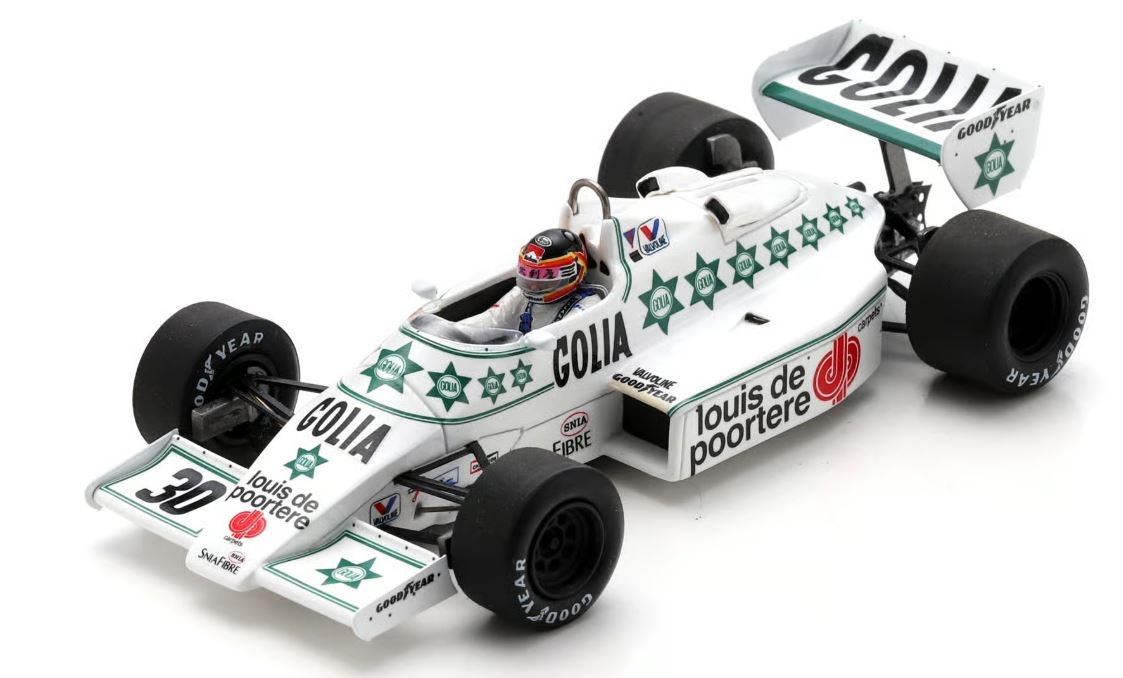 Spark: Arrows A6 - 1983 Italian GP
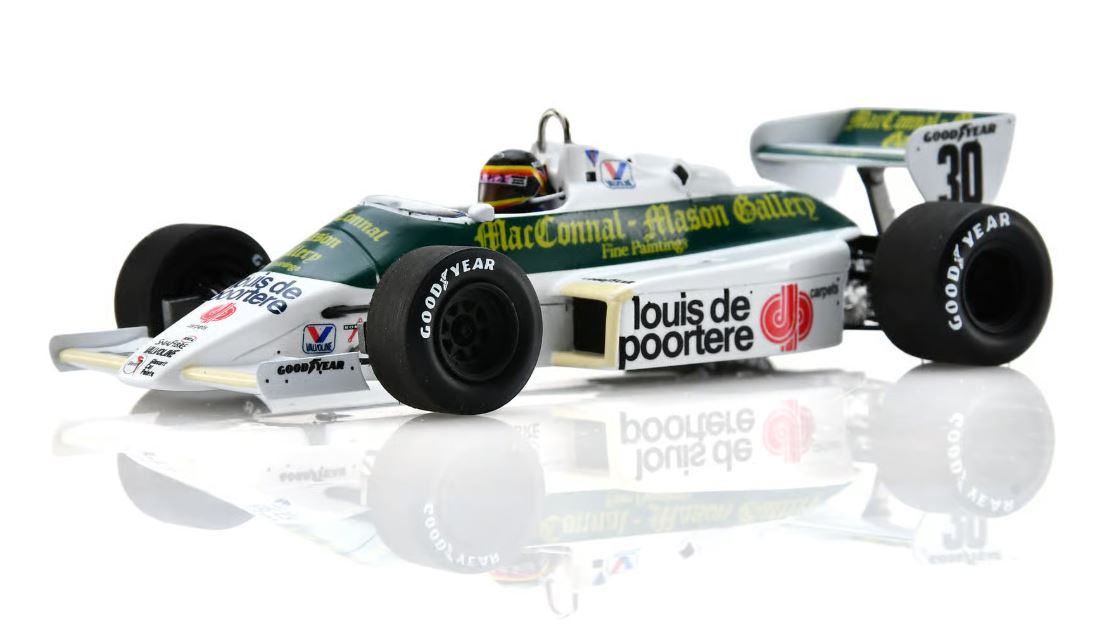 Spark:Arrows A6 - 1983 European GP
A financially precarious season had been weathered, but perseverance had paid off; from 1984, Barclays came on board as the main sponsor, enabling the team to finally switch to BMW turbo engines.
New Additions: August 2026
Welcome to another monthly update, which I'm writing bathed in bright, warm sunlight on a winter's day in Sydney. The days are slowly getting longer as we power through the winter months towards spring. It has been a quiet first half of the year for me, with very modest sales, but as we head into August, the number of model fairs and car events is starting to increase, hopefully with the prospect of improved sales!
There's not a lot of new additions to report this month, just a few white metal models that I acquired. Model car collectors who appreciate white metal models may be familiar with "Gems & Cobwebs". Founded in the early 1990s by Bernie and Graham du Cros, Gems & Cobwebs was a British brand specialising in 1/43 scale white metal model cars. The models produced by Gems & Cobwebs have a similar look and feel to those from Brooklin Models. In fact, between 1992 and 1993, Brooklin Models manufactured the first few 1/43 white metal Jaguar miniatures for Gems & Cobwebs before the brand launched its own dedicated production line. Independent production under the Gems & Cobwebs name began around 1994, with a strong focus on classic British luxury and saloon cars, particularly rare models from Jaguar, Riley, and Alvis. This boutique manufacturer continued to create limited-edition, hand-built white metal precision models until operations ceased around 2008. One notable model from Gems & Cobwebs is the Alvis TF21. Alvis was regarded as one of the great British car brands, representing classic English style and superb quality. This Alvis model would make a perfect addition to any classic car collection.
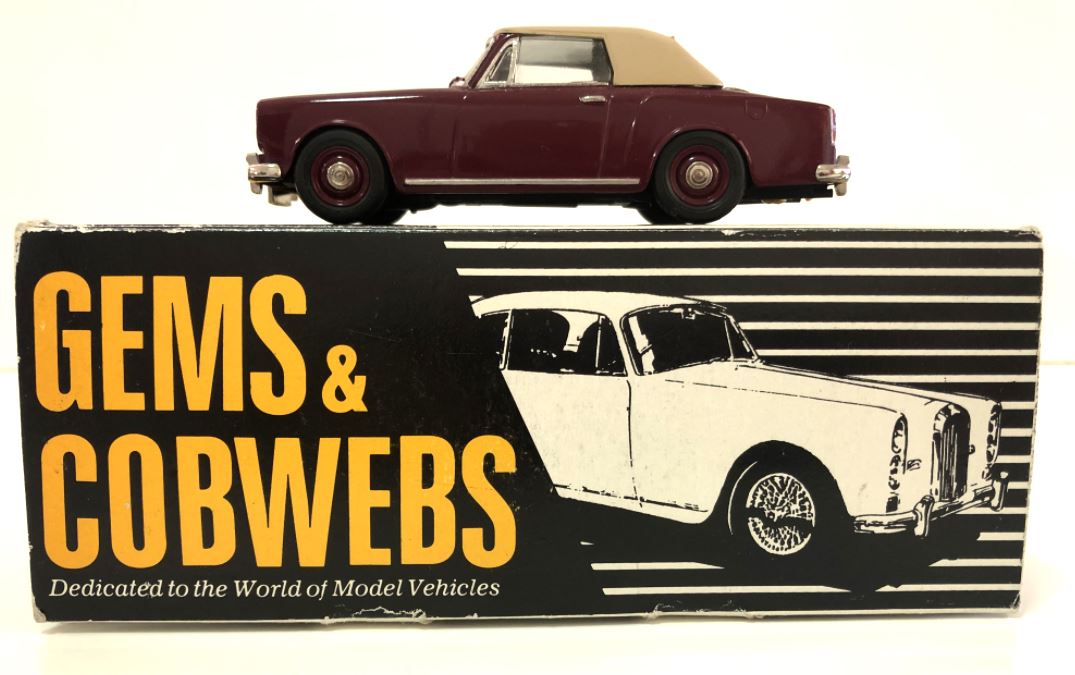 Gems & Cobwebs: Alvis TF21 (Model GC1)
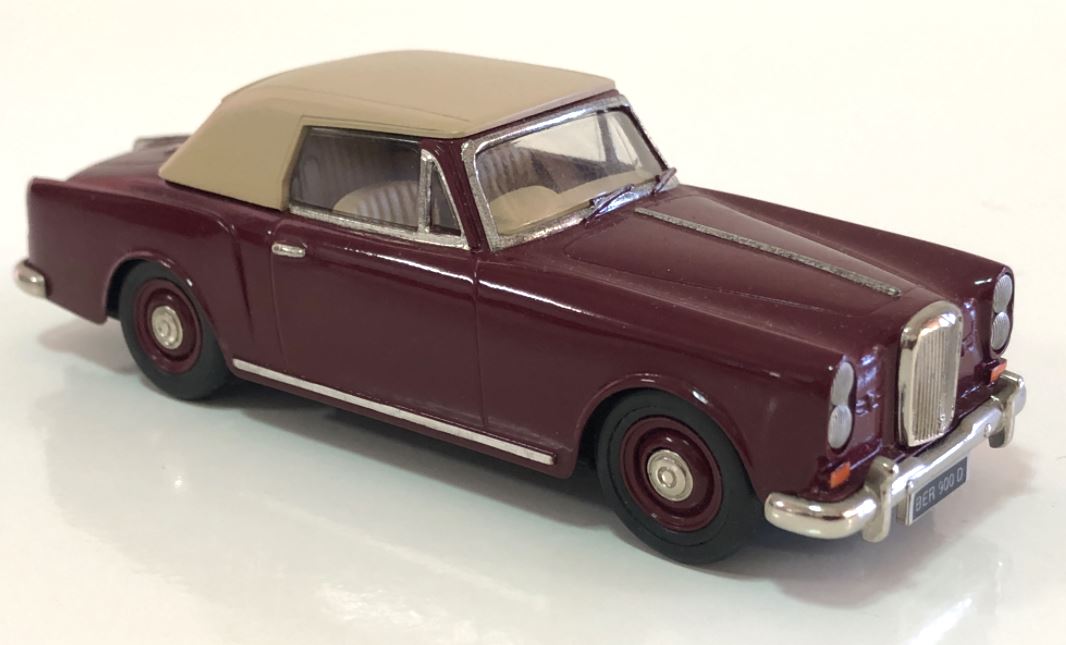 Gems & Cobwebs: Alvis TF21 hood up (Model GC1)
Okay, that's it for another monthly update, so what's on in August? Firstly, there's the regular Sydney Toy and Hobby Fair on 7th August at the Epping Creative Centre, 26 Stanley Road, Epping starting at 6:00 pm. Then on 16th August, I will be attending the Shannons Sydney Classic at the Sydney Motorsport Park (Eastern Creek). Following on from this, the Australian Diecast Expo returns to the Rosehill Race Course Pavillion on 29th and 30th August. I should also note the Hunter Toy Fair is on 9th August in Newcastle, however, I won't be attending this event. Until next month, happy collecting.
Road Cars
- 1966 Alvis TF21 in maroon/fawn hood (Gems and Cobwebs)
- 1949 Cadillac Series 62 Coupe De Ville in light blue (Western Models)
- 1951 Ford Victoria in two tone green (Brooklin Models)
- 1957 Ford Fairlane Skyliner in ivory (Brooklin Models)
- 1961 Jaguar Mk X in maroon (Gems and Cobwebs)
- 1969 Jaguar 420G in silver/light blue (Gems and Cobwebs)
- 1972 Jaguar E-Type V12 Convertible in silver (Gems and Cobwebs)
After Thoughts: "What Were They Thinking? Bad Career Moves #1"
The history of motorsport is littered with examples of drivers making poor career moves. One recent example is Daniel Ricciardo’s inexplicable switch from Red Bull to the uninspiring Renault team in 2019. Another poor career choice was made in 1976.
In 1975, the elder and less talented of the Fittipaldi brothers managed to persuade Brazilian sugar conglomerate Copersucar to support his F1 project. Having been Brabham's third driver in 1972 and 1973, Wilson Fittipaldi developed into a steady midfield runner whose two-year campaign yielded a grand total of three World Championship points. Whilst younger brother Emerson was busy taking his second F1 title in 1974, Wilson started setting up his own Grand Prix team. He employed Brazilian Richard Divila to design the car, while Mexican Jo Ramírez was hired as team manager. National aerospace company Embraer was also involved, supplying materials to the fledgling team and providing wind-tunnel time. The team was initially based in Brazil, almost 10,000 km away from the United Kingdom, a bold move given the overwhelmingly British nature of Formula One technology from the 1960s onwards.
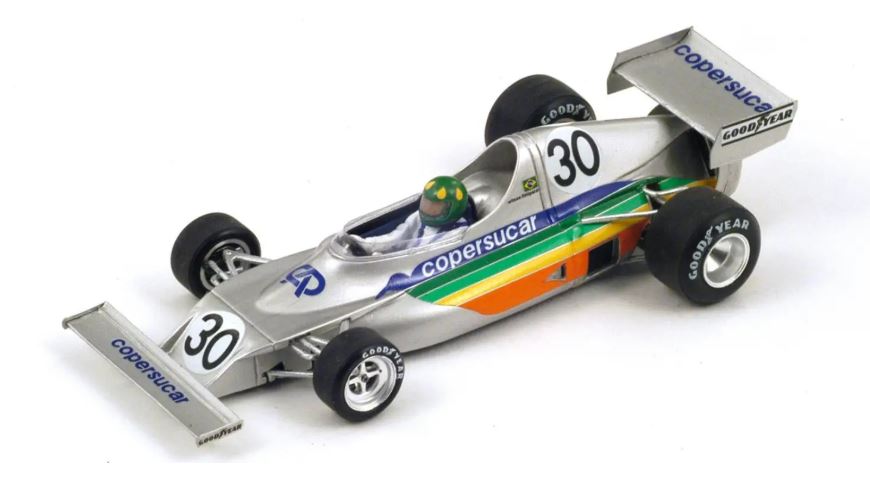 Spark: Copersucar Ford FD01 1975, W.Fittipaldi
The team’s first car, the FD01, was unveiled in October 1974 in time for the 1975 season, with Wilson being the driver. The first season was a disaster, with Wilson bringing up the rear more often than not, finishing a lowly tenth in the season finale at Watkins Glen, the meagre reward for a year's hard work. Thus, it came as a shock when double World Champion Emerson Fittipaldi announced he would be leaving McLaren to join his brother’s team in 1976. McLaren, bemused by Emerson’s decision, quickly hired James Hunt, who was available after Hesketh closed its operation. Hunt famously went on to win the World Championship that year after a titanic battle with Niki Lauda.
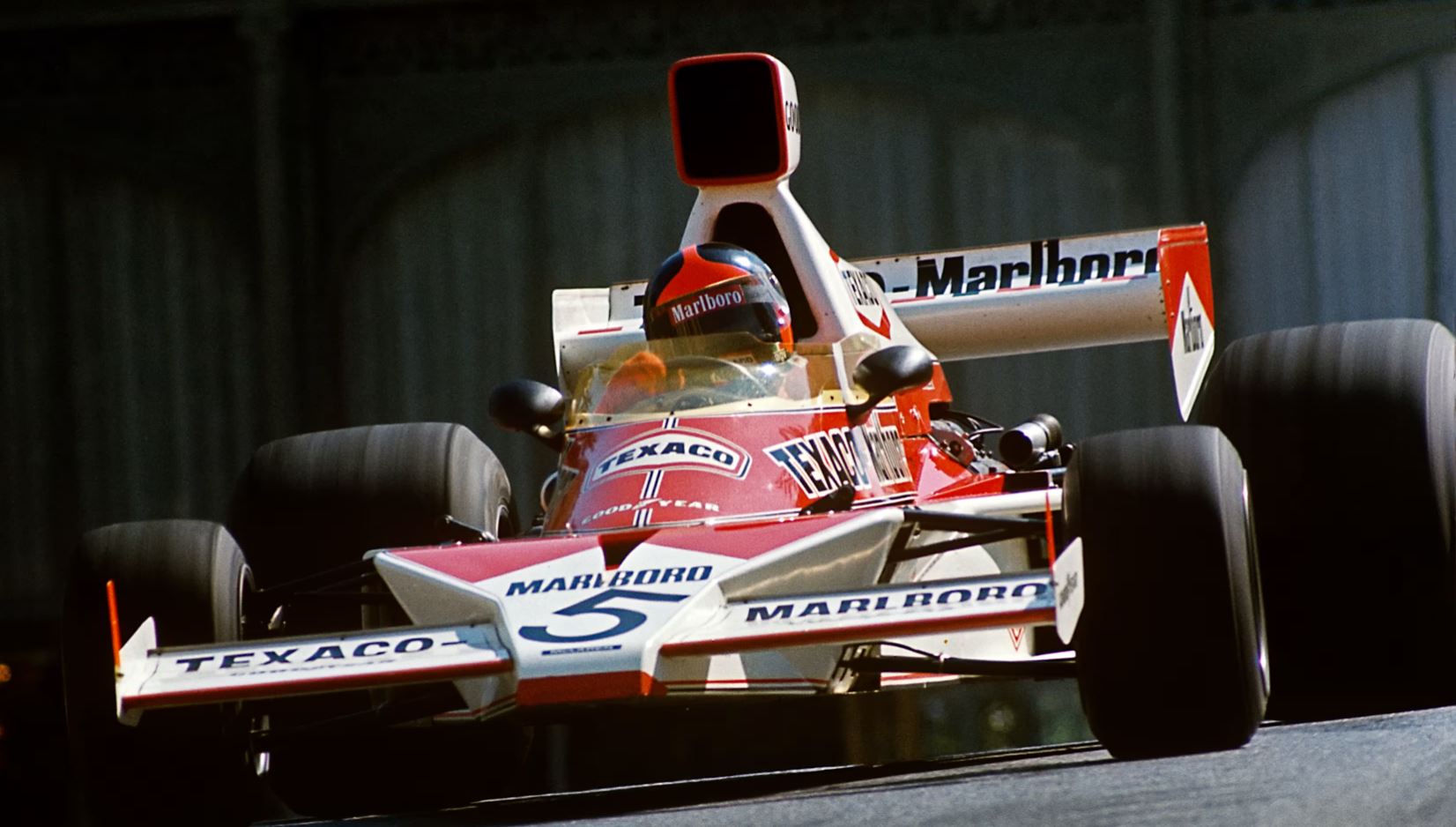 McLaren M23 1974 E.Fittipaldi, World Champion
Emerson’s decision to join his brother was based on family loyalty and patriotism for the all-Brazilian team. His strong desire to help build a Brazilian national racing team heavily motivated his shock departure from McLaren. Emerson’s efforts to turn the first Brazilian F1 team into contenders bore little to no fruit. Two frustrating seasons followed in 1976/77, with the Copersucar FD04 and F5 models returning a modest total of 14 points. Sporadic attempts to race a second car were swiftly abandoned, and the team gave up on the patriotic concept of a purely Brazilian F1 team, moving their base of operations from São Paulo to Reading, closer to the centre of the world motor racing industry in the UK.
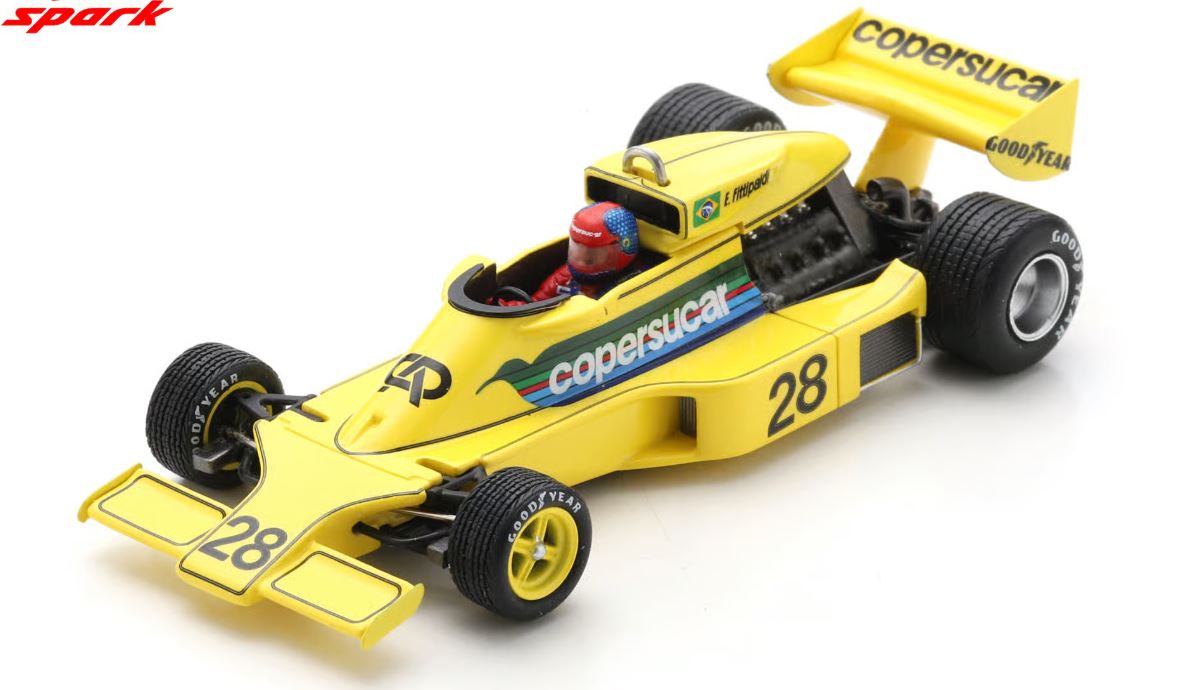 Spark: Copersucar Ford F5 1977, E.Fittipaldi
In 1978, Wilson and Emerson turned to Giacomo Caliri's Fly Studio to convert the F5 into a ground-effect car, the F5A, featuring a new suspension layout and Lotus-style sidepods as its main innovations. Still, when Emerson Fittipaldi arrived at the Jacarepaguá circuit in Brazil, few could have anticipated what was about to happen. The race was won by Carlos Reutemann in a Ferrari, but no one in the crowd even noticed: they crowded around the home favourite, Emerson Fittipaldi, when he crossed the line in second place. Sadly, that was as good as it ever got for Fittipaldi Automotive. Emerson scored a few more points finishes later in the season. Wilson enticed ex-Brabham and ex-McLaren designer Ralph Bellamy to join Fittipaldi, but for 1979 he could only produce an absolute failure of a car. What was supposed to have been the final jump to the top turned into a downward spiral the team never recovered from. Emerson decided to retire from F1 at the end of 1980.
Emerson Fittipaldi sacrificed career, fortune and even his own marriage in pursuit of the dream to form an all-conquering Brazilian F1 team - but maintains to this day he is glad he had a go.
New Additions: July 2026
Welcome to the July update. I received a small shipment of Spark models this month, all pre-ordered. It seems pre-ordering is the business model that Spark and some other manufacturers have adopted. I guess it makes sense, as it gives them an idea of how many models to make and helps avoid overproduction and saturating the market with unwanted models. I also suspect it's a way to prioritise their manufacturing schedule; a model with a large pre-order will be made before one with a smaller pre-order. It's the only way I can explain why some models are released so quickly (e.g., the current Spa 24-hour cars) while others take forever to be made (e.g., early F1 cars). I'm still waiting on models I ordered back in 2021 and even earlier. Anyway, getting back to the models that have arrived, a couple deserves a special mention.
Chenard-Walcker was a French automobile and commercial vehicle manufacturer from 1898 to 1946, and they had won the inaugural 1923 24-Hours of Le Mans with one of three cars entered. In 1937, Yves Giraud-Cabantous entered Le Mans with the pair of venerable Chenard-Walcker Z1s which had last raced at Le Mans in 1925. At the time, these small, streamlined cars had been innovative, inspired by the Bugatti Type 32. After Chenard-Walcker stopped motor-racing in 1926, the cars had been parked up in a warehouse until Giraud-Cabantous offered to buy them. The 1095cc pushrod engine put out 50 bhp, and Giraud-Cabantous installed a supercharger on his, which put the car up in the 2-litre class. The two Chenard-Walckers failed to finish the 1932 Le Mans race. This car would be a welcome addition to any Le Mans collection.
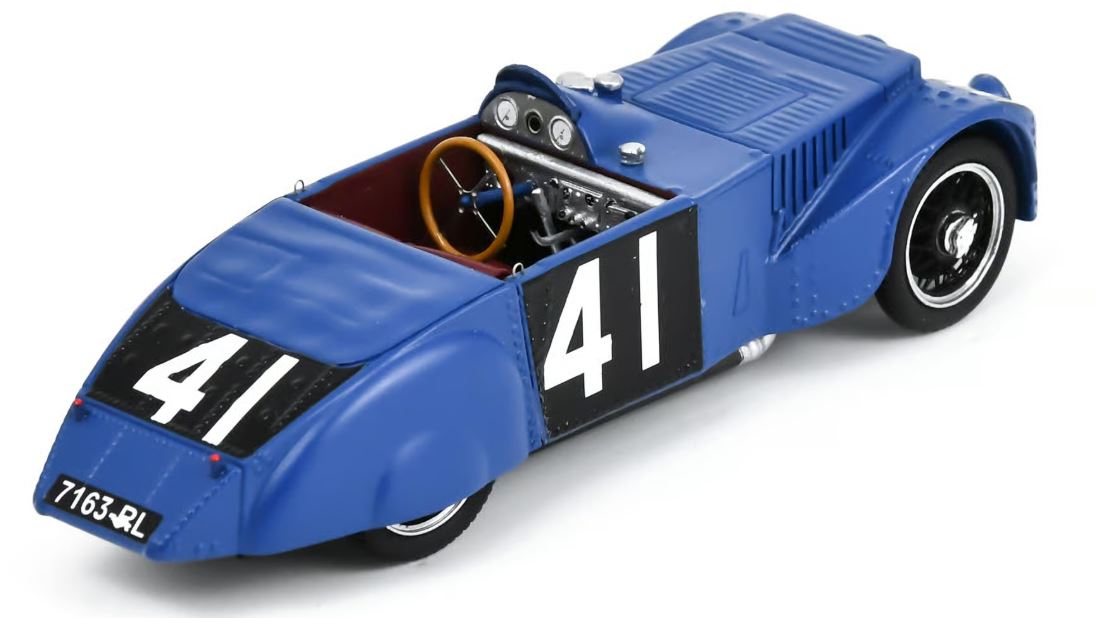 Spark: Chenard-Walcker Z1 1937 Le Mans
During the 1955 24-Hours of Le Mans, more than 80 spectators were killed, and some 120 were injured in the most horrendous accident in motor racing history. One of the cars at that race was a Salmson 2300S driven by Jean-Paul Colas and Jacques Dewez, which avoided the chaos of the infamous crash only to succumb to an oil leak after nine hours of racing. Salmson is a French engineering company. Initially a pump manufacturer, it turned to automobile and aeroplane manufacturing in the 20th century, returning to pump manufacturing in the 1960s. The Salmson 2300S, unveiled in 1953, took part in the 1955, 1956 and 1957 Le Mans 24-hour races. It was Salmson's final production vehicle, featuring a 2.3-litre aluminium-block engine capable of producing 103 horsepower and a top speed of 180 kph. During the 1955 race, driver Jean-Paul Colas provided live commentary from the cockpit of the Salmson Spyder for a local radio network, using a laryngophone and emitter. It was the first car in Le Mans history to broadcast a race live. This is another car that would be a great addition to a Le Mans collection.
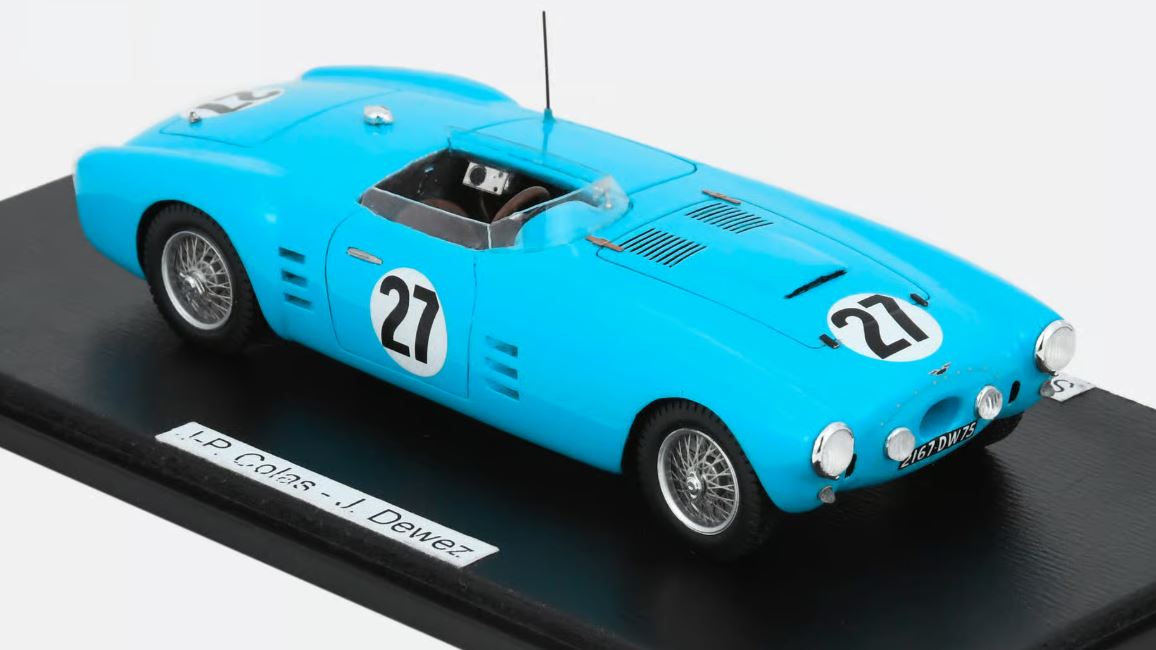 Spark: Salmson 2300S 1955 Le Mans
OK, that wraps up another monthly update. July looks like another quiet month for model car swap meets with just the Sydney Toy and Hobby Fair on Friday 3rd. It's held at the Epping Creative Centre, 26 Stanley Road, Epping 2121 starting at 6:00 pm. There is a Collector Con event on July 26th but I will not be attending this show. Until next month, happy collecting.
Formula One / Promo Vehicle
- 1960 Aston Martin DBR5, R.Salvadori (18) British GP (Spark)
- 1969 Brabham Ford BT26A, J.Brabham (8) 3rd Mexican GP (Spark)
- 1972 Tyrrell Ford 003, J.Stewart (21) 1st Argentinian GP (Spark)
- 1979 Tyrell Ford 008, D.Wilson (41) Race of Champions (Spark)
- 1980 Williams Ford FW07B, A.Jones (27) 1st British GP (Spark)
- 2023 Ford Super Van 4, M.Verstappen Red Bull Promo (du Grand Sambuc) (Spark)
Le Mans
- 1937 Chenard-Walcker Tank, Y.Giraud-Cabantous/C.Rigoulot (41) Le Mans
- 1959 Osca Sport 750 TN, P.Rodriguez/R.Rodriguez (51) Le Mans
- 1955 Salmson 2300S Spyder, J-P Colas/J.Dewez (27) Le Mans
American Racing Series
- 1966 Ford GT40 Mk2, Gurney/Grant (97) Daytona 24 Hours 2nd
- 1966 Ford GT40 Mk2, B.McLaren/C.Amon (96) Daytona 24 Hrs 1966 5th
- 1966 Ford GT40 Mk2, Hansgen/Donohue (95) Daytona 24 Hours 3rd
Road cars
- 1937 Buick Special 5-Passenger in Sandringham Maroon (Brooklin Models)
- 1952 Cadillac Series 62 4-door sedan in black (Brooklin Models)
- 1954 Hudson Italia Coupe in silver (Brooklin Models)
- 1949 Oldsmobile 98 Holiday Coupe in beige (Brooklin Models)
- 1953 Studebaker Champion Starliner in two-tone coral/ivory (Brooklin Models)
Helmets (1:5)
- 2024 L.Norris helmet Japanese GP (Spark)
- 2024 L.Norris helmet British GP (Spark)
- 2023 O.Piastri helmet Australian GP (Spark)
- 2024 O.Piastri helmet Australian GP (Spark)
- 2024 O.Piastri helmet (McLaren) (Spark)
- 2024 O.Piastri helmet Miami GP (Spark)
After Thoughts: "Unheralded F1 Driver Series #10 - Stefan Johansson"
Sweden has produced a number of Formula One drivers over the years; the most successful being Ronnie Petersen, who won 10 Grand Prix and came close to winning the championship on multiple occasions. His compatriot, Stefan Johansson, had a much lower profile, and although he did not win a GP in his 10-year F1 career, he was nevertheless talented enough to drive for Ferrari and McLaren.
Stefan Nils Edwin Johansson was born on 8 September 1956. His motor racing career followed the traditional path, beginning in kart racing, progressing through Formula Ford, and then to the British F3 championship, which he won in 1980. Johansson also made his Formula One debut that year—at the Argentine and Brazilian Grand Prix with Shadow—but did not qualify for either race he entered. His full-time F1 debut came in 1983 after a stint in Formula 2. Johansson re-entered F1 with the Spirit team and their Honda engines. In 1984, he joined Tyrrell as a mid-season replacement for the injured Martin Brundle and performed well enough to be signed by Ferrari in 1985 after René Arnoux was unexpectedly dismissed.
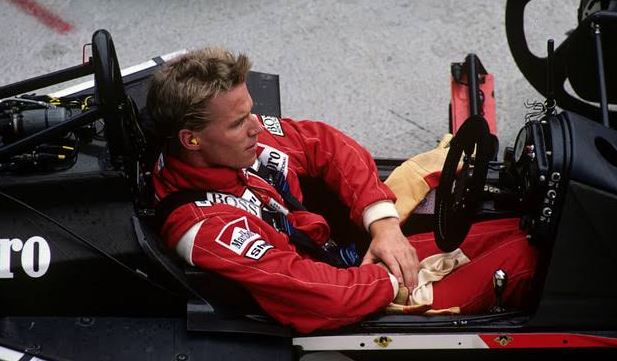 Johansson - Ferrari F1 driver 1985 - 86
During his time at Ferrari, Johansson’s role was to support Michele Alboreto’s championship bid, but in 1986 he frequently outpaced his teammate. He moved to McLaren in 1987 as Alain Prost’s number two. Despite further podium finishes, the team planned to replace him with Ayrton Senna in 1988. After 11 podiums over three seasons, Johansson remained winless and was not retained by a top team.
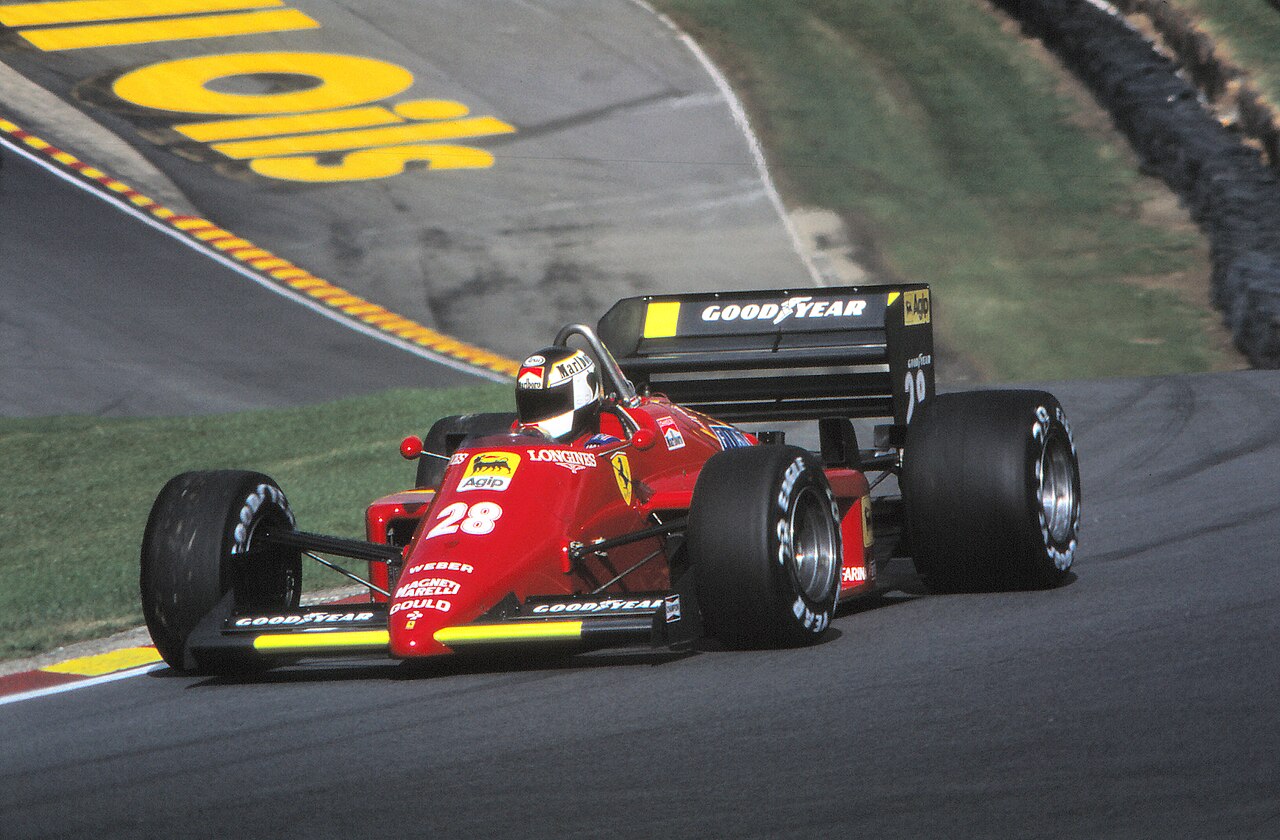 Ferrari 156/85 - 1985 European Grand Prix
He joined Ligier in 1988, but the car was highly uncompetitive, scoring no points and often failing to qualify. In 1989, he led the new Onyx team, achieving a third-place finish in Portugal, his last and the team’s only podium. He fell out with the team owner in early 1990 and was sacked, later making appearances for AGS and Footwork in 1991.
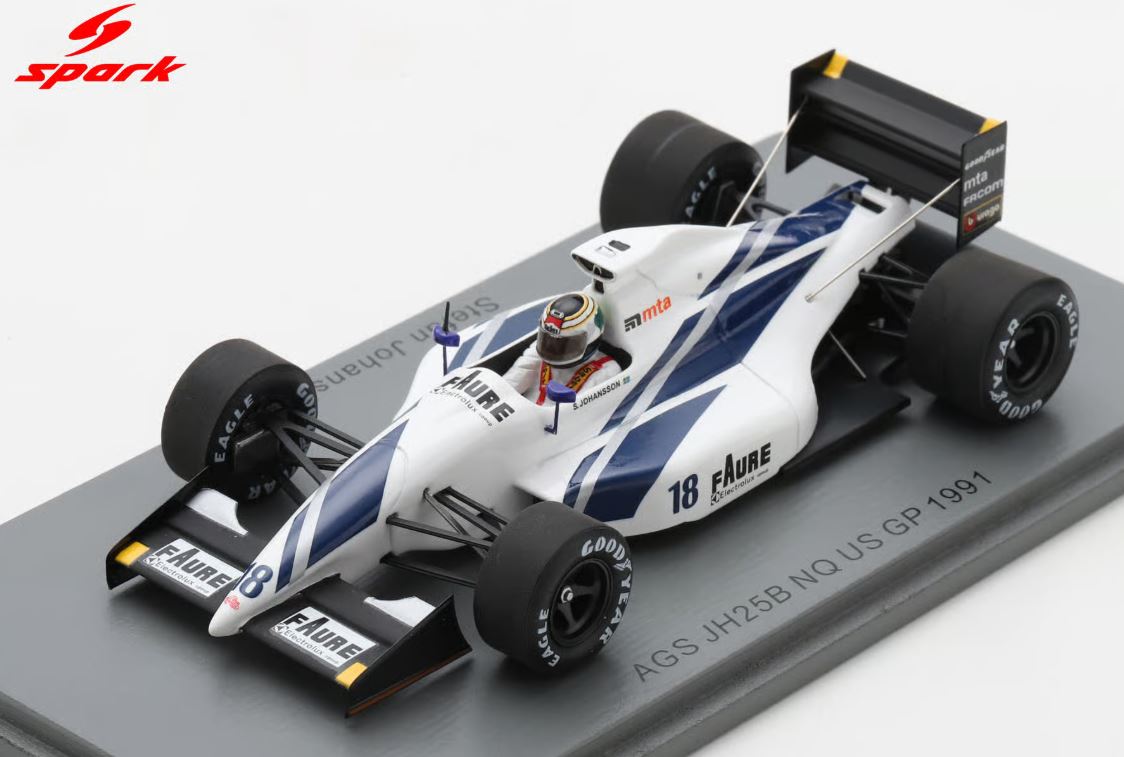 Spark: AGS Ford JH25B - 1991 DNQ US GP
In 1992, Johansson switched to the CART Championship Car series, earning the Rookie of the Year title with two third-place finishes. From 1992 to 1996, he started 74 races. His best overall season was in 1994, when he finished 11th, but he never won a race in CART. During this period, he competed in three Indy 500 races. The lowlight of his CART career came at the 1996 Molson Indy Toronto race, where he was involved in a fatal accident that claimed the life of driver Jeff Krosnoff.
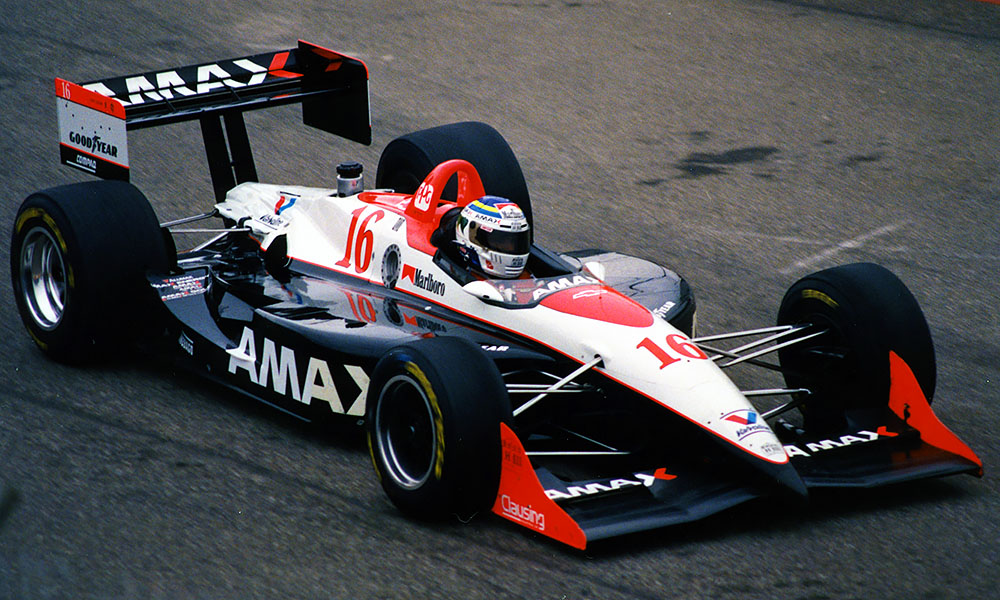 1993 PPG Indy Car Series; Penske-Chevrolet
Before his F1 career, Johansson competed in sports car races, including the 24 Hours of Le Mans, and won two World Sportscar Championship races in the 1980s. After retiring from CART at the end of 1996, he returned to sports car racing and, in 1997, won the 12 Hours of Sebring in a Ferrari 333 SP and at Le Mans driving a Joest Porsche.
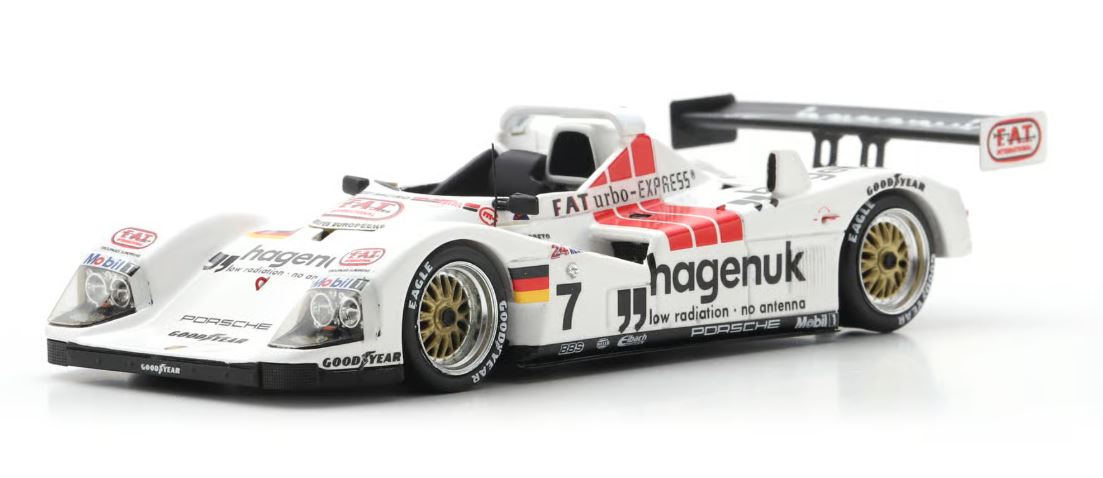 Spark: Joest TWR Porsche; 1st Le Mans 1997
In 2003, Johansson returned to CART as a team owner, running American Spirit Team Johansson with drivers Jimmy Vasser and Ryan Hunter-Reay. The team was underfunded, and despite a surprise win in Australia by Hunter-Reay, it folded at the end of the season. After sporadic sports car races in 2004, Johansson returned to full-time racing in 2005, driving a Chip Ganassi Lexus Riley Daytona Prototype in the American Grand-Am Series. In 2012, Johansson returned to the 24 Hours of Le Mans, racing a Lola B12/80. He effectively retired from professional top-tier racing around 2017.
Outside the cockpit, Johansson has a number of business ventures, including managing several successful drivers such as Scott Dixon, Felix Rosenqvist, and Romain Grosjean. He is also a keen artist, particularly known for his watch designs.
New Additions: June 2026
Welcome to the June update. Can you believe it - we are already approaching mid-year, time seems to fly by so quickly, and winter has arrived. Can you feel the crispness in the air? One thing about our hobby is that it's enjoyed indoors, and perhaps now is the time to rearrange your display cabinet(s) to make room for some more models. If, by chance, you have room for some more Ferrari F1 models, then I may be able to help you. I managed to acquire a number of Ferrari F1 models by Altaya, ranging from Gonzales' 1951 British GP winning car to the 2001 car that Schumacher drove to win the Championship. Also, a handful of Solido road cars made it into my inventory, one of which did catch my attention ...
The Pandem and Rocket Bunny brands are owned and founded by Kei Miura, a legendary Japanese automotive designer and former street racer. He is the CEO and mastermind behind TRA Kyoto, the fabrication headquarters in Kyoto, Japan, that designs and produces Rocket Bunny and Pandem aero and widebody kits. TRA Kyoto has earned global recognition for its uncompromising approach to custom aero parts, widebody kits, and motorsport-inspired automotive design. Known for their aggressive styling, exposed bolt-on fender flares, and massive wings, these body kits completely transform the shape, stance, and aerodynamics of tuner cars. The 1:43 Solido model of the iconic Datsun 240Z, clothed with the Pandem body kit, gives the car some serious street-cred. Collectors of JDM cars would be happy with this model.
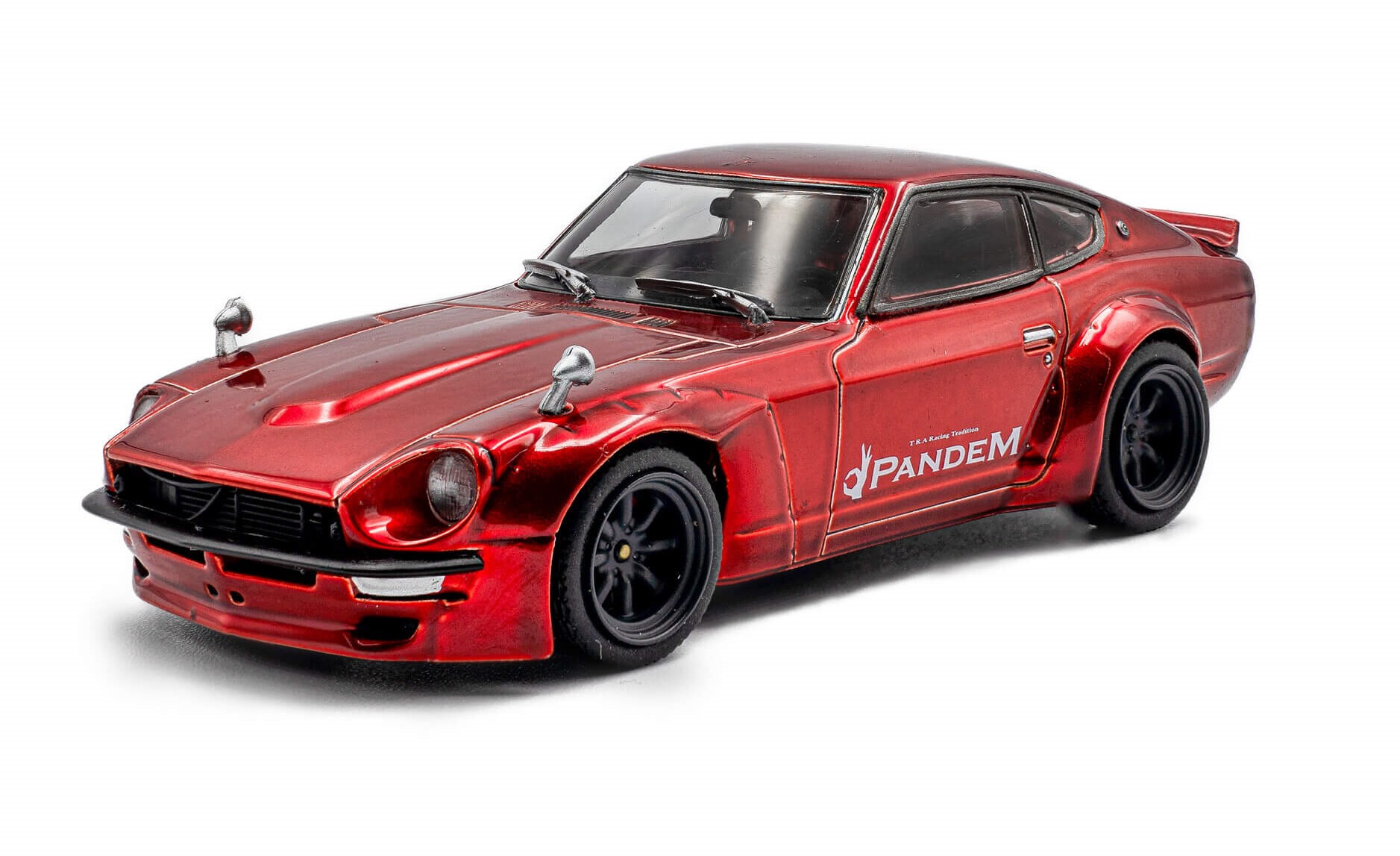 Solido model: Datsun 240Z Pandem
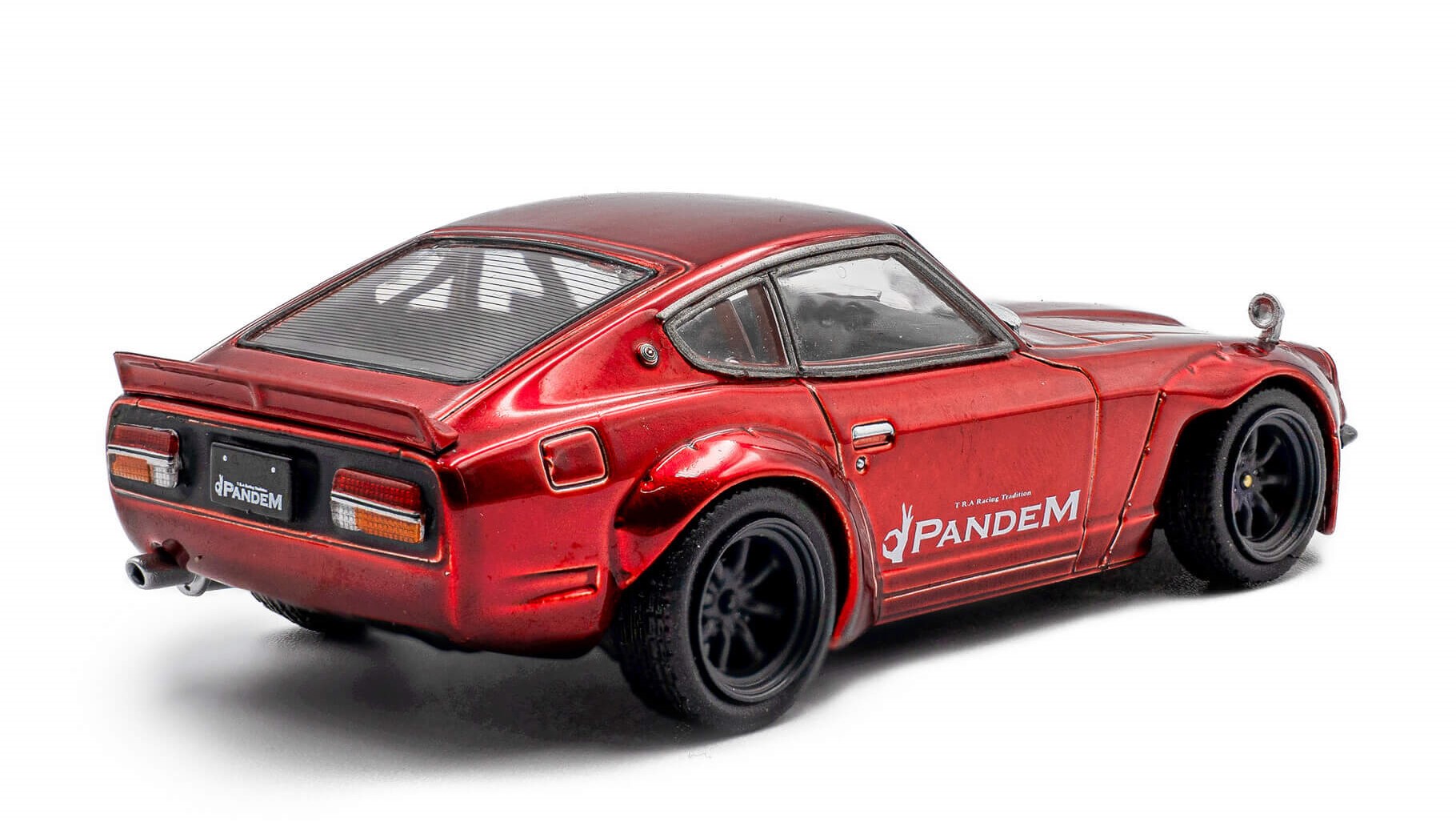 Solido model: Datsun 240Z Pandem - rear view
Okay, that's it for another monthly update, so what's on in June? The regular Sydney Toy and Hobby Fair is on 5th June at the Epping Creative Centre, 26 Stanley Road, Epping starting at 6:00 pm. That's it, another quiet month, until next time, happy collecting.
Formula One
- 1951 Ferrari 375, F.Gonzales (12) winner British GP (Altaya)
- 1953 Ferrari 553 Squalo, P.Carini (12) Italian GP (Altaya)
- 1955 Ferrari 625, M.Trintignant (44) (Altaya)
- 1956 Ferrari D50, J.M.Fangio (1) World Champion (Altaya)
- 1957 Ferrari 801, L.Musso (10) (Altaya)
- 1961 Ferrari 156, P.Hill (2) World Champion (Altaya)
- 1964 Ferrari 158, J.Surtees (2) World Champion (Altaya)
- 1965 Ferrari 512, P.Rodriguez (14) (Altaya)
- 1968 Ferrari 312 F1, J.Ickx (26) (Altaya)
- 1971 Ferrari 312B2, C.Regazzoni (5) (Altaya)
- 1973 Ferrari 312B3, A.Merzario (4) (Altaya)
- 1975 Ferrari 312B3, C.Regazzoni (11) Brazillian GP (Altaya)
- 1977 Ferrari 312T2, N.Lauda (11) World Champion (Altaya)
- 1979 Ferrari 312 T4, G.Villeneuve (12) (Altaya)
- 1986 Ferrari F1-86, S.Johansson (28) (Altaya)
- 1990 Ferrari F1-90, A.Prost (1) (Altaya)
- 2001 Ferrari F2001, M.Schumacher (1) World Champion (Altaya)
Road Cars
- 1999 BMW M3 (E36) Coupe in yellow (Solido)
- 2024 BMW M5 Sedan in fire orange (Solido)
- 1973 Datsun 240Z Pandem in metallic red (Solido)
- 1994 Mercedes E60 AMG in signal red (Solido)
1:18 Models
- 1991 Mazda 787B, Weidler/Herbert/Gachot (55) Le Mans Winner (WERK83)
- 1971 Porsche 917K, Marko/Van Lennep (22) Le Mans winner (WERK83)
After Thoughts: "Hammer Time at the 1932 Mille Miglia"
When Lewis Hamilton's race engineer tells him that it's "hammer time", it's a signal to put his foot down and push the car to its absolute limits prior to coming into the pits to execute an under or over-cut. However, at the 1932 Millie Miglia, hammer time meant something entirely different.
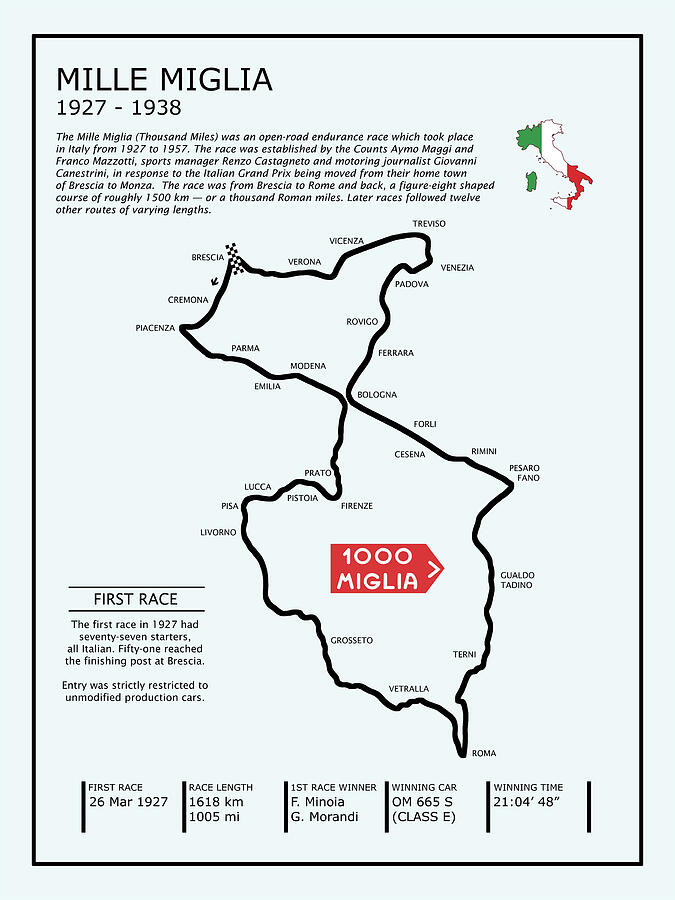
Count Aymo Maggi, along with several other prominent Brescia residents had a dream of a 1000-mile race through Italy, starting and finishing in Brescia and taking place on public roads which would not be closed for the duration. The ambitious proposal appealed to Italian leader Benito Mussolini and in 1927 the first Mille Miglia was held. For the race in 1932, Italian driver Giuseppe Campari was the red-hot favourite to win the race; he had won in 1928 and 1929, finished third in 1930 and second in 1931, and he was driving the dominant Alfa Romeo 8C 2300. In recent years Alfa Romeos had reigned supreme and in the 1932 event, the marque provided almost half of the entire 88-car entry. There were works cars for Campari, Rudolf Caracciola, Baconin Borzacchini and Tazio Nuvolari, as well as several Alfas from Scuderia Ferrari led by Piero Taruffi. Competition to the Alfas were provided by Lancia, Bugatti, Talbot and others.
Giuseppe Campari was born in Fanfulla near Milan, on 8 June 1892. He joined Alfa Romeo in his teens as a mechanic, soon becoming a test driver, and eventually racing for Alfa for twenty years. He was a larger than life character; one could hardly find a man who looked less like a racing driver than Campari. He weighed over 100 kg and his big enjoyments in life except for racing was good food and Grand Opera. He had, in fact, sung opera professionally and he was known to belt out an aria in his fine baritone voice while roaring down the road.
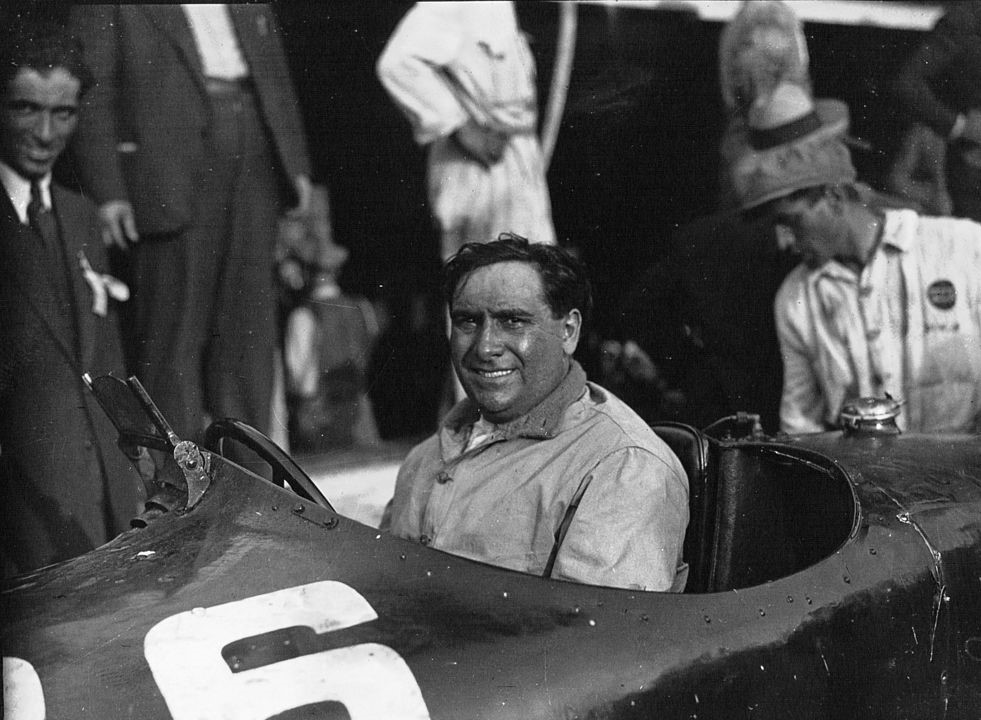 Photo: Giuseppe Campari
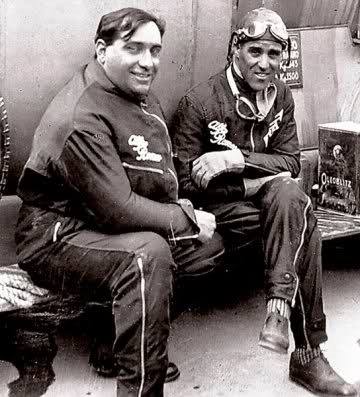 Photo: Alfa team mates, Campari (L), Nuvolari (R)
The 6th Mille Miglia started on April 9, 1932. In the first section from Brescia to Bologna, Campari was not in the leading trio. His teammate Nuvolari led from Varzi (Bugatti) and Caracciola with all three averaging over 160 kph for the stage. By the time the lead cars reached Florence, Caracciola was ahead of Campari and Taruffi; Nuvolari had retired after crashing into a tree. The order for the run into Rome was Caracciola, Taruffi and Campari. But Campari soon overhauled Taruffi and he began to scent another famous win as they headed back to Brescia. After overtaking Taruffi, he was now only 35 seconds adrift of Caracciola with Borzacchini now in third.
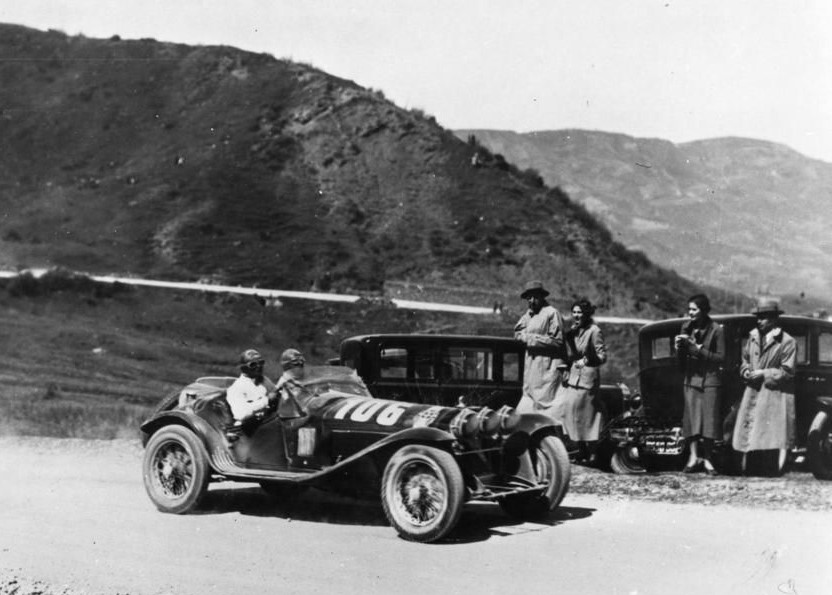 Photo: Borzacchini, winner of the 1932 Mille Miglia
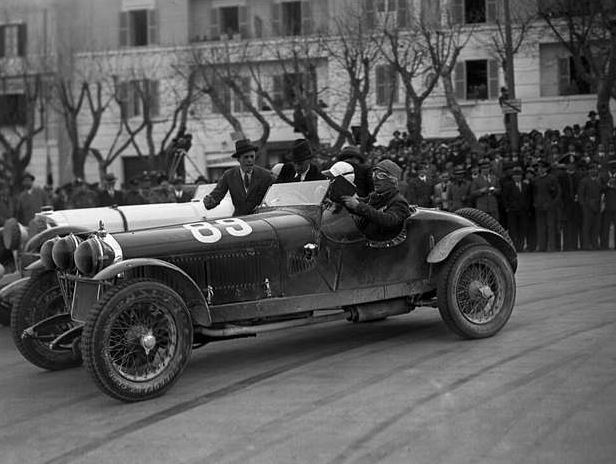 Photo: Luigi Scarfiotti and Guido d'Ippolito drove entry #89, an Alfa Romeo 6C 1750 GS, at Mille Miglia on 10 April 1932. They raced for the Scuderia Ferrari team and ended in 3rd place
Building up a veritable head of steam, the burly Campari powered on and had surged into the lead as he approached the Adriatic coast. However, such flat-out driving over winding roads had taken its toll and Campari decided to let his mechanic, Sozzi, have a turn at driving so that the great man could take a breather in preparation for the final run to Brescia. No sooner had Sozzi taken over the driving, he crashed the Alfa into a wall, putting himself and Campari out of the race. Perhaps understandably, Campari was most displeased and chased the fearful Sozzi down the road brandishing a hammer from the tool box. Fortunately for Sozzi, while he may not have been the faster driver, he was the faster runner. Campari's mishap left Borzacchini to inherit the lead and he drove into Brescia for a famous victory. Campari, perhaps justifiably, maintained that victory should have been his.
The following year, Campari, now aged 41, decided to leave motor racing and make a new career as an opera singer. Driving an Alfa P3, he was to start his last race in front of his home crowd at the 1933 Monza GP. He lost control on the first lap on oil dropped by another competitor and his car went over an embankment. After having survived 20 years of racing without any major injuries Campari was crushed underneath his inverted car and died instantly. Borzacchini also died in the same race.
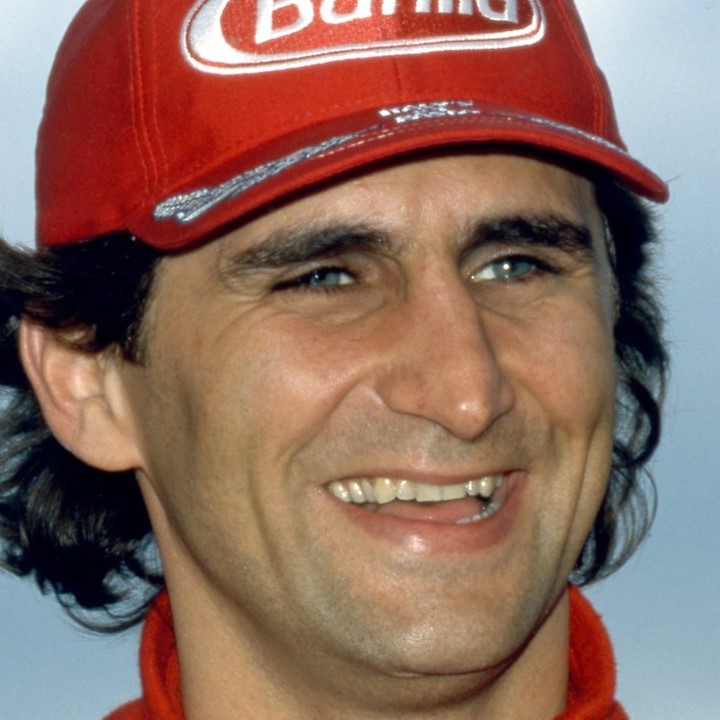 Vale: Alex Zanardi, Italian F1 Driver. (23/10/66 - 1/5/26)
New Additions: May 2026
Welcome to another monthly. Who would have thought the situation in Iran would still be unresolved some eight weeks after it started? The economic consequences of this prolonged conflict doesn't bear thinking about. But, hopefully our hobby will bring some joy. A few new Spark models have landed and one particular model deserves a special mention.
You don’t really associate Jack Brabham as a sportscar driver but his early racing career saw several notable sportscar achievements; first in the 1958 Nurburgring 1000Km with Stirling Moss and second in the Tourist Trophy at Goodwood with Roy Salvadori driving works Aston Martin DBR1's. But he was so busy in the 1960’s with F1 that he simply didn’t have the time for sportscars. Then in 1969, Jack told his wife, Betty that he would retire at the end of the season but when Jochen Rindt decided not to race for Brabham in 1970, he was required to race for another year and he had one of his busiest seasons. At the age of 44, he raced F1, F2, Indy and most of the endurance events that Equipe Matra Elf contested in 1970. His decision to race Matra sports prototypes was mainly to keep his skills sharp against the younger F1 drivers, although there is some suggestion he was also quietly evaluating the Matra 3.0L V12 as a possible engine for his F1 team. He competed as a guest driver, enjoying the pressure-free role compared to running his own F1 team. Matra’s primary 1970 tool was an updated 1969 Matra MS650, the new MS660, which made its debut at Le Mans. However, the car raced at Le Mans by Brabham and Francois Cevert was the earlier MS650, but it retired with engine failure on lap 76. This model by Spark would be a welcome addition to any Brabham or Le Mans collection.
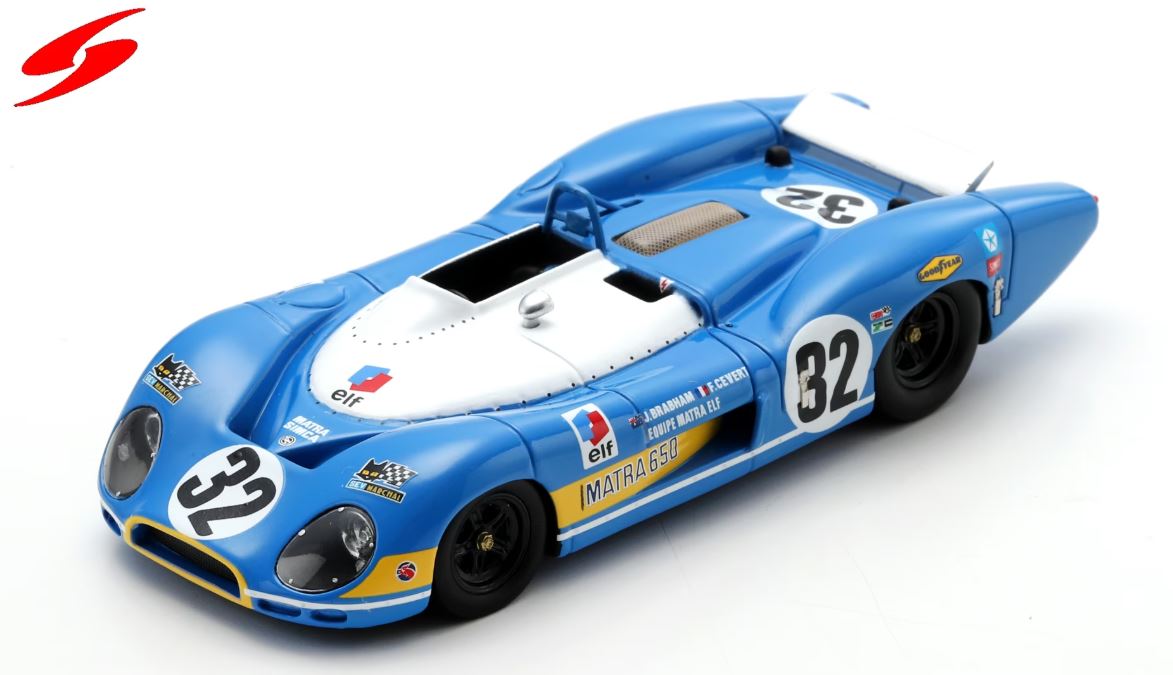 Spark: Matra MS650 Brabham/Cervert 1970 Le Mans
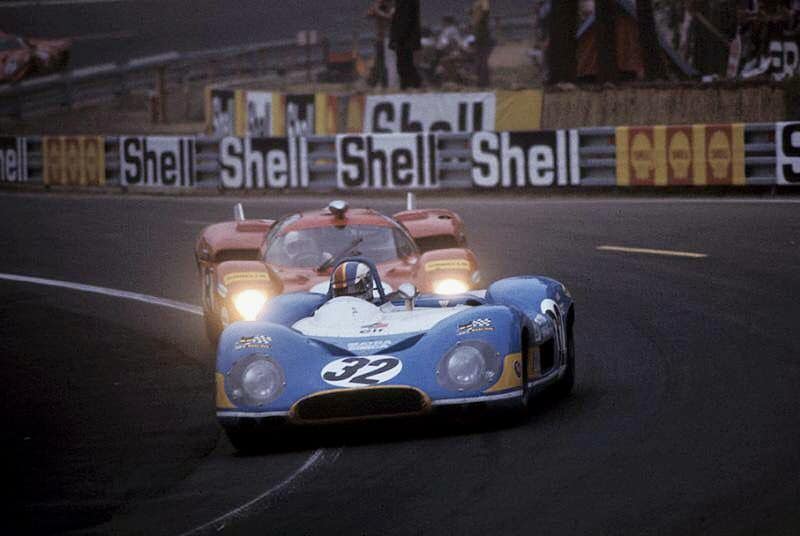 Matra 650 at 1970 Le Mans; Cervert at the wheel
Okay, that's it for another monthly update, so what's on in May? The regular Sydney Toy and Hobby Fair is on 1st May at the Epping Creative Centre, 26 Stanley Road, Epping starting at 6:00 pm. The Penrith Collector Con is on 31st May, but I will not be attending this event. Until next month, happy collecting.
Formula One
- 1961 Ferrari 156, W. von Trips (4) race car (Altaya)
- 2023 McLaren Mercedes MCL60, O.Piastri (81) 4th Great Britain GP (Solido)
Le Mans
- 1966 CD Peugeot SP66, Laurent/Ogier (51) Le Mans (Spark)
- 1966 CD Peugeot SP66, Heligouin/Rives (53) Le Mans (Spark)
- 1991 Cougar Porsche C26S, Migault/Robert/Raulet (12) Le Mans (Spark)
- 1991 Cougar Porsche C26S, Dumfries/Olofsson/Danielsson (13) Le Mans (Spark)
- 1961 DB Panhard HBR 5, Caillaud/Mougin (52) 22nd Le Mans (Spark)
- 1969 Matra Simca MS650, Beltoise/Courage (33) 4th Le Mans (Spark)
- 1970 Matra Simca MS650, J.Brabham/Cevert (32) Le Mans (Spark)
- 1980 Mazda RX-7, Soto/Honegger/Hutchins (86) Le Mans (Spark)
- 1931 Mercedes SSK, Ivanowski/Stoffel (1) 2nd Le Mans (Spark)
American Racing Series
- 1957 Aston Martin Chevrolet DB3S, J.Graham (4) 3rd Cotati Pacific Coast C'ships (Spark)
- 1965 Ford GT40, Miles/McLaren (11) 2nd Sebring 12 Hour (Spark)
- 1965 Ford GT40, Bondurant/Ginther (72) 3rd Daytona 2000km (Spark)
Road Cars
- 2003 BMW 645Ci Cabrio in silver (Kyosho)
- 2003 BMW 645Ci Coupe in white (Kyosho)
- 2004 BMW 545i Sedan in silver (Kyosho)
- Shelby GT350 Convertible in red (Kyosho)
1:18 Model
- 1963 EH Holden Special in gold - released by The Diecast Magazine (Classic Carlectables)
After Thoughts: "The Forgotten F1 Circuits Series #9 – Circuito de Monsanto (Portugal)."
Some F1 racing circuits have stood the test of time to become legends of the sport, such as the Monaco and Monza Circuits. Others flicker briefly into existence, and then vanish into obscurity. The Circuito de Monsanto (Monsanto Park Circuit) in Portugal belongs firmly in this latter category— a one-off Formula One venue that combined danger, high temperatures and sheer unpredictability. Nestled within Lisbon’s sprawling Monsanto Forest Park, the 5.44 km (3.38 mile) circuit was a patchwork of public roads stitched together through dense woodland. It was raw, uneven, and utterly unforgiving. Drivers faced a constantly changing surface—tarmac blending into cobbles, even tramlines cutting across the racing line—making it one of the most technically demanding circuits of its era.
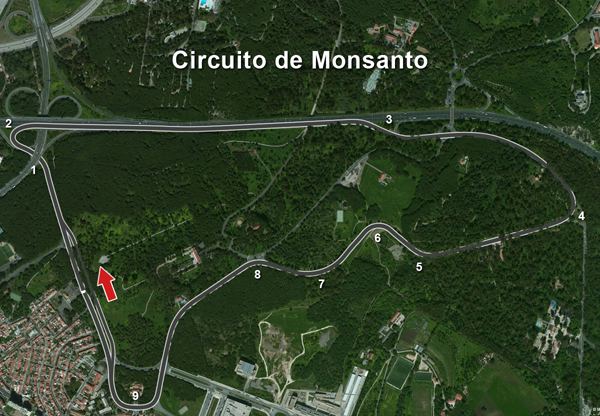 Circuito de Monsanto track layout
Long before it hosted Formula One, Monsanto was already central to Portuguese motorsport. The area’s racing roots stretch back to 1910, when a modest hillclimb marked the country’s first organised motorsport event. By the 1930s, a large-scale reforestation project transformed the barren Monte Santo into the lush Monsanto Forest Park and racing returned in earnest in 1953 with the Automóvel Club de Portugal’s Jubilee Grand Prix, a sports car event. That inaugural event produced an early moment of notoriety when Argentine driver José Froilán González crashed heavily at the Lake Hairpin. In a gesture of characteristic Portuguese humour, the corner was later named after him.
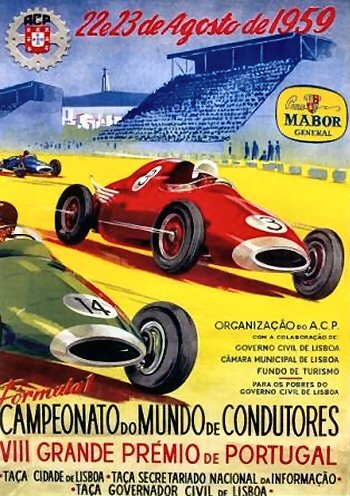 1959 Portuguese GP poster
Despite hosting several races throughout the 1950s, Monsanto’s time in Formula One came just once: the 1959 Portuguese Grand Prix. There wasn't a large field at Monsanto for the Grand Prix; the disappointing Aston Martins made only their second appearance at this event while Mario de Araujo Cabral represented the local racing scene despite having never raced an open-wheel car before. Stirling Moss in his Rob Walker entered Cooper was on pole with a 2min02s time, two whole seconds better than championship leader Jack Brabham in second. Coopers occupied the top four spots on the grid.
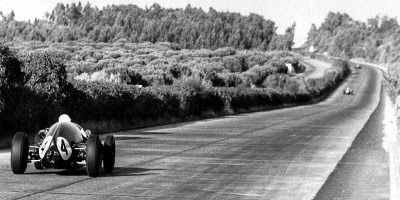 Moss (#4) was in a class of his own.
The race was deliberately started late in the day to avoid the oppressive Lisbon heat, meaning the closing laps were concluded in fading light. From the very start, the race was Stirling Moss' to lose. He had a substantial lead from the end of lap 1 and managed to lap the entire field in an absolute masterclass of driving.
Meanwhile, Jack Braham had a near-tragic race. Firstly, at 120 mph, he had to avoid a small boy who ran across a section of track, then a few laps later, he had to avoid a careless official that just so happened to step onto the track. Then on lap 23, Brabham set himself up to lap de Araujo Cabral through the infamous González bend. Being a little too eager, he rubbed against the privateer and lost control. He skidded into a concrete telegraph pole and was thrown out onto the track from the rolling Cooper. His teammate, Masten Gregory, was completely unsighted and missed Brabham by mere centimetres. Brabham somehow escaped with a bruised knee, but could only watch as Stirling Moss went on to win the race and close the championship gap.
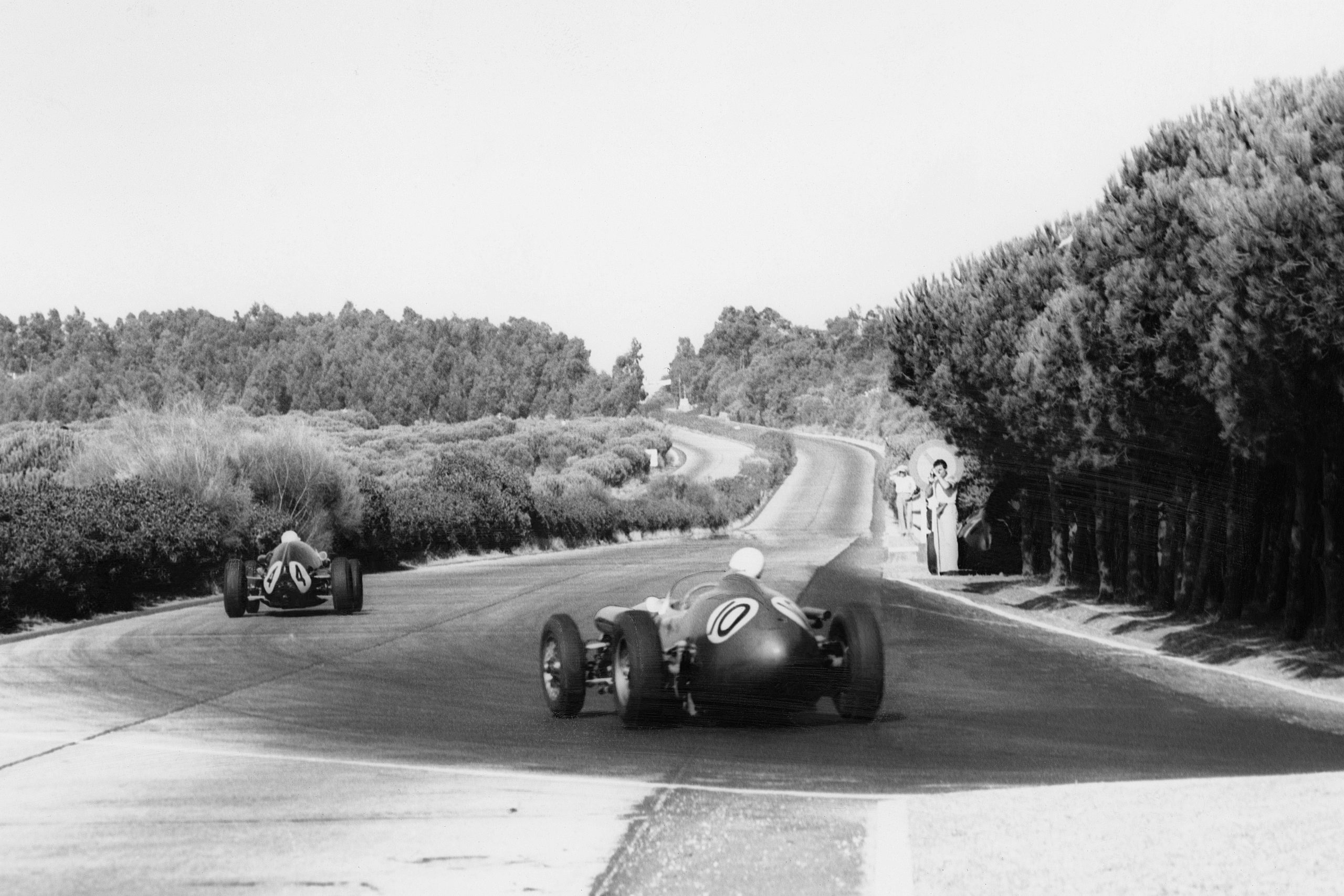 Roy Savadori (Aston Martin #10) was lapped 3 times by Moss (Cooper #4)
Despite the race starting at 5 pm to avoid the Portuguese summer heat, the temperature was still blisteringly hot for both drivers and cars. So when Joakim Bonnier broke down on the entrance to the Autostrada after ten laps, he and photographer Bernard Cahier set up a refreshment point around the spot of Bonnier's broken car. They were on standby, handing out water bottles and splashing passing drivers with water from Bonnier's helmet.
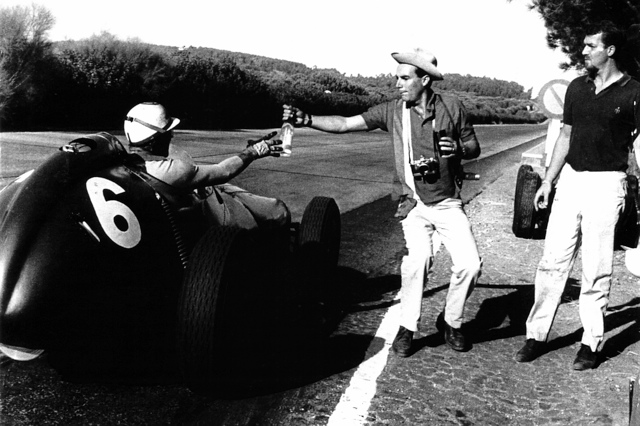 Bernard Cahier handing a bottle to Harry Schell (BRM) at the slowest corner of the track.
In an era when safety standards were rapidly evolving, Monsanto’s dangers were impossible to ignore. The narrow roads, unforgiving obstacles, and inconsistent surfaces left little margin for error. Following the 1959 race, Formula One abandoned the circuit entirely, the Portuguese GP returning instead in 1960 to the more established Boavista street circuit in Oporto. Although racing continued at Monsanto for a few more years, the writing was on the wall. By 1971, the circuit was closed for good. Today, Monsanto stands as a fascinating footnote in Formula One history.
[Back to Top]
New Additions: April 2026
Welcome to another monthly update. This update comes at a time of increasing uncertainty; petrol prices are on the rise but of more concern is will we run out of fuel completely? Everyone with an electric car is probably feeling quite smug right now. Anyway, we can take our mind off the chaos in the Middle East by focusing on our hobby; at least model cars don't burn any fuel. A few new models arrived this month with a good mix of F1, Rally, Le Mans, and road cars to tempt you. OK, what do I think are the stand out models?
The Aston Martin F1 team is in a whole world of hurt at the moment with their current AMR26, and it was much the same story with their first F1 car, the DBR4. The history of this F1 team dates back to the late 1950's. Industrialist David Brown, who had acquired Aston Martin in 1947, recognised the potential that existed for the company if he could take it racing on international circuits. A purpose-built sports car, the DB3S made its Le Mans debut in 1952. Following the success of its sports car racing programme, culminating in an outright win at Le Mans in 1959, the company decided to enter the F1 championship. The Aston Martin DBR4 open-wheeler was largely based on the DB3S, borrowing the sports car's basic chassis and engine layout. The DBR4 made its World Championship debut at the 1959 Dutch GP in the hands of Roy Salvatori and Carroll Shelby. But, an overly long development period for their car meant that much of its concept and technology were obsolete when it finally went racing. The bodywork of the DBR4 appeared streamlined but the effect was spoilt by the large air intake mounted on the side of the bonnet and by the installation of a relatively tall, near vertical windscreen. The DBR4 also used the de Dion suspension system, however, the other F1 teams were already moving to all-round independent suspension. At the Dutch GP both cars suffered terminal engine problems. The F1 programme suffered further delays and the DBR4 only appeared in another three races that season. The best results were two sixth place finishes for Salvatori. In 1960, recognising the DBR4 failings, it was replaced by a lighter, smaller and more powerful DBR5. By the end of the year, Aston Martin had decided to scrap their brief venture into F1 to concentrate entirely on sports car racing. Spark has produced this significant car that was raced by Shelby at the British GP, a must have for F1 and Aston Martin collectors.
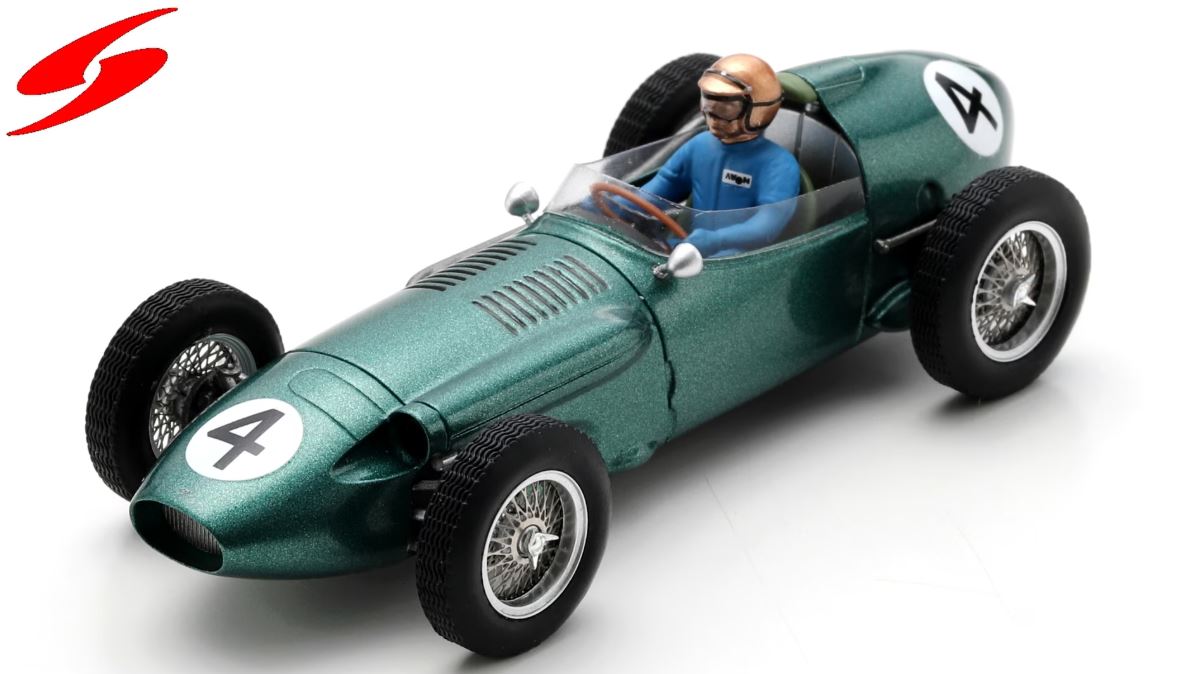 Spark: Aston Martin DBR4, 1959 C.Shelby (S8136)
It's not often we get to celebrate great Australian rally drivers through model cars. So, it's welcome news that Spark has released a 1:43 model (S7765) of the Datsun Stanza that George Fury and Monty Suffern drove to victory in the 1978 Southern Cross Rally. For the majority of his career, Fury was associated with Datsun/Nissan, twice winning the Australian Rally Championship in 1977 and 1980. Fury also twice won the Southern Cross Rally in 1978 and 1979. The 2727-kilometre Southern Cross Rally was a major international rally mainly held in the Port Macquarie region of New South Wales, between 1966 and 1980. The rally attracted many of the world's leading rally drivers and factory teams. This race-winning car is currently part of the Nissan Museum collection in Zama, Japan (https://www.nissan-global.com/EN/HERITAGE_COLLECTION/)
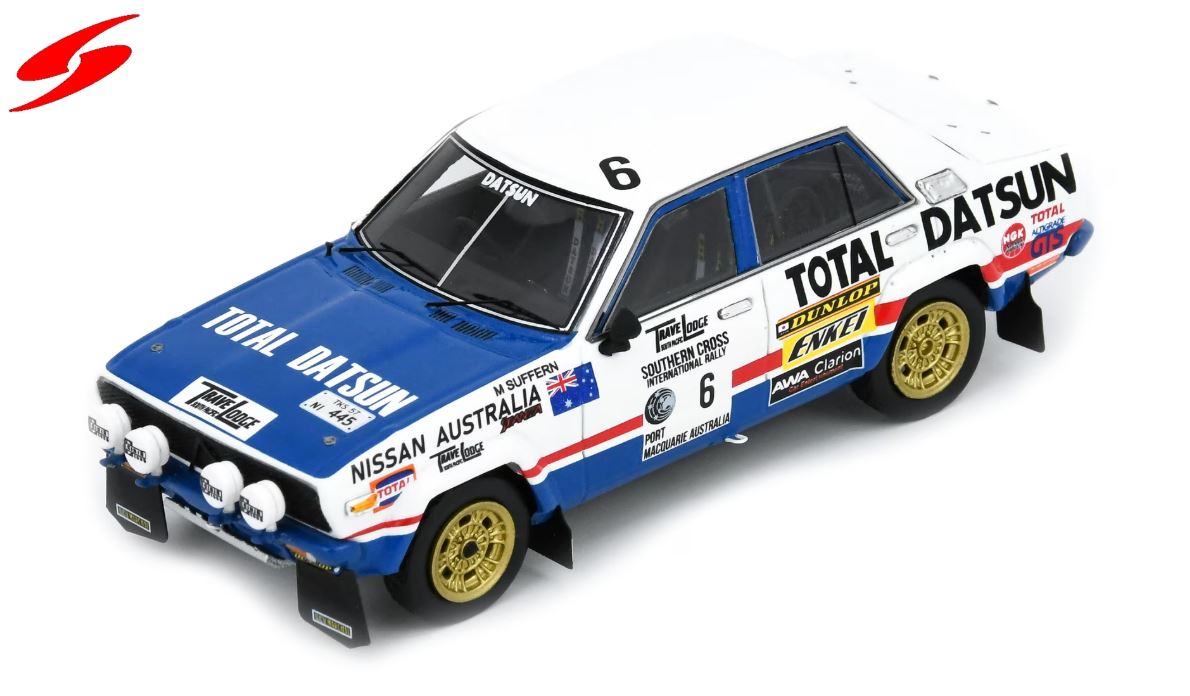 Spark: Datsun Stanza 1st 1978 Southern Cross Rally
Ok, that wraps up another monthly update, so what's happening in April? Not a lot is the answer. Unfortunately, the regular Sydney Toy and Hobby Fair will not be held as it falls on the Good Friday holiday. There is a Collector Con event in Newcastle on 19 April but I will not be attending. Before I sign off, I would like to mention that Sir Jack Brabham was born 100 years ago, on 2 April 1926 in the Sydney suburb of Hurstville - a true Australian legend. Until next month, happy collecting.
Formula One
- 1983 Alfa Romeo 183T, M.Baldi (23) 6th Monaco GP (Spark)
- 1959 Aston Martin DBR4, C.Shelby (4) British GP (Spark)
- 1972 Brabham Ford BT38, W.Fittipaldi (20) 4th Hockenheim GP F2 (Spark)
- 1992 Brabham Judd BT60B, G.Amati (8) South African GP DNQ (Spark)
- 1976 Citroën DS Break, Team Ligier F1 support vehicle (Spark)
Rally Cars
- 1978 Datsun Stanza, G.Fury/M.Suffern (6) 1st Southern Cross Rally (Spark)
- 1972 Renault 16 TS, Le Tahitien/Duprès (34) Rallye du Maroc (Spark)
- 1976 Renault 17, Privé/Tilber (16) 6th Rallye du Maroc (Spark)
Le Mans
- 1938 Alfa Romeo 8C 2900B, R.Sommer/C.Biondetti (19) Le Mans (Spark)
- 1967 Chaparral 2F, P.Hill/M.Spence (7) Le Mans (Spark)
- 1937 Chenard-Walcker Tank, Cotet/Roux (40) Le Mans (Spark)
- 1982 GRID-Plaza Cosworth S1, de Villota/de Cadenet/Wilson (37) Le Mans (Spark)
- 1982 GRID-Plaza Cosworth S1, Wood/Stiff/Ratcliff (49) Le Mans (Spark)
- 1976 Porsche 934 Turbo, Schenken/Hezemans (57) 16th Le Mans (Spark)
Road Cars
- 1975 BMW 318 in dark blue (Minichamps)
- 1961 Porsche 356B Coupe in silver (Minichamps)
- 1996 Porsche Boxster (986) in silver (Schuco)
- 1999 Porsche Boxster S (986) in dark blue (Minichamps)
- 2005 Porsche 911 (997) Carrera S cabrio in yellow (Minichamps)
- 2005 Porsche Cayman S (987) in white (Minichamps)
- 2011 Porsche 911 (991) Turbo Cabrio in silver (Minichamps)
- 2012 Porsche 911 (991) Carrera S cabrio in black (Minichamps)
- 1964 Renault R8 Gordini in blue (Minichamps)
After Thoughts: "A Tale of Two Engines: The BRM H16 and the Repco V8."
“It was the best of times, it was the worst of times…” wrote Charles Dickens — a line that perfectly captures the contrasting fortunes of Formula One’s most fascinating engines of the 1960s. In 1966, the sport entered a bold new era as engine capacity doubled to 3.0 litres. Engineers were handed a blank canvas, some responded with complexity and ambition; others with simplicity and pragmatism. Nowhere is that contrast clearer than between the BRM P75 H16 and the Repco RB620 V8.
British Racing Motors took perhaps the most radical path of all. Instead of designing a conventional V8 or V12, BRM effectively stacked two flat-eight engines on top of each other to create the extraordinary P75 H16. On paper, it was staggering. A 3.0-litre, 16-cylinder engine with 64 valves, capable of 10,000 rpm and beyond. It was compact in length and, crucially, could be used as a stressed chassis member — a theoretical advantage over rival designs. In reality, it was something else entirely.
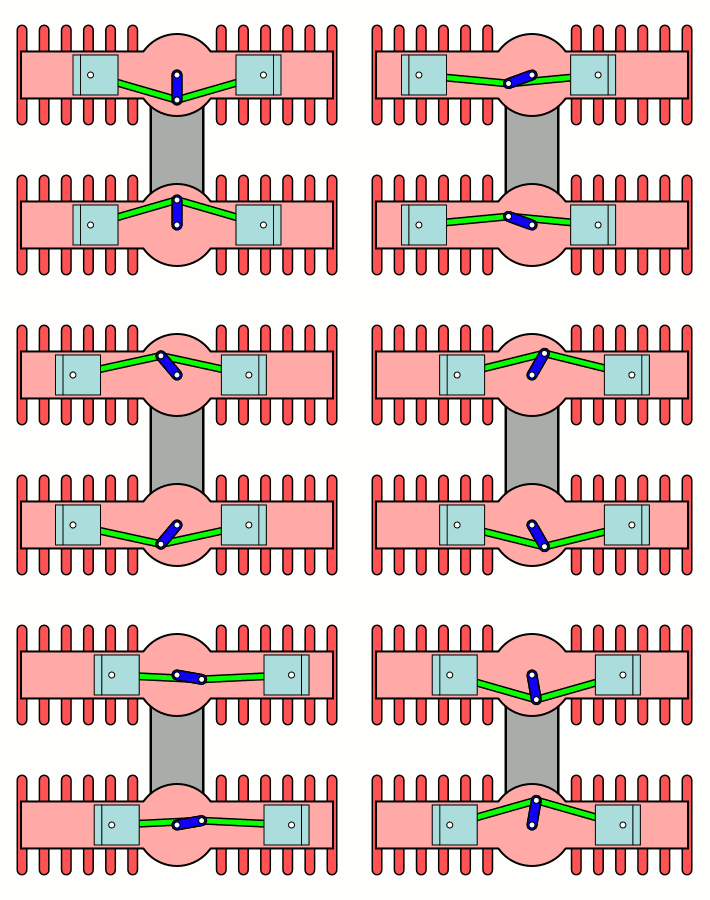 The H engine concept
The H16 was immensely complex. Each “layer” of the engine required its own systems — fuel metering, ignition, cooling — all geared together into a single output shaft. The result was a dense, heavy unit that in practice produced closer to 400 horsepower, well below its projected potential. Worse still, it was fragile. Persistent crankshaft vibration plagued the engine from the outset. Quick fixes, such as bolt-on balancing weights, often made matters worse — occasionally detaching themselves with catastrophic consequences. The sheer intricacy of the design led to endless failures, contributing to 27 retirements from just 40 race starts.
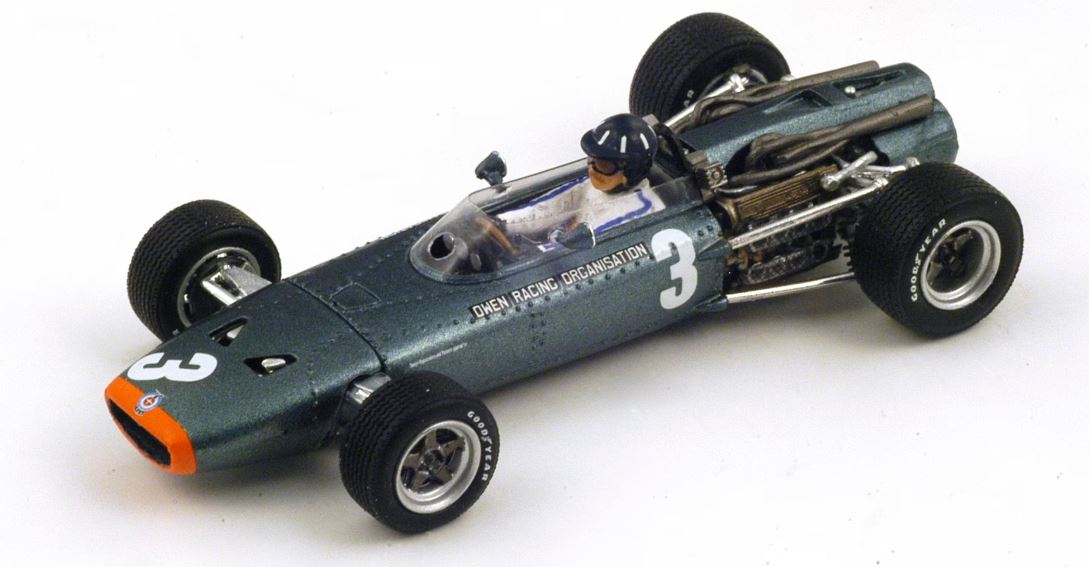 Spark: BRM P83 1966 US GP G.Hill (S4253)
Even drivers were unimpressed. Jackie Stewart famously criticised it as unnecessarily large and heavy, noting its appetite for fuel, oil and cooling — all of which compromised handling and agility.
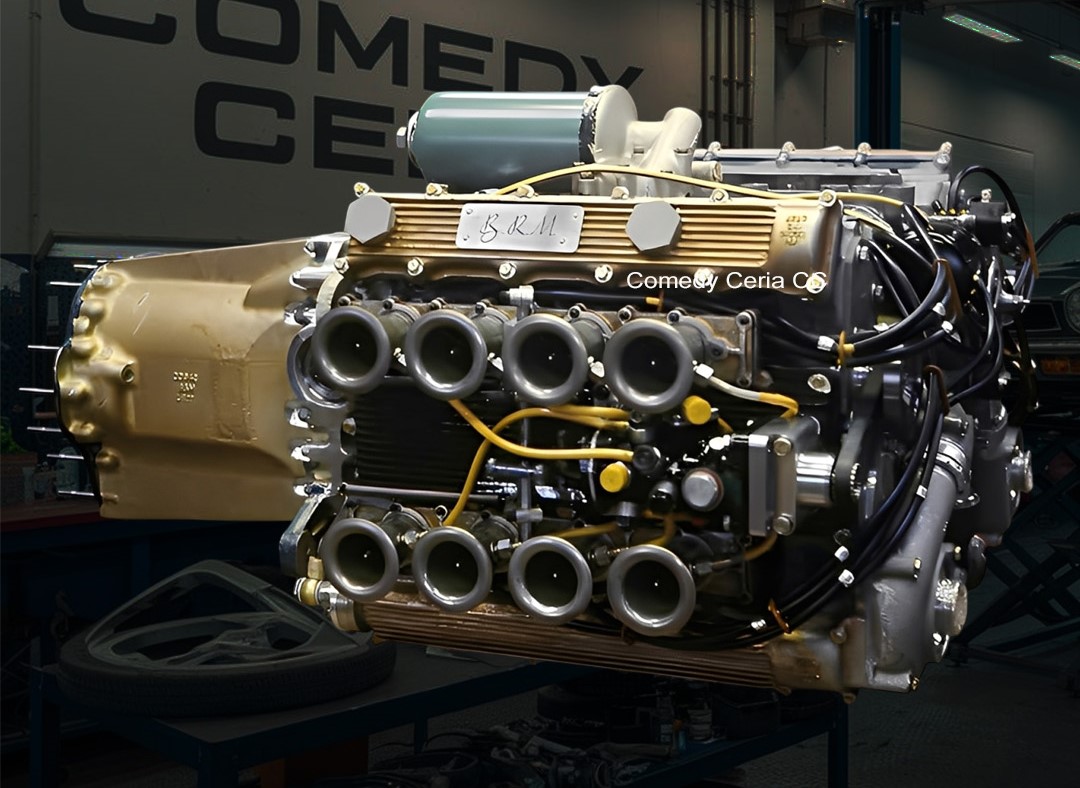 BRM P75 H16 3-litre engine
Yet, for all its flaws, the P75 H16 did achieve a moment of glory. In the 1966 United States Grand Prix, Jim Clark drove the Lotus 43 to victory, securing the engine’s only win. It was a brief moment of triumph for one of the most audacious engines ever conceived.
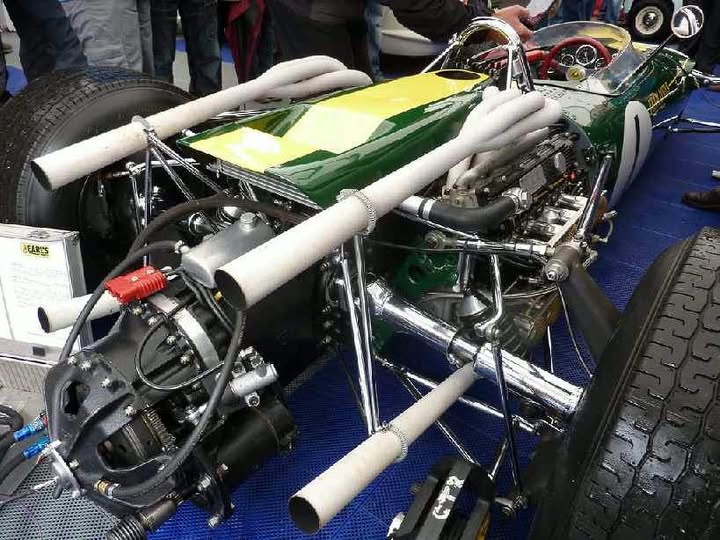 Lotus BRM 43 1966
While BRM chased complexity, an altogether different philosophy was taking shape in Australia. At the heart of it was Phil Irving, working with Jack Brabham and designer Ron Tauranac. Their goal was not to build the most powerful engine — but the most effective one. The Repco RB620 V8 was deliberately conservative. Based on the aluminium Oldsmobile F85 block, it used single overhead camshafts and just two valves per cylinder. Compared to the multi-valve European designs, it seemed almost stone-aged. But it had advantages that mattered.
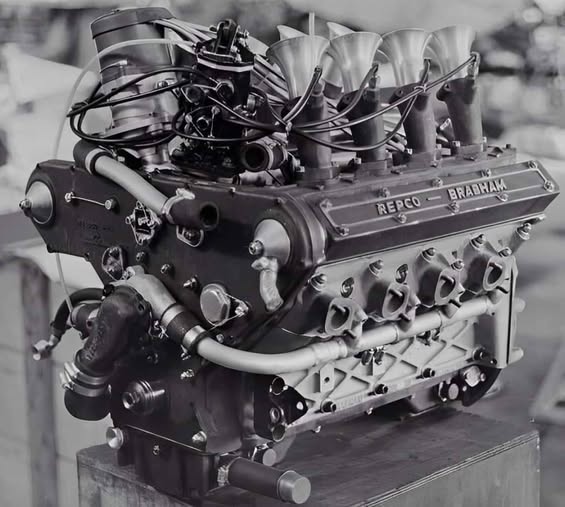 Repco V8 engine
It was compact, lightweight, and — most importantly — reliable. Early versions produced around 280 horsepower, later rising to just over 300. That left it significantly down on peak power compared to engines like the BRM H16. Yet it was smooth, flexible and dependable — qualities that proved decisive over a race distance. Repco’s integrated manufacturing capability also gave it an edge. The company could produce many of its own components in-house, avoiding the supply complications that hindered European rivals. The RB620 found its perfect partner in the Brabham BT19[1] — a compact, cleverly engineered chassis originally designed for the smaller Coventry Climax engine. Together, they formed a package that was not spectacular but exceptionally effective.
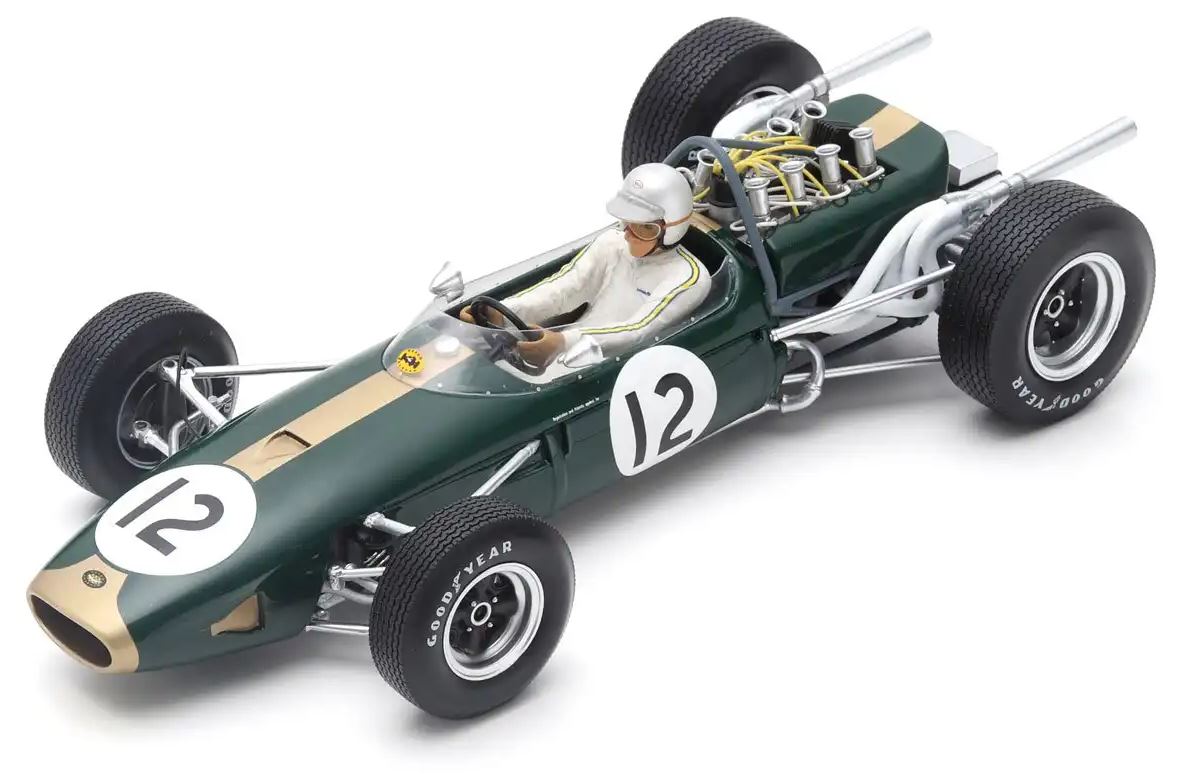 Spark: Brabham Repco BT19 (1:18)
The results spoke for themselves; the Repco V8 won 4 races in 1966. Jack Brabham not only won the World Drivers’ Championship but also secured the Constructors’ title — a historic achievement, as he remains the only driver to win a championship in a car bearing his own name.
The BRM P75 H16 and Repco RB620 V8 represent two extremes of engineering philosophy. The H16 was a bold technical statement — innovative, imaginative, and ultimately flawed. It demonstrated what was possible when engineers pursued performance without compromise, but also highlighted the dangers of excessive complexity. The Repco V8, by contrast, was a masterclass in restraint. It sacrificed outright power for usability, reliability and balance — and in doing so, achieved far greater success. Today, both engines are remembered, but for very different reasons. The BRM P75 H16 stands as one of Formula One’s most fascinating “what ifs” — a brilliant idea that never fulfilled its promise. The Repco RB620, meanwhile, is a reminder that in motorsport, the smartest solution is not always the most complicated.
Note 1: The Repco Brabham BT19 was inducted into the Australian Motorsport Hall of Fame in March 2026, being the first non-human inductee.
New Additions: March 2026
Welcome to the March update. It doesn't seem all that long ago that I was sitting here writing the last monthly update, I guess it may have something to do with February having only 28 days! Let's get straight into it then. I received some fine examples of road cars from Schuco, a German company that is now a subsidiary of Spark. Other new additions include several from Spark and Minichamps. The stand-outs for me are highlighted below.
The Mirage M9 Renault was a sports prototype racing car developed by Grand Touring Cars for the 1978 24 Hours of Le Mans, featuring a Renault V6 2L turbo engine. The M9 was essentially an evolution of the previous year's car with a lower rollbar, and a narrower cockpit compared to its predecessor. Vern Schuppan was joined by Jacques Laffite and Sam Posey as the driver line up for Le Mans. While the M9 was quick in testing, reaching high speeds during private trials on the Interstate 10 freeway in Phoenix, it ultimately could not match the pace or reliability of the factory Renault-Alpine A442B that won the race that year. Engine issues cost the car four hours in the pits and tenth was all it could manage. This Spark model would appeal to those who collect cars driven by Australians or Le Mans cars in general.
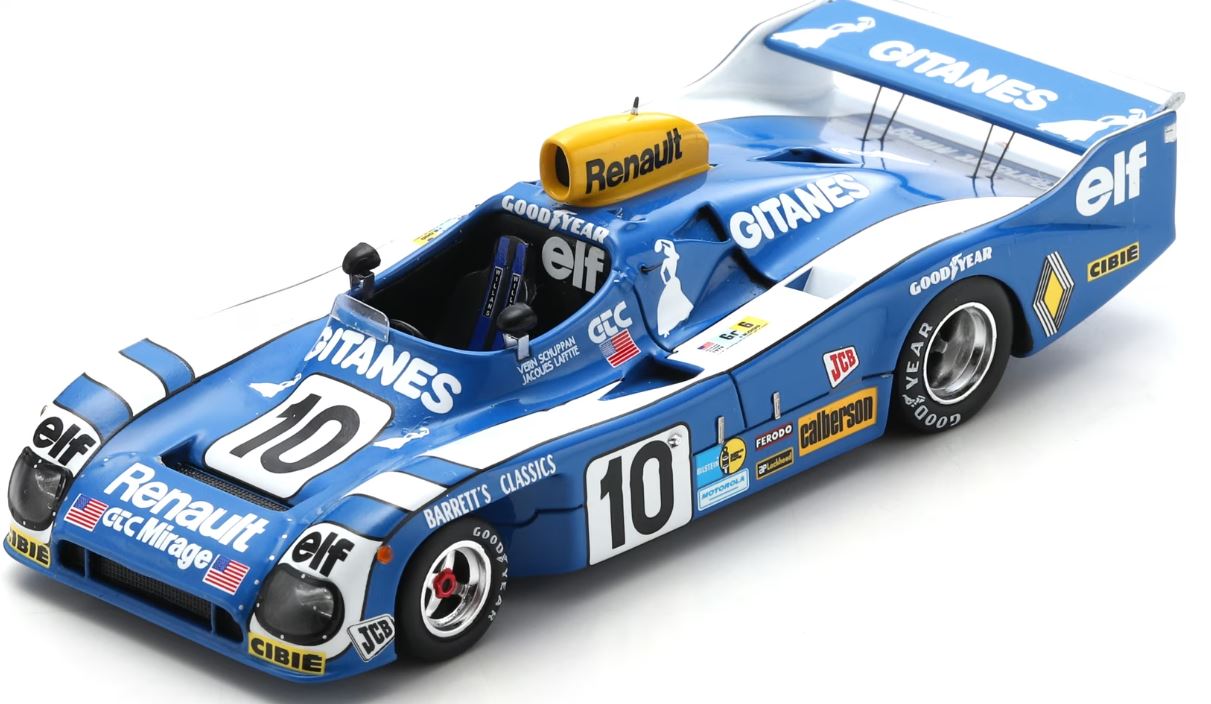 Spark: Mirage M9 Renault 1978 Le Mans (S0311)
Officine Stampaggi Industriali (OSI), or “Industrial Stampings Workshops,” was one of Italy’s smaller coachbuilders, established in 1960 to take on smaller projects for its parent company, Ghia. OSI produced some designs based on Fiat and Alfa Romeo chassis, but it was the company’s connection with Ford of Germany that led to its best-known model, the OSI-Ford 20M TS. The 20M TS was based on the contemporary European Ford Taunus and OSI built around 2,200 of them between 1967 and 1969. The 20M TS shared all of its mechanical bits with the production Taunus, it was powered by the most potent engine available, a 1,998-cc version of Ford’s brand-new Cologne V6. Later cars benefitted from the 2,293-cc version of the same engine. They were bought by people who appreciated the combination of hand-built style and reliable Ford running gear, and didn’t mind paying a little extra for the privilege. This example by Schuco would be a welcome addition to any collection of rare cars.
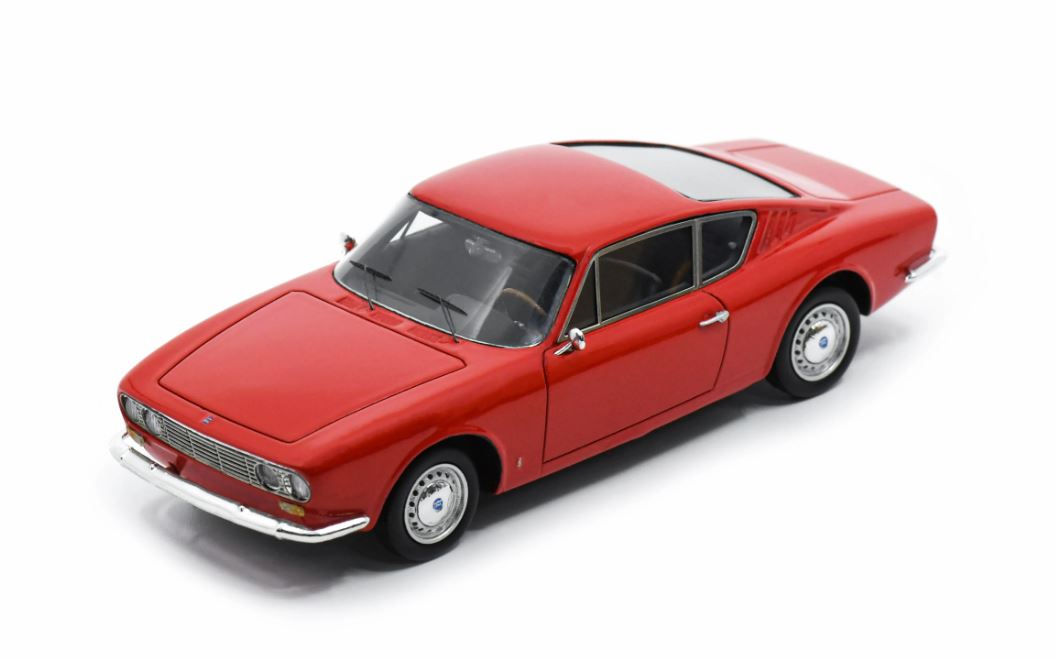 Schuco: OSI-Ford 20M TS Coupe
Okay, that's it for another monthly update, so what's on in March? As with last month, not a lot going on except the regular first Friday of the month Sydney Toy and Hobby Fair on March 6th. So, until next month, happy collecting.
Le Mans
- 1995 McLaren F1 GTR, Delétraz/Giroix/Grouillard (50) 5th Le Mans (Spark)
- 1978 Mirage Renault M9, Schuppan/Laffite/Posey (10) Le Mans 10th (Spark)
Road Cars
- 1965 Alfa Romeo Guilia Sprint GTA in red (Schuco)
- 1954 BMW 502 V8 Limousine in black (Minichamps)
- 1965 BMW 1800 TiSA in silver (Minichamps)
- 1973 De Tomaso Pantera GTS in red (Schuco)
- 1975 Mazda RX-5 (Cosmo AP) in red (Schuco)
- 1978 Mazda RX-7 Savanna in yellow (Schuco)
- 1953 Mercedes-Benz 180 in metallic green (Minichamps)
- 2019 Morgan Plus Six in grey (Schuco)
- 1968 OSI-Ford 20M TS Coupe in red (Schuco)
- 1972 Porsche 916 in silver (Schuco)
- 1997 Porsche Boxster (986) Hardtop in silver (Schuco)
- 1998 Porsche 911 (996) Cabrio in yellow (Schuco)
Misc Scales
- 1962 Porsche 356 Carrera 2, with luggage rack/skis in red 1:64 (Schuco)
After Thoughts: "JLP Racing - A Story of Speed and Weed."
John Paul Sr. was by all accounts, a very unpleasant, volatile and abusive bully. Born Hans-Johan Paul in 1939, a year before Nazi Germany invaded the Netherlands, his earliest memories were of deprivation and uncertainty under Nazi occupation. The trauma of wartime occupation left its mark on the young boy. In 1956, his family emigrated to the United States, settling in Indiana, where he reinvented himself as John Lee Paul. Brilliant with numbers, he earned a scholarship to Harvard, completing a master’s degree in business. By his early thirties, he was a millionaire Wall Street fund manager. Success came quickly and motor racing became his passion. Then came 1971. A Wall Street slump devastated the fund market. His marriage collapsed; his wife returned to Indiana with their young son, also named John. Paul Sr. liquidated everything, bought a 37-foot yacht, and crossed the Atlantic solo - twice. After drifting through the Caribbean for two years, he returned to the U.S., where his son, John Paul Jr. chose to live with him.
Back on American soil, Paul Sr. launched JLP Racing in 1977. The team’s cars were unmistakable: baby blue with splashes of yellow. He sent his son to the Skip Barber Racing School, where instructors judged the young man “hopeless.” Undeterred, Paul Sr. bought him a Formula Ford and raw talent surfaced quickly. Meanwhile, Paul Sr. competed in IMSA with a Porsche 911 and later a Corvette C3. In 1978, he finished fifth overall at Le Mans in Dick Barber’s Porsche 935. The following year, he acquired his own 935, operating from discreet workshops in Lawrenceville, Georgia—close to Road Atlanta, yet removed from prying eyes.
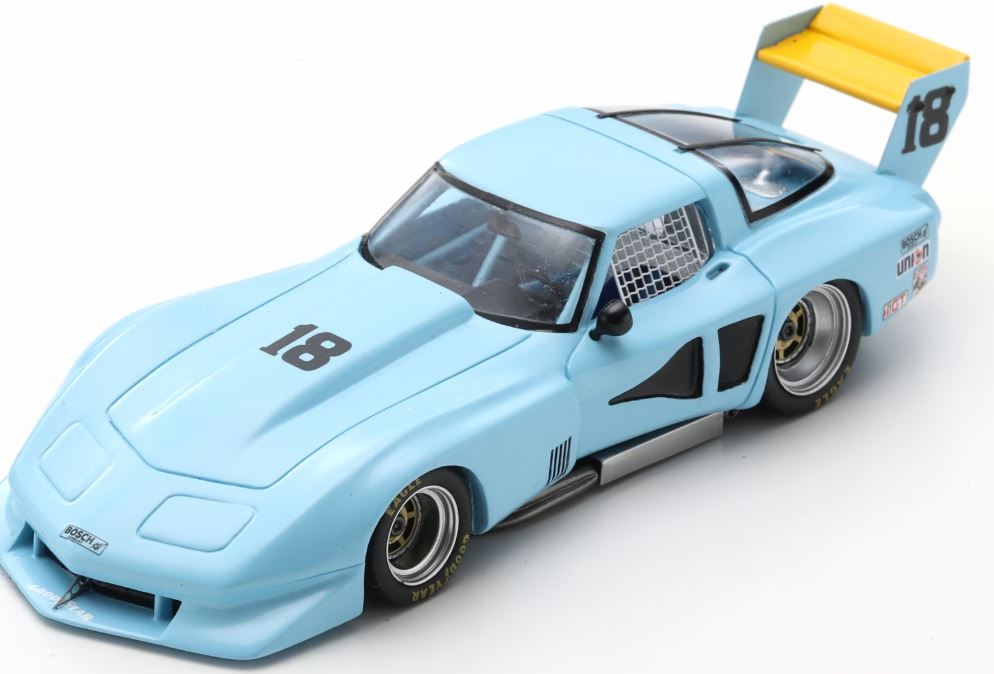 Spark: JLP Racing Corvette Road Atlanta 1978
In 1980, Paul Sr. brought his son into his team and they won their first IMSA race together. After that race Paul Sr. married his 2nd wife, Chalice. For 1980, JLP campaigned a Kremer-developed Porsche 935 dubbed the JLP-2. Paul Sr. finished second in the IMSA championship, and the pair placed ninth overall at Le Mans. In 1981 came another Porsche 935 (JLP-3), alongside a Lola T600. In a textbook start to the 1982 season, father and son won the Daytona 24 Hours and Sebring 12 Hours and at season's end, the talented 22-year-old Paul Jr. became IMSA's youngest champion.
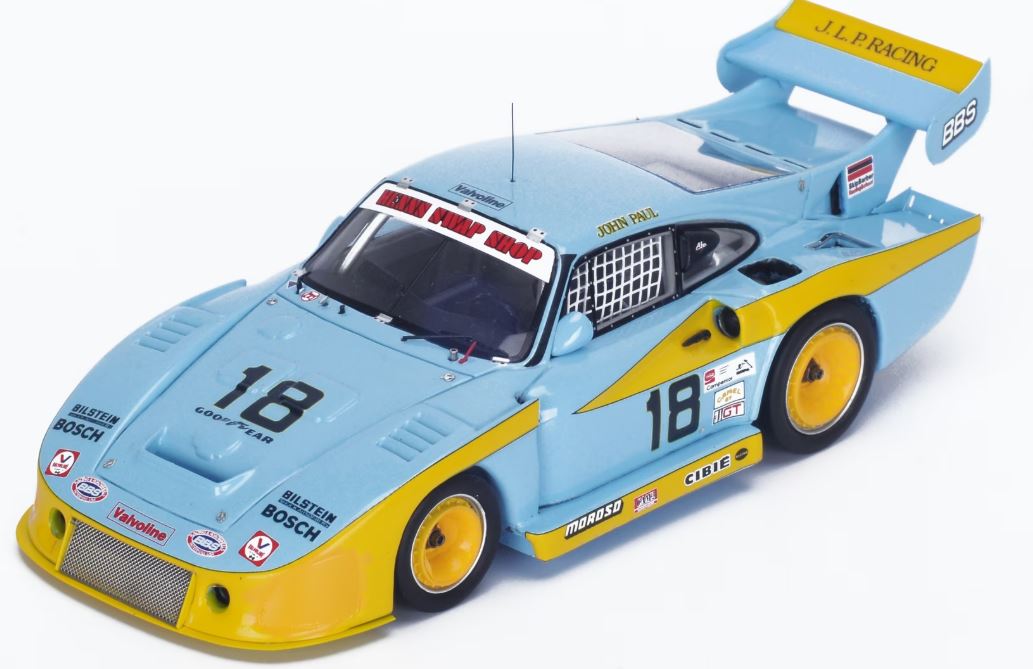 Spark: Porsche 935 1st Sebring 12 hr 1982
Paul Sr. retired as a driver at the end of 1982 to devote his time managing his racing team. However, Paul Sr. remained extremely unpopular with other drivers and was known for his quick and irrational temper that could explode into violent outbursts, on and off track. He once crashed into another competitor on a slowing-down lap in retaliation for his son being blocked on track. Unsurprisingly, few dared to confront him.
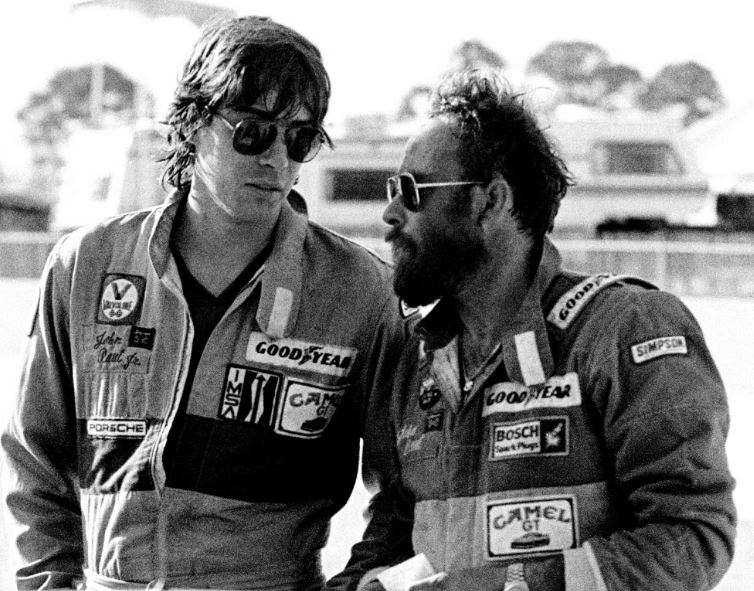 John Paul Jr. with his father, John Paul Sr.
By 1982, Paul Jr. noticed troubling signs. The team had no major sponsors, yet money flowed freely. A plain black transporter carried endless spare parts and engines. They outspent factory teams. The truth was staggering: the operation was financed by Paul Sr.’s marijuana smuggling network. Confronted with reality, Paul Jr. became complicit, helping unload bales of contraband from boats bound for hidden storage facilities. By 1983, the FBI had built a case with help from a key witness, an associate of Paul Sr. who had been offered immunity. Learning of his impending arrest, Paul Sr. accosted his associate and shot him five times. Miraculously, the man survived. Paul Sr. was arrested - then astonishingly released on bail. When he failed to appear for trial, an international manhunt followed and he was captured in Switzerland over a year later and extradited. Convicted of attempted first-degree murder, drug smuggling, racketeering, and tax evasion, Paul Sr. received a 25-year sentence. Paul Jr. was sentenced to five years, serving 28 months but his promising racing career that had now extended into Indy cars was stalled.
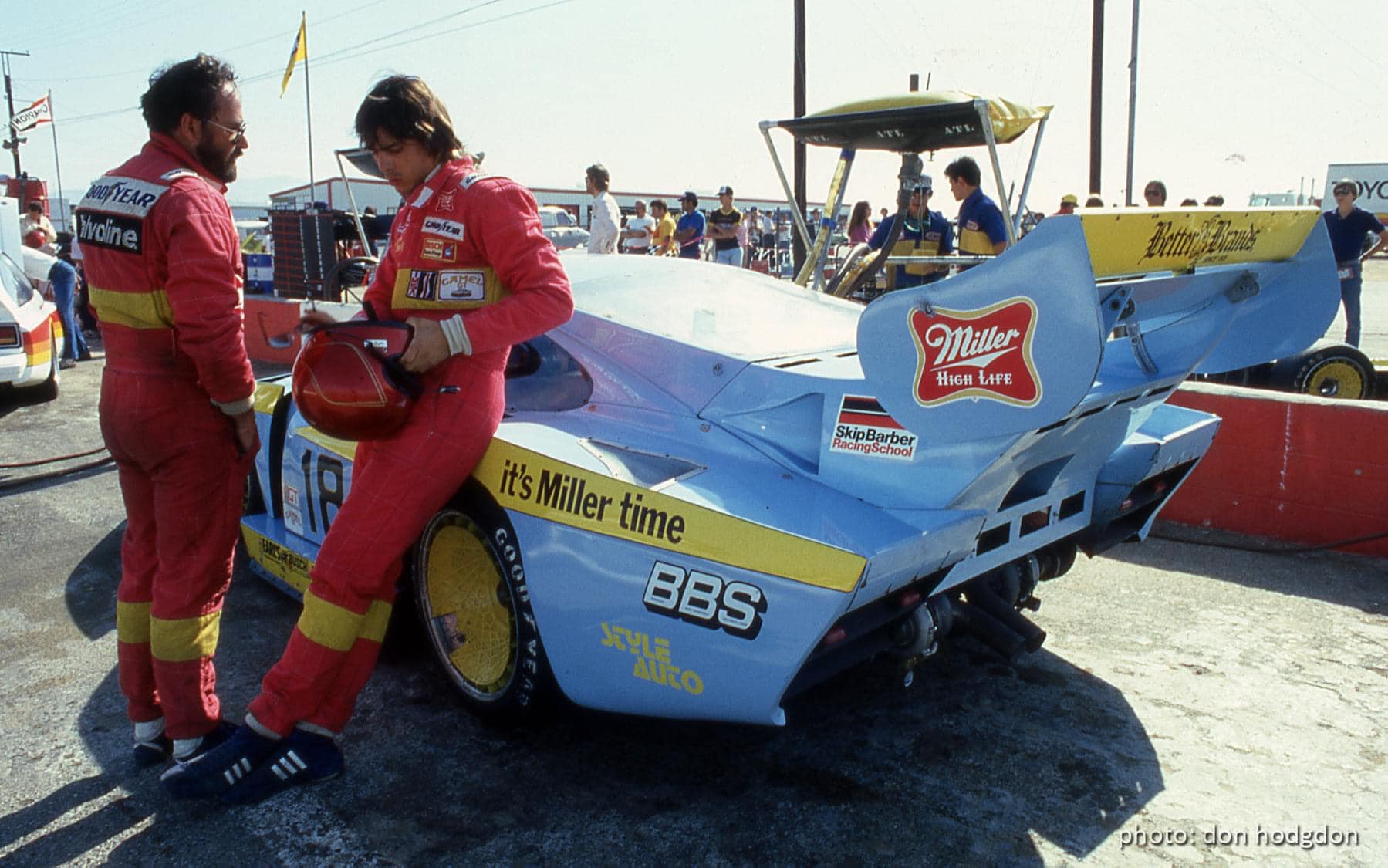 Porsche 935 JLP-3 1982 Riverside
Upon release, the racing community - remarkably - welcomed Paul Jr. back. Many believed he had been bullied into criminality by his father. His formidable talent meant he was still recognised as one of America's very best drivers and against the odds, he managed several more IMSA wins but his great desire was to return to Indy car racing. He raced the Indy 500 six times, albeit, driving for the smaller teams. He retired in 2001 and died in 2020 at age 60 after a long battle with a neurological condition.
However, John Paul Sr.’s story took a darker turn. Soon after he began his prison sentence, he and another prisoner made an attempt to escape but was quickly recaptured. He seemed to have behaved himself after that and he was paroled in 1999 after serving 13 years of his 25-year sentence. Not long afterwards, he became romantically involved with Colleen Wood. Together they prepared a 55-foot schooner for a five-year world voyage, in violation his parole, but then Colleen suddenly vanished. Her credit card had been used to withdraw $40,000 and when detectives sought a warrant to search the schooner, both Paul Sr. and the vessel were gone. Meanwhile, Paul Sr. also became a suspect in the mysterious disappearance of Chalice, his second wife whom he married in 1980. She had vanished without trace. Colleen's case also remains unsolved and John Paul Sr. remains the only suspect. However, authorities, to this day have never been able to locate him.
New Additions: February 2026
Welcome to the February update. Can you believe that one month has already gone in 2026? The first Sydney Toy and Hobby Fair on January 2 was well attended by both vendors and visitors despite being just a day after New Year's day. It bodes well for the rest of the year! This month I can report the arrival of some road cars, many of which are from the Maxichamps stable. These value-for-money models in their distinctive orange outer boxes are made by Minichamps and are popular with budget-conscious collectors. However, the model I'd like to highlight this month is a model from Minichamps.
The Lamborghini Urraco is a 2+2 mid-engined coupé produced between 1972 and 1979, designed by Bertone as a more affordable alternative to the Ferrari Dino and Porsche 911. It was named after a line of Miura-bred fighting bulls. A total of 791 units were produced during this period. Featuring a 2.0L to 3.0L transversely mounted V8 between the rear wheels, this car combined 1970s wedge styling with everyday practicality, though it initially struggled with production quality. The early versions of the Urraco had a lot of quality and reliability problems, which damaged the reputation of this car. However, the Urraco was appreciated for superb roadholding, agile handling, powerful braking and benign behavior at the limit. The Urraco served as the basis for later Lamborghini models, including the Silhouette and Jalpa. Lamborghini's first attempt at offering a mass production model became a complete failure, nevertheless, the Urraco is now a highly regarded collector's item. Similarly, the 1:43 Minichamps model is also highly regarded by model car collectors.
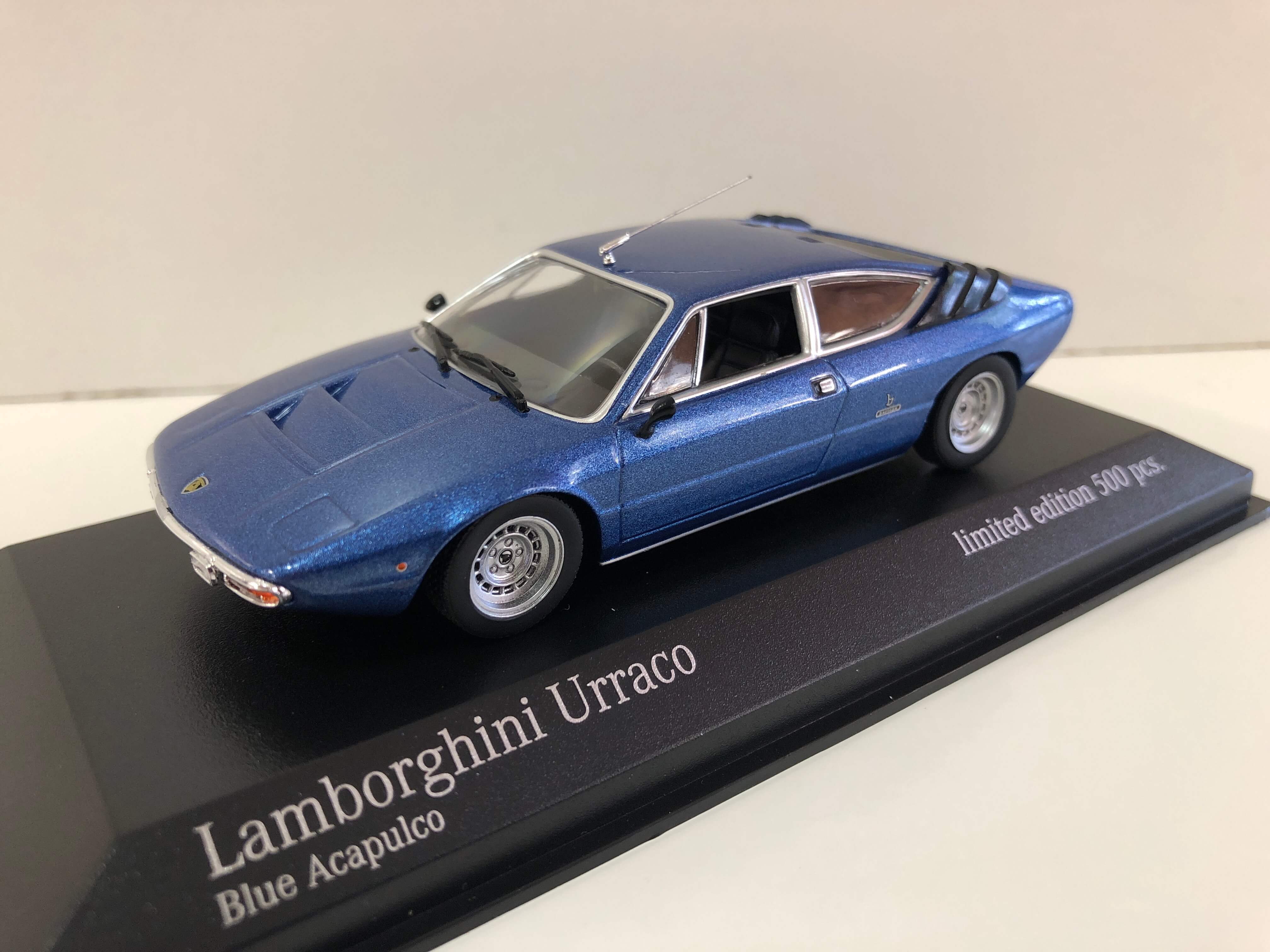 Minichamps: Lamborghini Urraco
Okay, that's it for another monthly update, so what's on in February? Not a lot, is the answer. Just the regular Sydney Toy and Hobby Fair on Friday 6 at the Epping Creative Centre, 26 Stanley Road, Epping starting at 6:00 pm. There is an event called "HobbyCon" on February 28 at the Wentworth Park Stadium, 5 Wentworth Park Road, Glebe, however, I will not be attending this event. Also, the first Collector Con is on March 1 at Penrith, and I will not be attending this event either. So, until next month, happy collecting.
Road Cars
- 1999 Audi A8 (D2) in white (Maxichamps)
- 1991 BMW Z1 (E30) in metallic black (Maxichamps)
- 1968 Fiat 850 Sport Spider in black (Maxichamps)
- 1994 Ford Mustang Cabriolet in white (Maxichamps)
- 2005 Ford Mustang Saleen S281 in metallic silver grey (IXO)
- 2020 Ford Mustang Shelby GT500 in metallic green/white (Solido)
- 1974 Lamborghini Urraco in metallic blue (Minichamps)
- 1978 Lotus Esprit Turbo in silver (Maxichamps)
- 1955 Mercedes 300SL Coupe (W198) in red (Maxichamps)
- 1992 Mercedes 600 SEC (C140) in black (Minichamps)
- 1975 Opel Rekord D Coupe in light blue (Maxichamps)
- 1992 Opel Calibra Turbo 4x4 in metallic grey (Maxichamps)
- 1961 Porsche 356B Coupe in dark green (Maxichamps)
- 1974 Porsche 911 Carrera RS 3.0 in green (Maxichamps)
- 1991 Renault 19 Cabriolet in yellow (Maxichamps)
- 2020 Toyota Supra in white (IXO)
- 1998 VW New Beetle (Type 9C) in red (Maxichamps)
After Thoughts: "Frankenheimer's "Grand Prix" (1966): Cinema at Full Throttle."
When John Frankenheimer’s "Grand Prix" hit cinemas sixty years ago in 1966, it did something no film had ever truly achieved before: it captured the raw speed, danger and romance of Formula One in a way that felt real. Six decades on, it remains one of the most authentic and visually spectacular motorsport films ever made, capturing Grand Prix racing’s golden era.
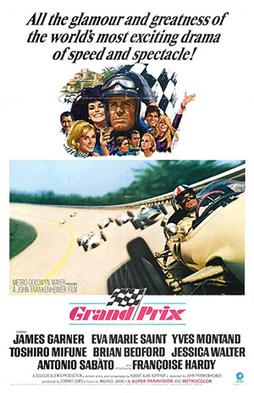
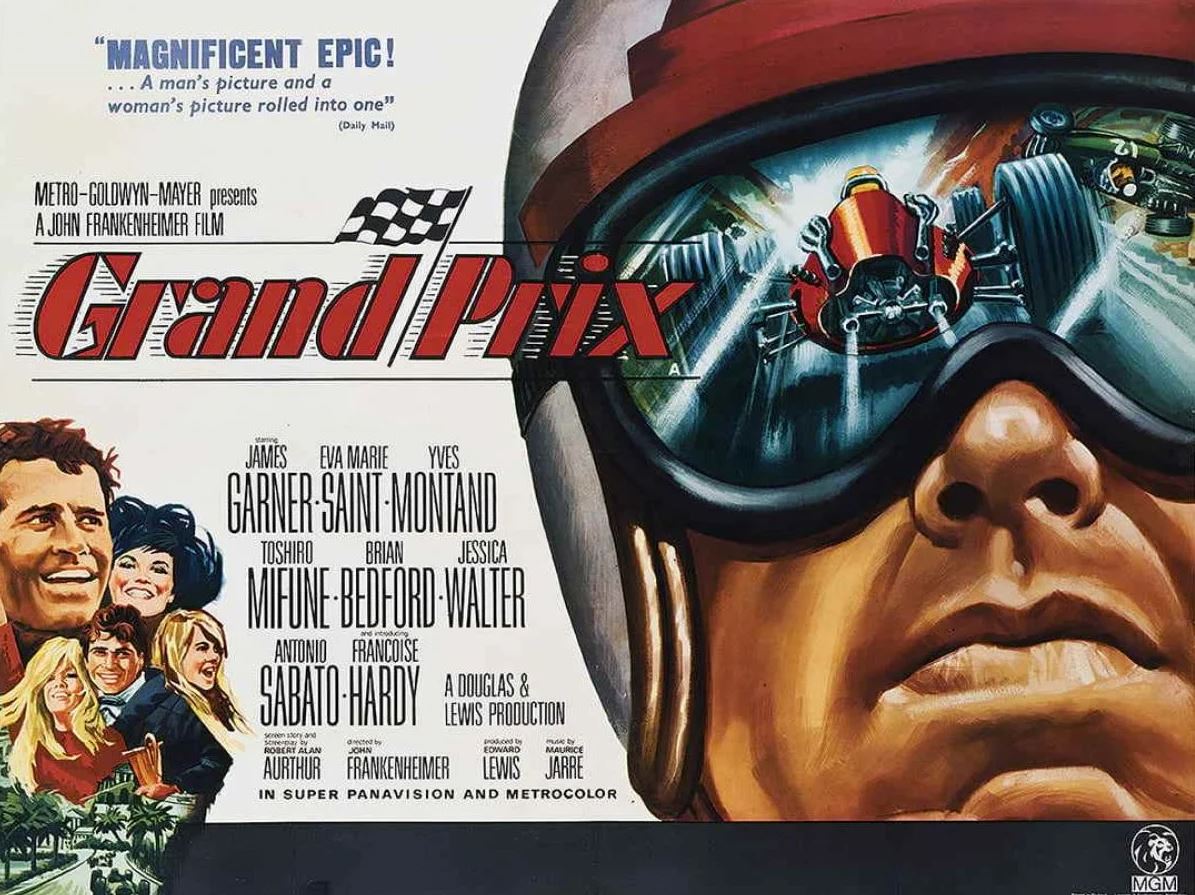 Posters
The plot of the film follows several drivers as they navigate rivalry, ambition, love and mortality across a season of racing. James Garner plays American driver Pete Aron, a talented but controversial racer fighting for redemption. Yves Montand portrays the seasoned Frenchman Jean-Pierre Sarti, while Brian Bedford (Scott Stoddard) and Antonio Sabàto (Nino Barlini) round out the fictional driver lineup.
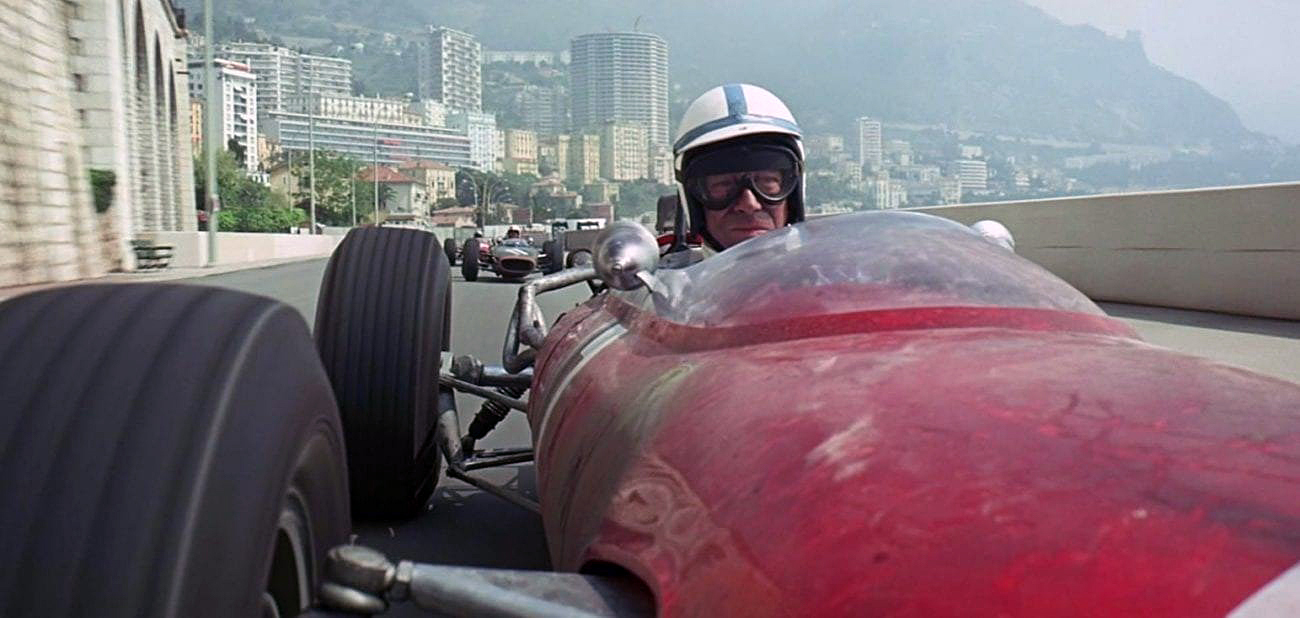 Yves Montand as Jean-Pierre Sarti (Ferrari) at the Monaco GP
Rather than relying on studio sets and staged sequences, Frankenheimer insisted on filming during actual Formula One race weekends across Europe. Real crowds, real paddocks, and real racing infrastructure became the backdrop for this fictional championship narrative. The production embedded itself within the 1966 World Championship season, capturing real cars, real drivers and real circuits in action. Locations included Monaco, Spa-Francorchamps, Monza, Brands Hatch, Zandvoort, and Clermont-Ferrand. Cameras were mounted on racing cars, helicopters were used for aerial shots, and specially modified Formula 3 cars stood in for the F1 machines during close-up scenes.
Another strength of the film was its integration of actual Formula One drivers and teams. Legends such as Juan Manuel Fangio, Jim Clark, Graham Hill and Jack Brabham appear throughout the film, lending it enormous credibility. Phil Hill and Bruce McLaren also contributed driving footage for the racing sequences. Some of the footage was captured by Phil Hill, driving a modified Lotus Climax fitted with a camera in some sessions during the actual Monaco and Belgian Grand Prix. This was some of the earliest experimentation with in-car cameras for F1. In order to realistically film the racing cars at speed, another camera car, a Ford GT40 was used for much of the filming. The production team often decided to include unplanned accidents caught on film in the final movie. For major accidents that were part of the story-line, the crew constructed a special cannon-like device that could fire gutted cars a considerable distance. Shot in Super Panavision 70 and Cinerama, the film was designed for the largest screens possible. Its split-screen editing style, allowed Frankenheimer to show multiple perspectives simultaneously — drivers, crowds, mechanics and track action. The sound design was equally revolutionary. The roar of the engines, the scream of gear changes and the thunder of the crowd were captured with remarkable clarity.
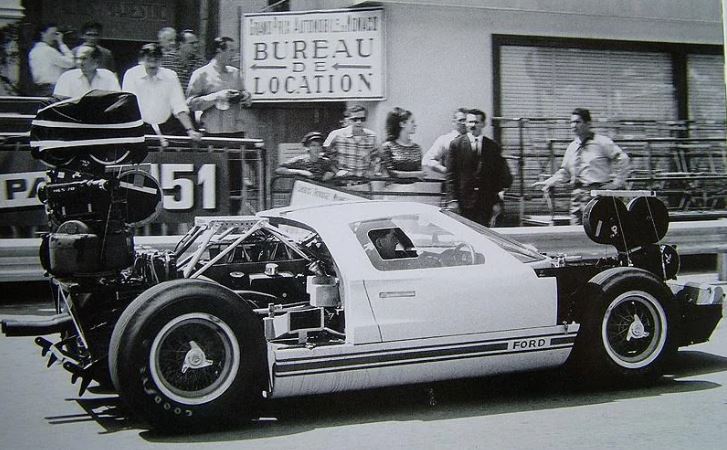 Ford GT40 Camera car
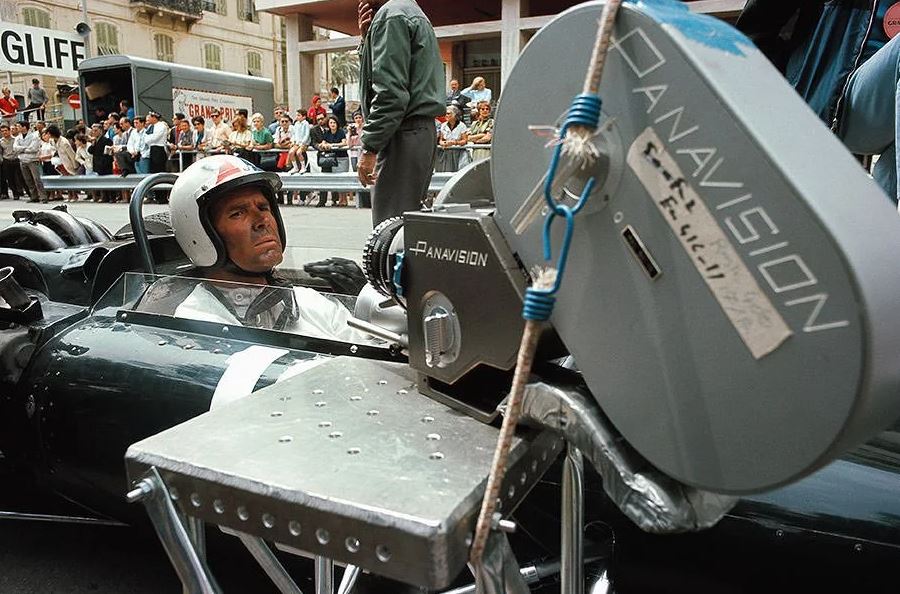 Camera mounted on Garner's GP car
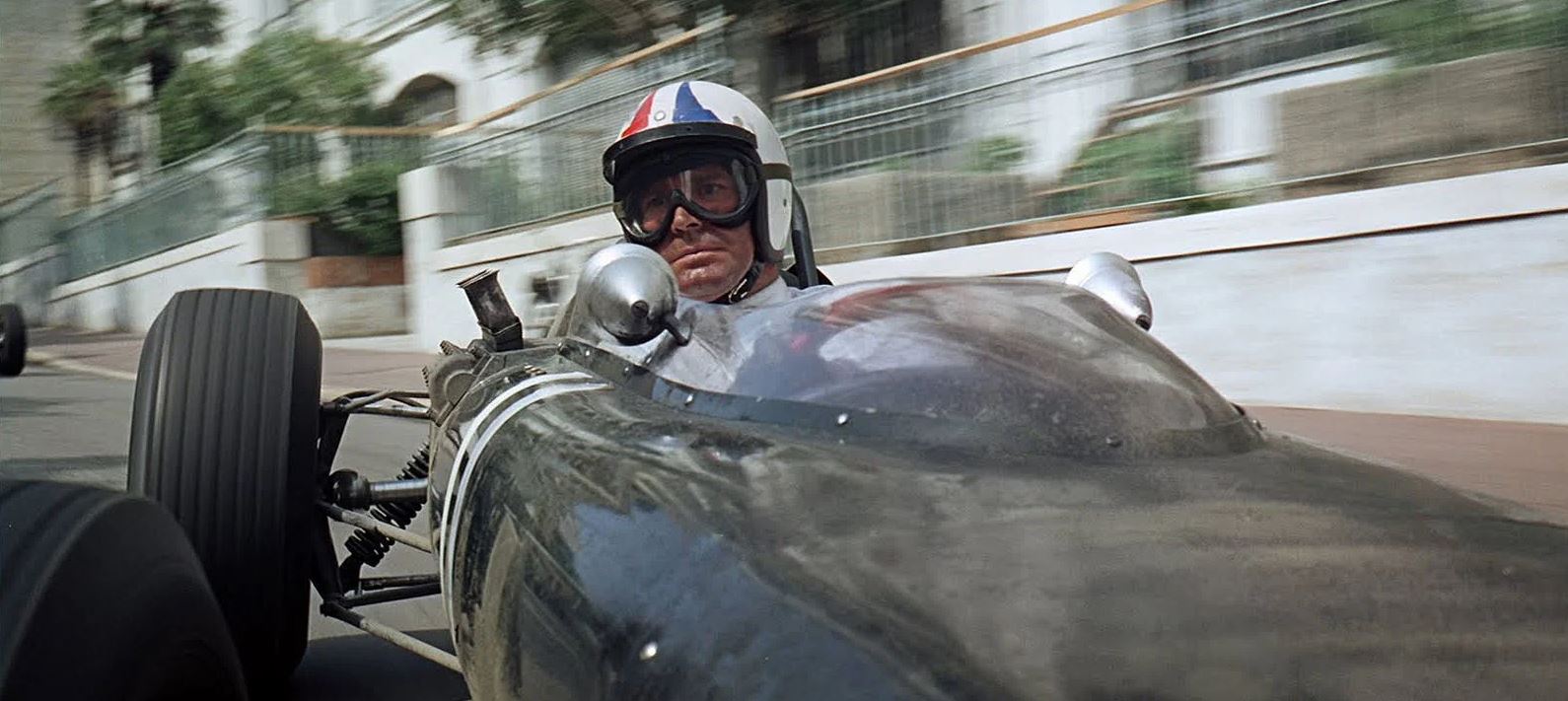 Scene from camera on Garner's car
However, not everyone was enthusiastic about the intrusion of the production crew; the filming process meant disrupting vital practice runs and otherwise getting in the way of the actual racers' activities. In particular, Enzo Ferrari did not allow the Ferrari name to be used and refused to let his cars to be filmed fearing the trivialisation of his brand. Undeterred, Frankenheimer spliced together approximately thirty minutes of detailed footage after filming in Monte Carlo, and sent the short piece to the Ferrari factory. He received such a positive response from Enzo that he gained unprecedented access, being allowed to shoot inside Ferrari's production floor alongside the real racing vehicles. The director used this relationship to push other parties to help with the film-making process. Because Yamura Motors was a fictional race team, the producers struck a deal with Bruce McLaren's newly formed McLaren team to have his car, the McLaren M2B, painted with Yamura's colours.
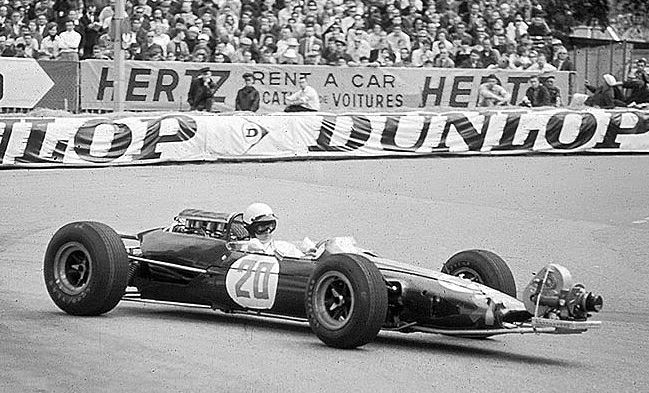 Phil Hill driving the Lotus-Climax camera car
The actual level of driving ability possessed by the movie's actors varied wildly. Bedford (Stoddard) could not drive at all and was only ever in the car for close-up type shots. Montand (Sarti) and Sabàto (Barlini) both struggled with even basic skills. Garner (Aron), on the other hand, proved competent enough that he trained exclusively with driver Bob Bondurant. Garner's driving talent became strong enough that some of the professional drivers, remarked that the actor could have been a successful Grand Prix driver if he had not gone into making films; in fact, Garner later went on to sponsor his own Formula racing team.
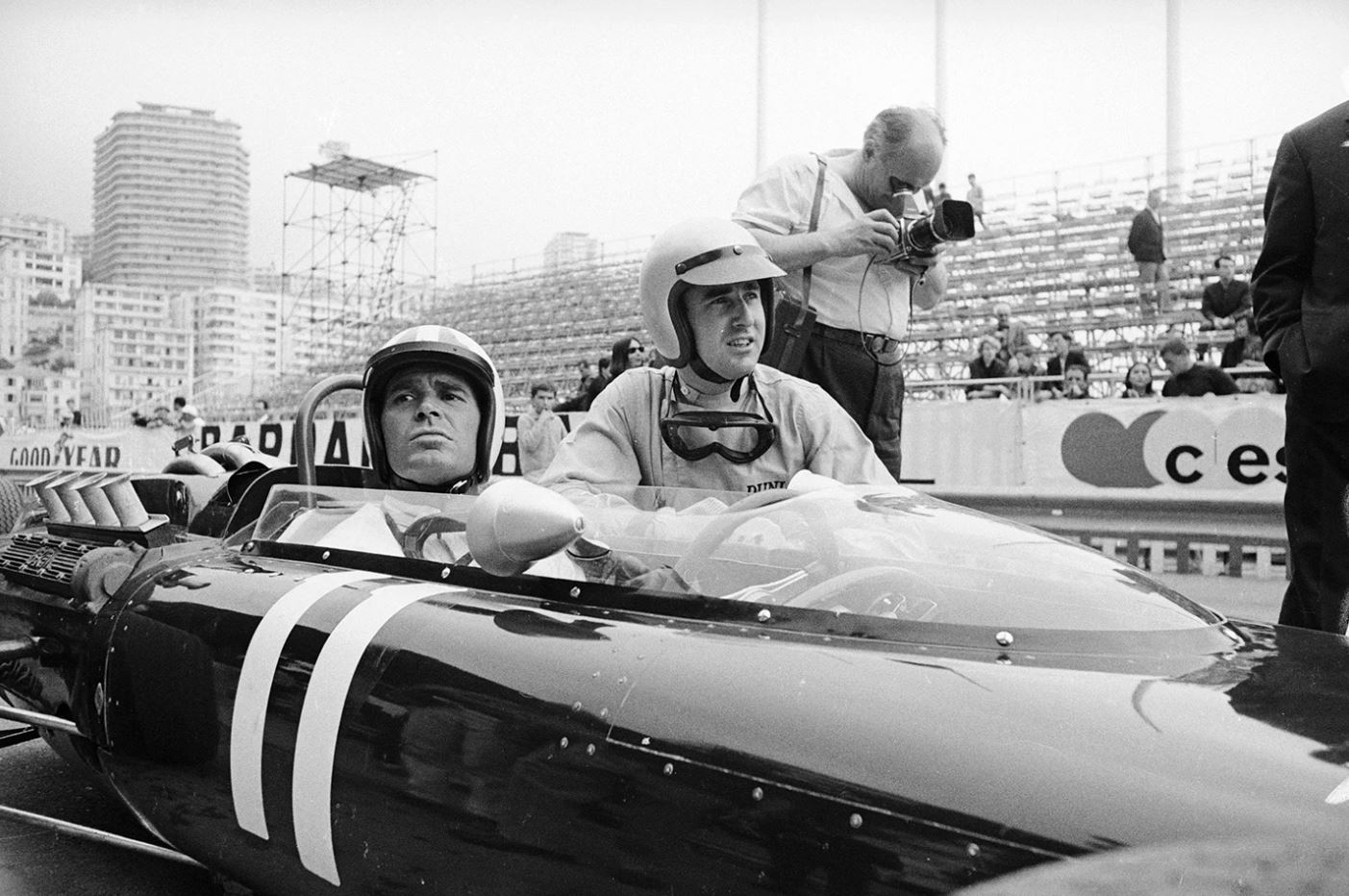 Garner getting some driving tips from Jack Brabham
The film grossed $20.8 million in the United States and Canada. It was one of the ten highest-grossing films of 1966. However, it received only three Oscar nominations at the 39th Academy Awards. While not nominated for Best Picture or Director by the Academy, it won all three categories in which it was nominated; Best Film Editing, Best Sound, and Best Effects.
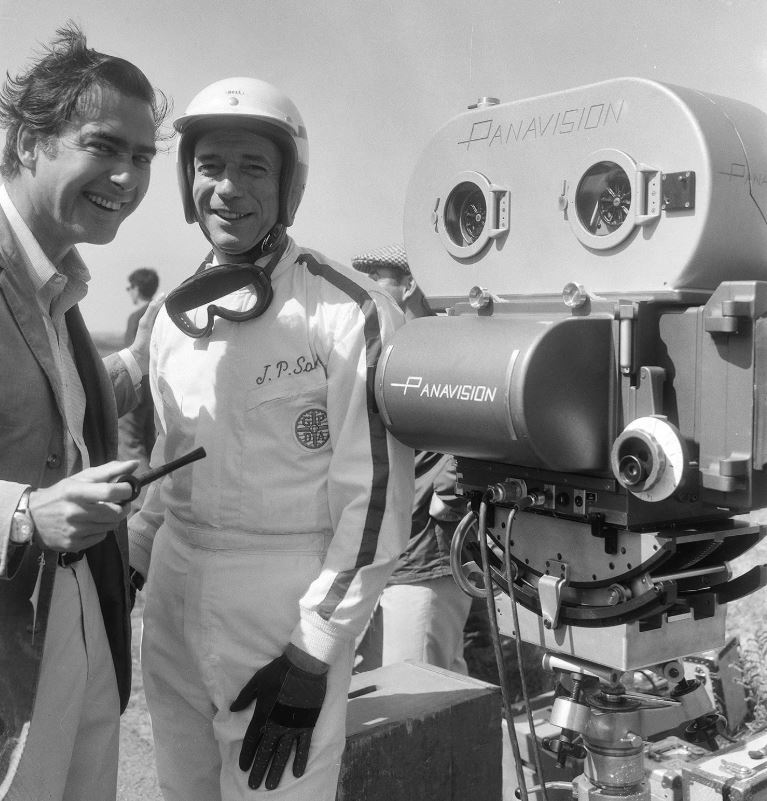 Frankenheimer with Montand on set of Grand Prix
Today, Grand Prix is still regarded as the benchmark for motorsport cinema. Later films such as Le Mans, Rush and F1: The Movie, owe a debt to Frankenheimer’s pioneering approach. For Formula One fans, the film remains essential viewing — not just as entertainment, but as a tribute to a bygone era. Frankenheimer didn’t just make a movie about Formula One—he turned Formula One into cinema.
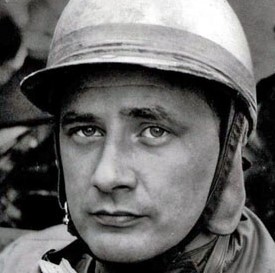 Vale: Hans Herrmann, German F1 Driver. (23/2/28 - 9/1/26)
New Additions: January 2026
Welcome to the first update for 2026. I hope everyone had a safe and relaxing time during the festive break and I wish you all the best for the new year. Last year was another difficult year for everyone with the cost of living challenges and I realise collecting model cars sometimes had to take a back seat. The forecast for 2026 looks like it could be a repeat of last year, but I guess we have to remain optimistic for better times ahead. We start off the new year, surprisingly, with no new additions to report, so I thought I would focus on a couple of significant models that I had received late last year.
The Ford Mustang GT3 was unveiled at the 2023 24 Hours of Le Mans as Ford's new global GT3 challenger, with its actual racing debut scheduled for 2024 at the 24 Hours of Daytona, followed by Le Mans in June 2024. The Mustang GT3 was designed and developed by Ford Racing and Multimatic Motorsports according to GT3 regulations while M-Sport, Ford's long-term partner in the World Rally Championship helped to develop the 5.4-litre naturally aspirated Ford Coyote-based V8. At its launch, it was confirmed the German racing team, Proton Competition would be the first customer team to run the Mustang GT3 in 2024. The Mustang made a highly successful debut at the 2024 Le Mans, competing in the new LMGT3 category; this marked the first Le Mans appearance for a Mustang (the Saleen-Mustang) since 1997. Three cars were entered by Proton Competition (Cars #44, #77 and #88). The #88 endured early challenges but showed consistency throughout the race, a clever pit strategy helping the car maintain a top-five position and eventually delivering a third place in the LMGT3 class. The #44 car also secured 4th place in class. The #77 and #88 cars have been modeled by Spark and would make a welcome addition to any Le Mans or Mustang collection.
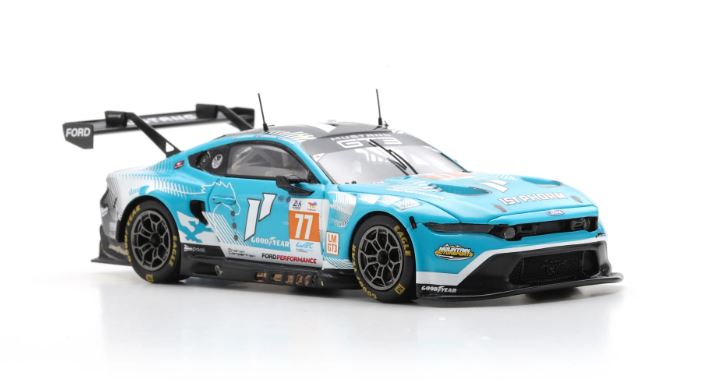 Spark: Mustang GT3 #77 Le Mans 2024 (S9153)
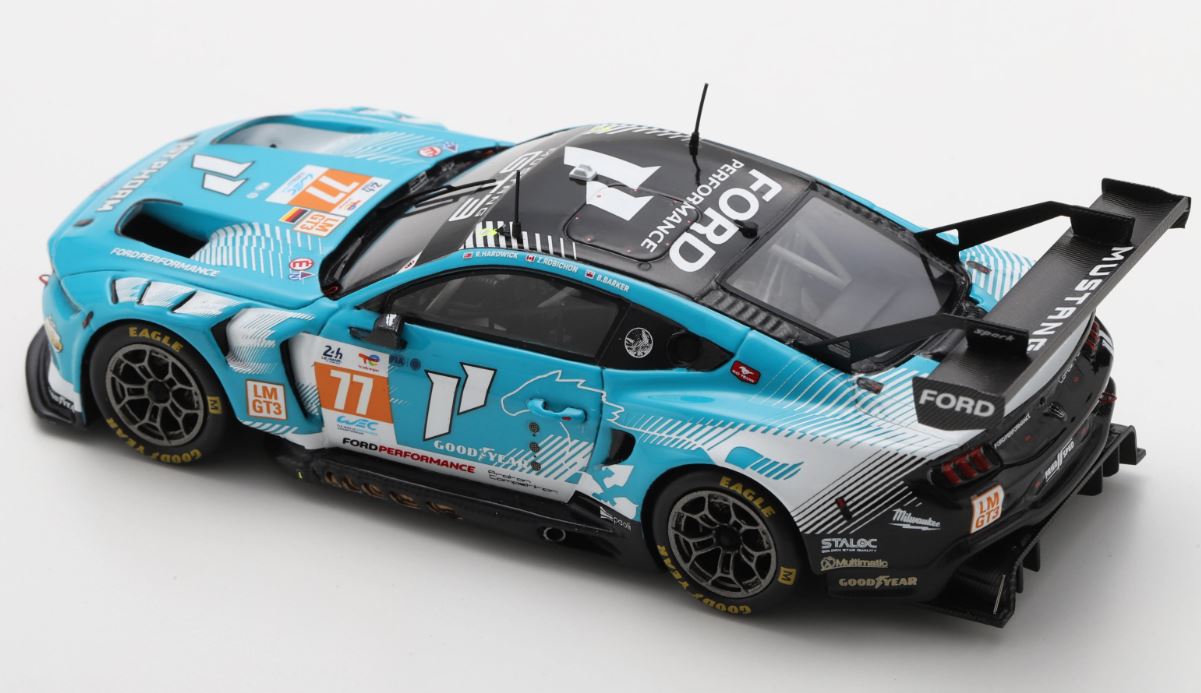 Spark: Mustang GT3 #77 Le Mans 2024 (S9153)
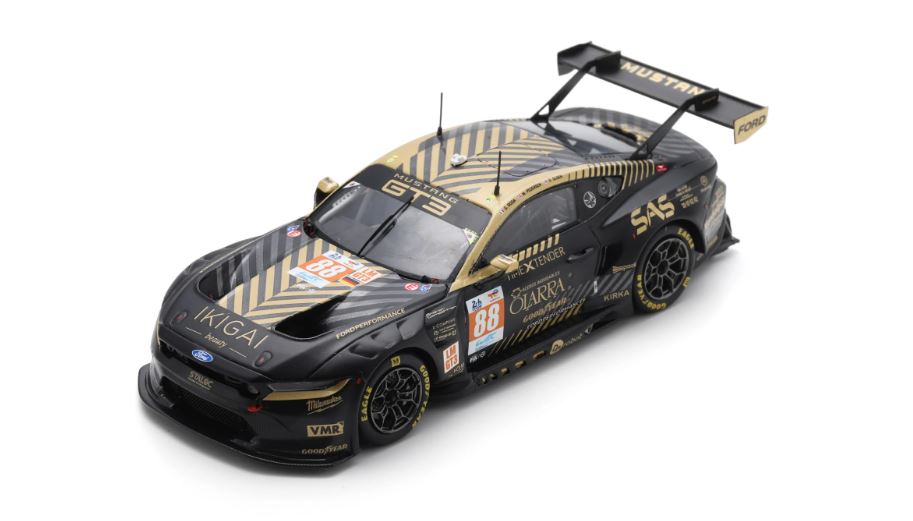 Spark: Mustang GT3 #88 Le Mans 2024 (S9159)
OK, that's it for my first update of the year. January is always a quiet month, but thankfully we have the Sydney Toy and Hobby Fair on January 2. Located at the Epping Creative Centre, 26 Stanley Road, Epping. Until next month, happy collecting.
After Thoughts: "Umbeto Panini: The Cheesemaker Who Saved Maserati's Car Collection."
As Maserati celebrates its 112th anniversary this year, it's worth remembering that a vital part of the brand's history nearly disappeared in the 1980s. At the time, Maserati was under the ownership of Alejandro De Tomaso. When De Tomaso purchased Maserati in 1975, a historic car collection came with the manufacturing operations. Although the company had launched the sharp-edged Biturbo range and sold a minority stake to Chrysler, the financial health of Maserati remained fragile. In a move to raise quick capital, De Tomaso made a dramatic decision: he would sell Maserati's priceless collection of historic road and race cars. The collection included some of the most important machines in the company's history, among them Juan Manuel Fangio's legendary 250F Formula One car, the exquisite "Birdcage" Tipo 61, the elegant A6G/54, and iconic grand tourers of the 1960s and 1970s such as the 3500 GT, Ghibli, Khamsin, Mistral, and Merak. Had they been sold individually, many of these cars would likely have left Italy forever.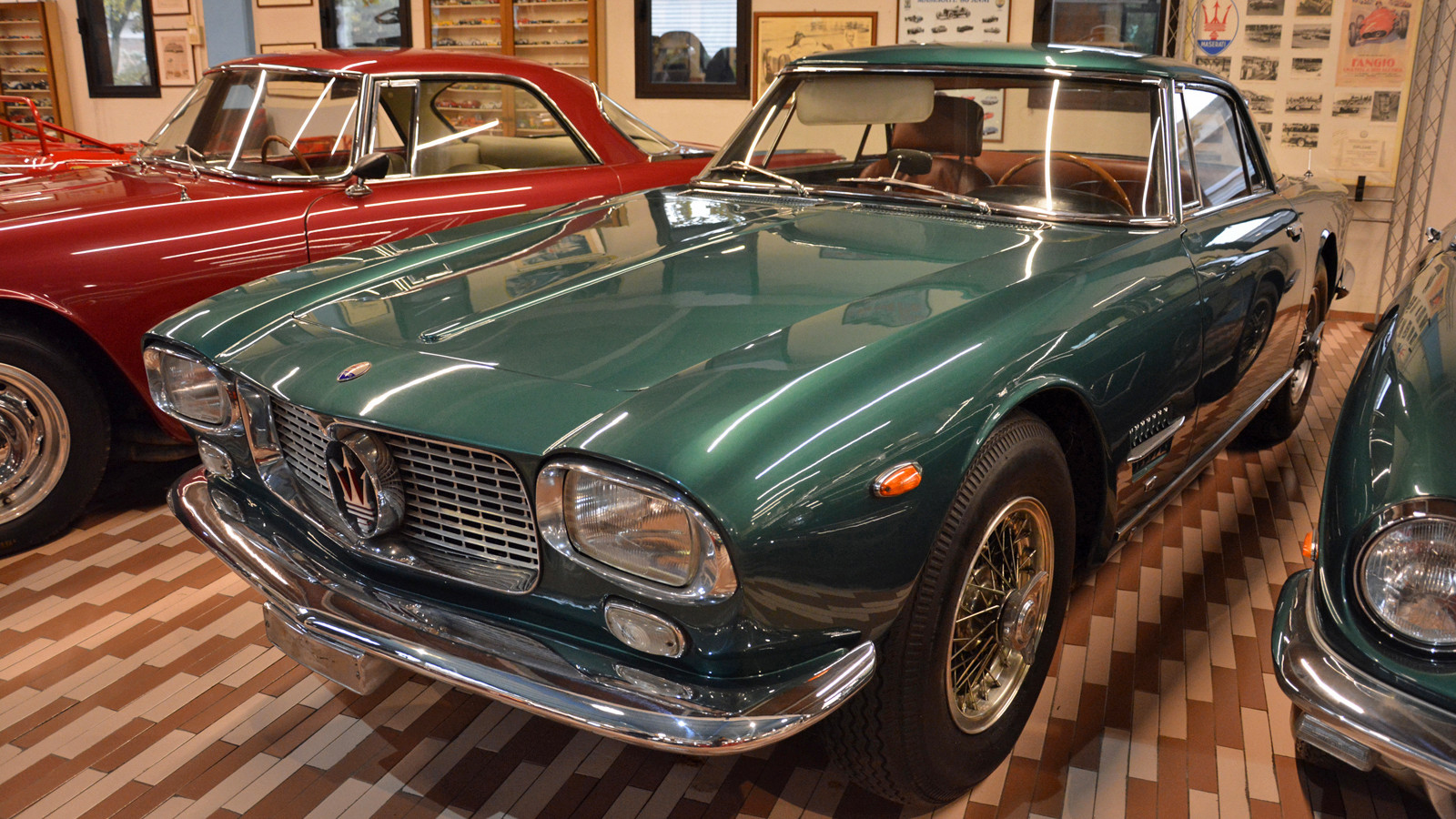
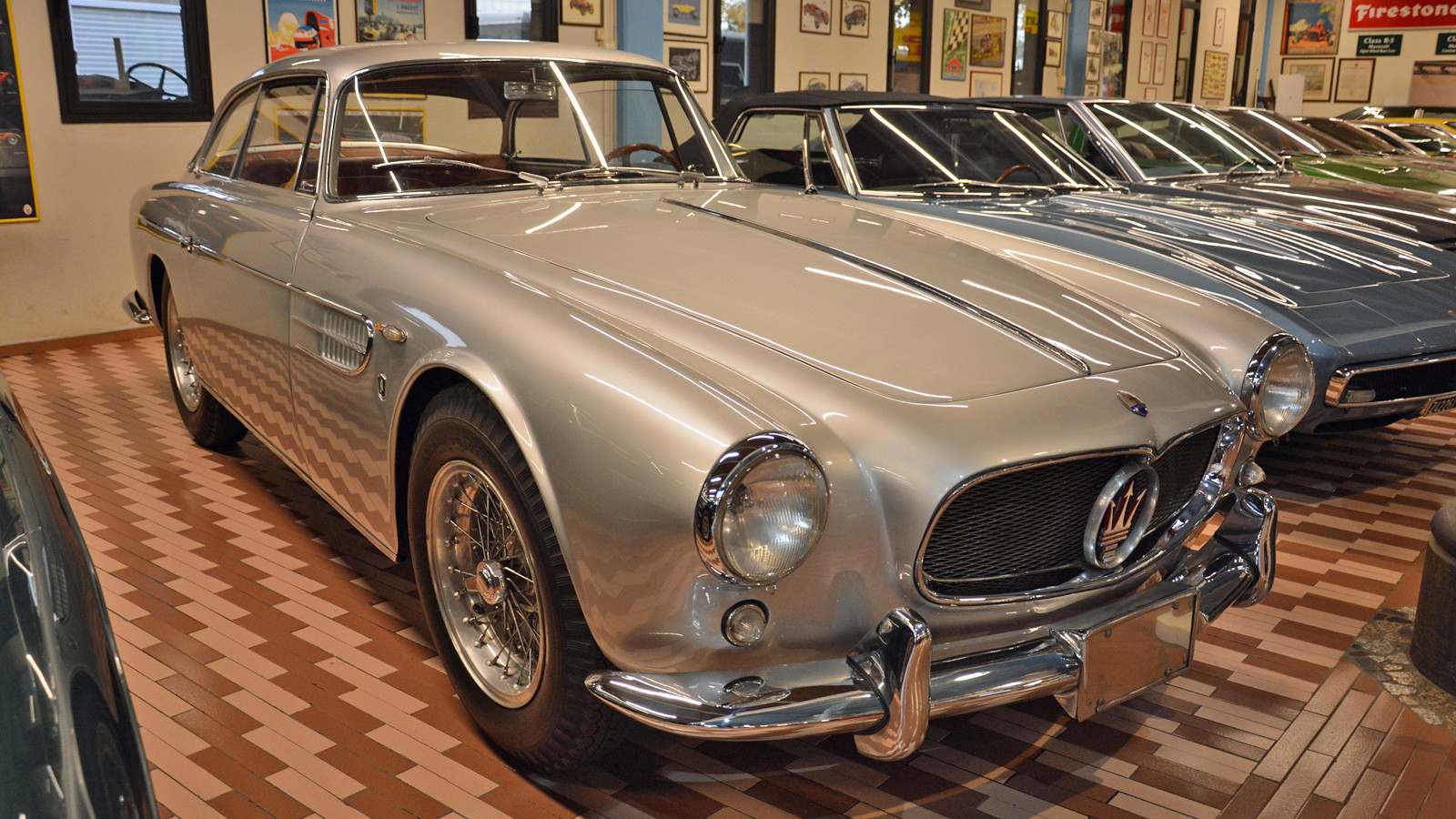
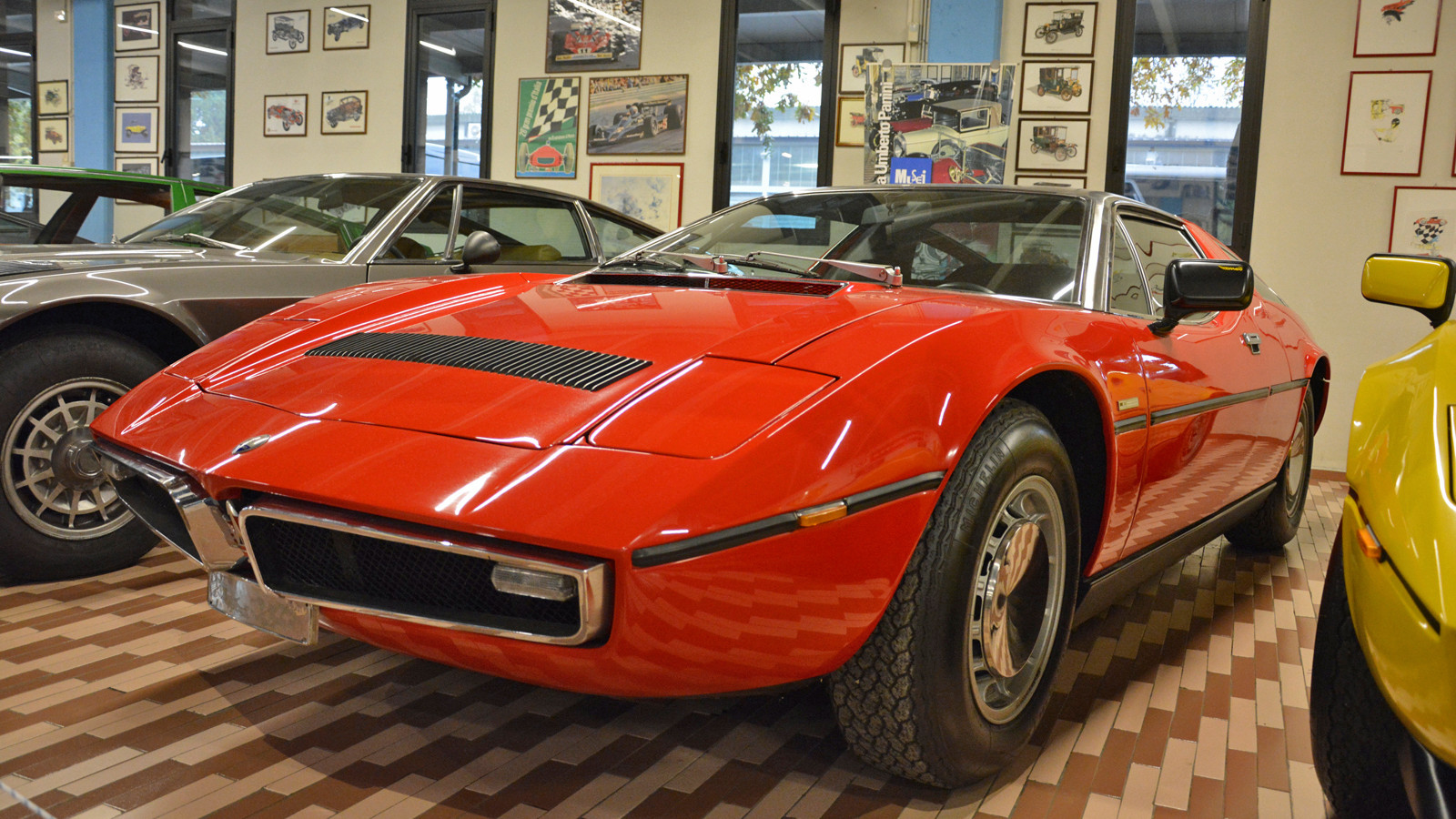
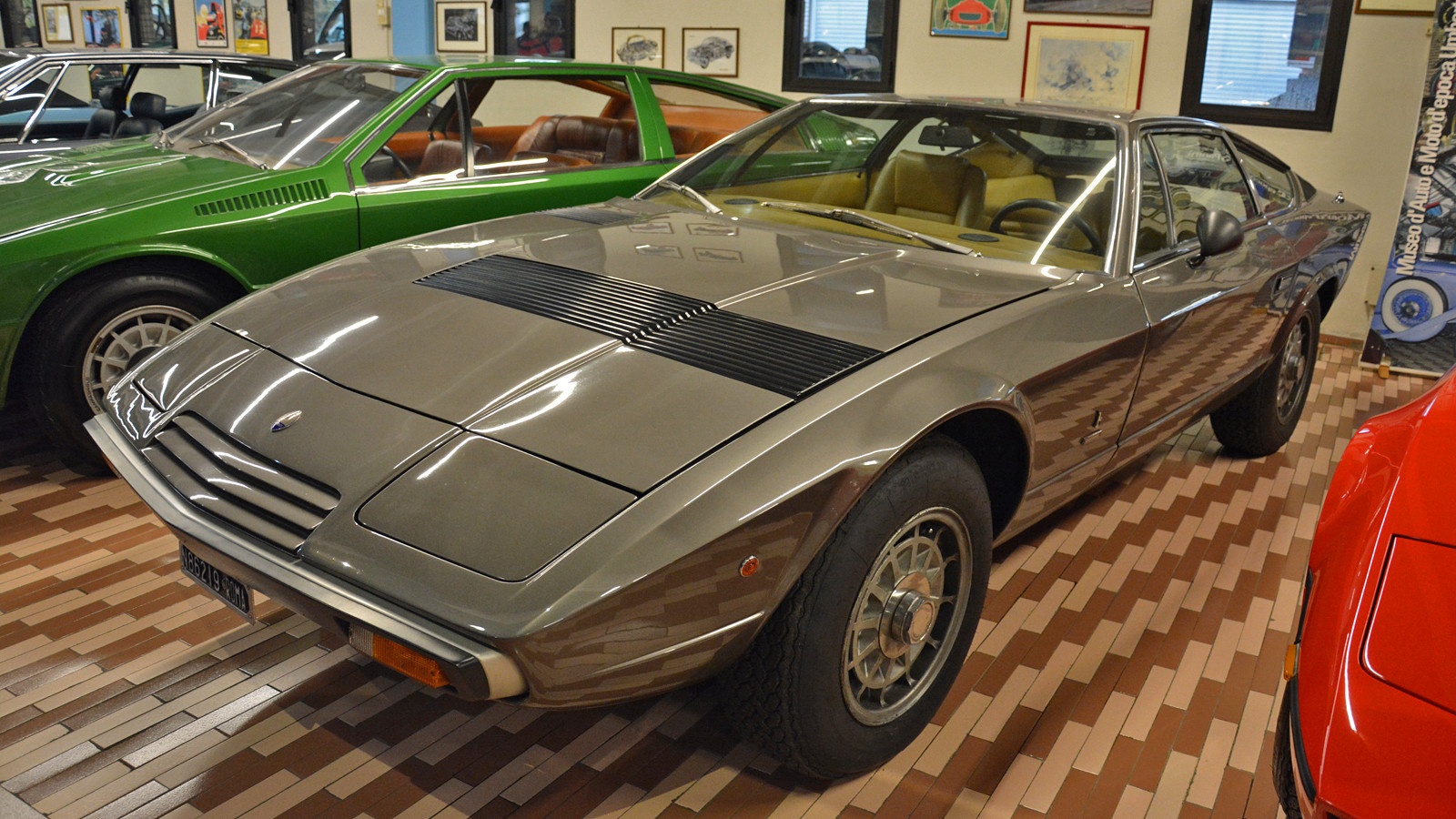
Photos clockwise from top left: Maserati A6G/54, 5000GT, Bora, Khamsin (at the Hombre Farm Museum)
Just a few miles outside Modena, Umberto Panini was quietly building a very different empire. Famous worldwide for the Panini sticker albums cherished by generations of children, Panini had invested his success back into his homeland. He founded Hombre, an organic farm producing Parmigiano cheese, and began filling its barns with a remarkable collection of cars and motorcycles. When Panini, a proud Modenese, learned that Maserati's historic cars were at risk of being scattered across the globe, he could not accept the idea of such cultural treasures leaving the region. "In 1986, my father saved the Maserati classic collection," recalls his son, Giovanni Panini. "He tried to form a local committee, but in reality, he was the only one seriously negotiating with De Tomaso."
By the summer of that year, an agreement had been reached. Contracts were signed in September, and by November, the cars had arrived at Hombre, safely housed and displayed together once again. That collection became the Collezione Umberto Panini, a free museum nestled among cowsheds and cheese-making facilities, and home to 22 historic Maseratis. Almost overnight, it became a pilgrimage site for enthusiasts worldwide.
 Umberto Panini with his collection (photo: D.Dowsey)
Remarkably, nearly every Maserati in the collection remains fully drivable. Only a prewar 6C with a serious engine issue is currently sidelined. The rest are exercised regularly, driven, raced, and showcased as living machines rather than static exhibits.
In 2025, the entire museum was relocated from the Hombre Farm to a more central site in Modena. The new address is Via dell'Aeroporto 140, Marzaglia, Modena. Under Stellantis ownership, questions once again surround Maserati's future. But thanks to Umberto Panini's decisive action four decades ago, the brand's past, its soul, its triumphs, and its most iconic machines remain safe, intact, and proudly Italian.
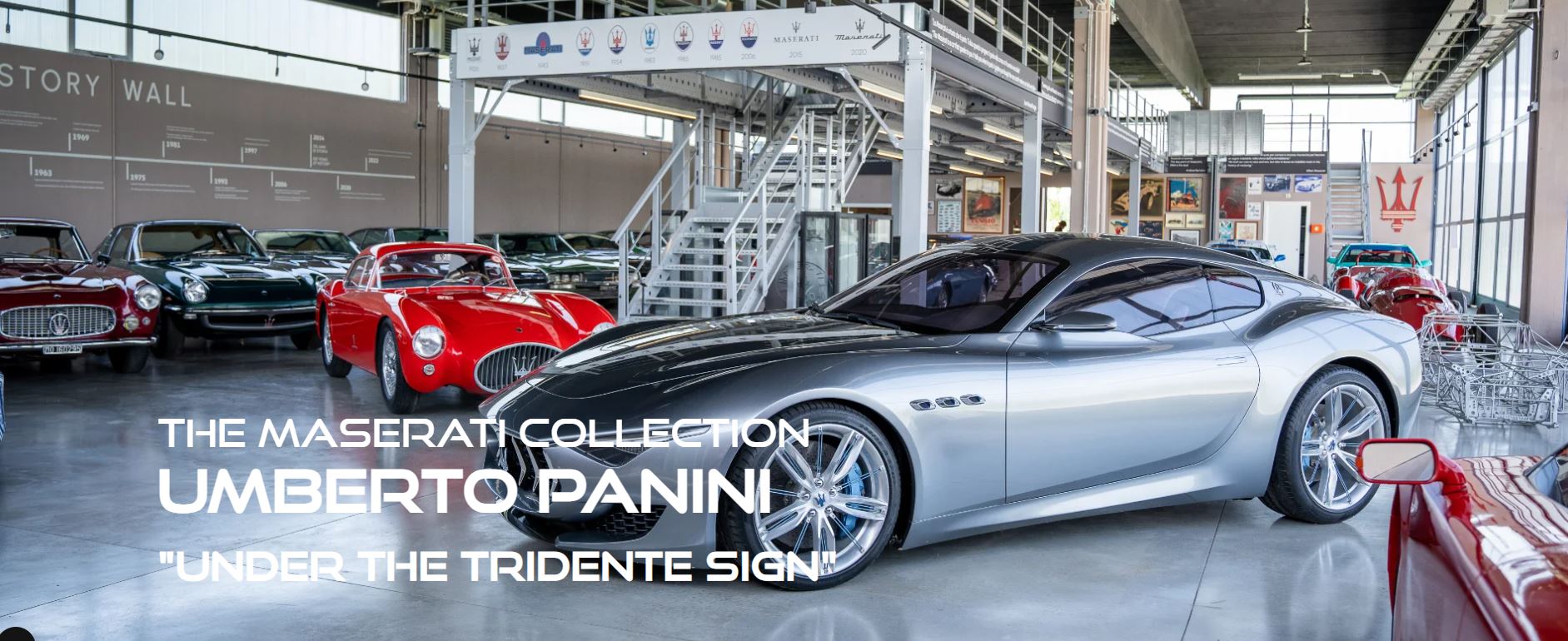
Collezione Umberto Panini, at the new location: Via dell'Aeroporto 140, Marzaglia, Modena